


China News Network: What do you think is the significance of these visits? Why choose these two Central Asian countries?
Xu Tao: Kazakhstan, the Central Asian nation hosting the SCO summit in its capital, Astana, is a highly important partner for China. As China’s largest neighbor in the West, Kazakhstan plays a crucial role in regional stability and cooperation for China. In recent years, bilateral relations between China and Kazakhstan have developed rapidly, with a high level of cooperation.
In 2019, Kassym-Jomart Tokayev visited China after he assumed office as President of Kazakhstan, and the two countries signed a joint statement, elevating their relationship from a comprehensive strategic partnership to a permanent comprehensive strategic partnership. Currently, China’s relations with Kazakhstan are at the highest level among its bilateral relationships with countries in the region.
Through this visit, China and Kazakhstan can deepen their political and economic cooperation, further advancing their relationship, which holds significant meaning for both nations.
Nurzhanat Ametbek: First of all we should underline that Central Asia is a neighboring region to China. China and Central Asian countries share long border and Chinese and Central Asian people share long common history. Moreover, Central Asia has strategic importance due to its geopolitical location and its rich natural resources.
Secondly, the visits are important because of economic relations between China, Kazakhstan and Tajikistan, and these visits aim to bolster the Belt and Road Initiative (BRI), enhancing trade routes and economic cooperation. Central Asia is a crucial corridor for the BRI, linking China to Europe and the Middle East.
Thirdly, the visit is significant due to the energy security of China. Kazakhstan is vital for China’s energy security.
And last but not least, enhancing bilateral ties with Kazakhstan and Tajikistan helps promote regional stability, which is crucial for China.
China News Network: How do you see the benefits the Belt and Road Initiative has brought to peoples in Kazakhstan and Tajikistan?
Xu Tao: In a speech he delivered at Nazarbayev University in Astana, Kazakhstan, on Sept 7, 2013, President Xi Jinping proposed that the two countries jointly build the “Silk Road Economic Belt”, which together with the 21st Century Maritime Silk Road now makes up the Belt and Road Initiative (BRI). Kazakh President Nursultan Nazarbayev announced in 2014 his new economic plan, known as “Nurly Zhol” (meaning “bright path” in the Kazakh language), highlighting further interaction of Kazakhstan’s Nurly Zhol and the the Economic BRI.
Kazakhstan views the Silk Road Economic Belt as a crucial opportunity for its economic development, leading to rapid cooperation between China and Kazakhstan within the framework of the Silk Road Economic Belt. In 2016, Nazarbayev commented that the Silk Road Economic Belt would transform the geo-economic landscape of Central Asia.
Currently, Kazakhstan has undergone a transition from Nazarbayev to President Tokayev. Despite differences in governing philosophies and styles, Tokayev remains steadfast in advancing cooperation with China within the framework of the Silk Road Economic Belt. Tokayev’s participation in the China-Central Asia Summit in Xi’an in 2023 and various cooperative efforts between Kazakhstan and China in recent years underscore Kazakhstan’s proactive engagement in these initiatives.
Nurzhanat Ametbek: Astana, the capital of Kazakhstan, where the SCO Summit is held, is the place where in 2013 the BRI was announced. In other words, the visit of President Xi to Kazakhstan after decade of the announcement of the BRI is very symbolic.
There is no doubt that the BRI has significantly impacted Central Asia over the past decade, with notable developments in infrastructure and economic integration.
Firstly, Central Asian countries have seen substantial improvements in transportation infrastructure, including railways, highways, and logistics hubs, facilitating better connectivity.
Secondly, The BRI has fostered deeper economic ties between China and Central Asian nations through increased trade, investment, and the establishment of free trade zones.
Thirdly, projects like pipelines and energy infrastructure have strengthened energy security and cooperation, particularly benefiting resource-rich countries like Kazakhstan.
In summary, the BRI has brought significant advancements to Central Asia over the past decade, and future outcomes for Kazakhstan and Tajikistan are likely to include enhanced connectivity, economic diversification, energy security, and sustainable development.
China News Network: What do you think of the cooperation between China and Central Asia? And how do you see its future?
Xu Tao: China’s cooperation with Central Asian countries is characterized by complementarity. There is significant disparity in resource endowments between China and Central Asian countries – China has long been a major importer of energy, while countries like Kazakhstan, Uzbekistan, and Turkmenistan are major energy exporters. Kyrgyzstan and Tajikistan also export minerals and other resources, which are essential for China’s economic development.
For Central Asian countries, connectivity is a top priority. They have been actively promoting cooperation with China in pipeline transportation, as well as in road and railway infrastructure. Such infrastructure projects cannot be accomplished by a single country alone; therefore, Central Asian countries must collaborate with neighboring countries, including major powers like China, as well as Iran, Turkey, and others.
China and Central Asian countries have successfully completed numerous landmark projects. For instance, Tajikistan’s highway projects have received high praise, with many Tajik people expressing appreciation for the comfort provided by these highways.
Through cooperation, China’s technology and standards have been promoted abroad. Moreover, China’s new development models, particularly its economic strategies, have also been introduced to Central Asia.
The ecological environment in Central Asia is fragile, facing challenges such as natural conditions, population growth, climate change, and industrial and agricultural development, resulting in severe water scarcity. Hence, projects on green agriculture and renewable energy initiated by China in collaboration with Central Asian countries have been widely welcomed.
For example, the SCO Demonstration Base for Agricultural Technology Exchange and Training established in Yangling, Shaanxi Province, China, has been pivotal in training agricultural technology professionals and managers, promoting crop varieties, and establishing sustainable farming models.
In countries like Kazakhstan, Chinese enterprises have significantly contributed to economic growth, employment generation, water conservation, and agricultural technology advancement.
Another area of cooperation is in solar energy. Renewable energy sources are highly popular in Central Asian countries, as are new energy vehicles.
I believe these are potential directions for future cooperation. China holds advantages in these areas, which are crucial for the development needs of Central Asian countries.
Nurzhanat Ametbek: In this regard, we should once again underline that China and Central Asian countries are neighbors who share a common environment. For example, Rivers like the Irtysh River and Ile River start from China and flow towards Kazakhstan. It means the environmental problem is not a national problem but the problems which need international cooperation.
In addition, Central Asian countries have a problem of the Aral Sea. In this regard, China has the technology to fight this kind of problem. For example, we know that Chinese people are successfully fighting the expansion of the Taklamakan desert.
China News Network: What do you think of the positive energy and certainty the SCO “big family” brings to the region and the world?
Xu Tao: Promoting the establishment and affirmation of the concept of a community with a shared future for mankind, as well as advancing a new type of international relations system within the Shanghai Cooperation Organization (SCO), is crucial for China’s diplomacy and the SCO “big family”. This effort helps China to develop an influential voice in the future international community.
The SCO “big family” continues to expand, with a rapidly increasing number of countries willing to participate in the SCO dialogue partner mechanism, and formal member states expected to grow. Thus, ensuring a more balanced membership structure within the SCO will also have a greater impact in the international community.
The growing membership and the increasing calls from countries wishing to join the SCO highlight that the Shanghai Spirit and the cooperation model of the SCO are increasingly accepted and recognized by more international political entities. This itself constitutes a significant contribution to the development of world peace and stability.
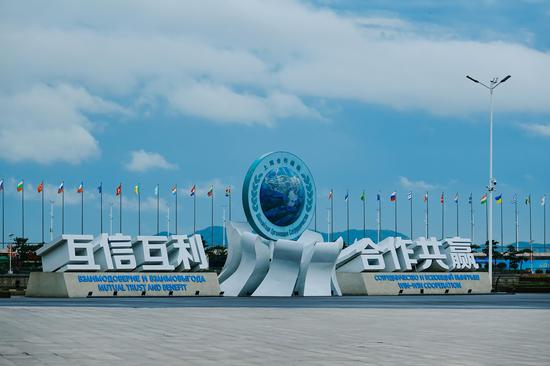
Nurzhanat Ametbek: Before the SCO was established in 2001, there were Shanghai Five countries, namely, China, Russia, Kazakhstan, Kyrgyzstan and Tajikistan, five neighboring countries who conducted negotiations since the early 1990s to solve border issues inherited from the Soviet Union. When the border issues were solved, it led to the establishment of trust, confidence and cooperation. In fact, SCO was established on the basis of this trans-border trust and cooperation.
Later, this atmosphere of trust and cooperation expanded and countries like India, Pakistan, and Iran became full members. By the way, In Astana SCO Summit Belarus will become a full member. The rising interest in SCO shows that SCO has become a prestigious international organization. In this context, the attendance of Recep Tayyip Erdogan, President of Turkey which is a member of NATO reveals that SCO is an open organization and against block politics understanding. The motto of Astana Summit is strengthening multilateral dialogue.
In the final analysis, SCO plays a crucial role in regional stability and development. When the international system is moving from a unipolar system to multipolarity, SCO is definitely a significant international organization.
About the Author