
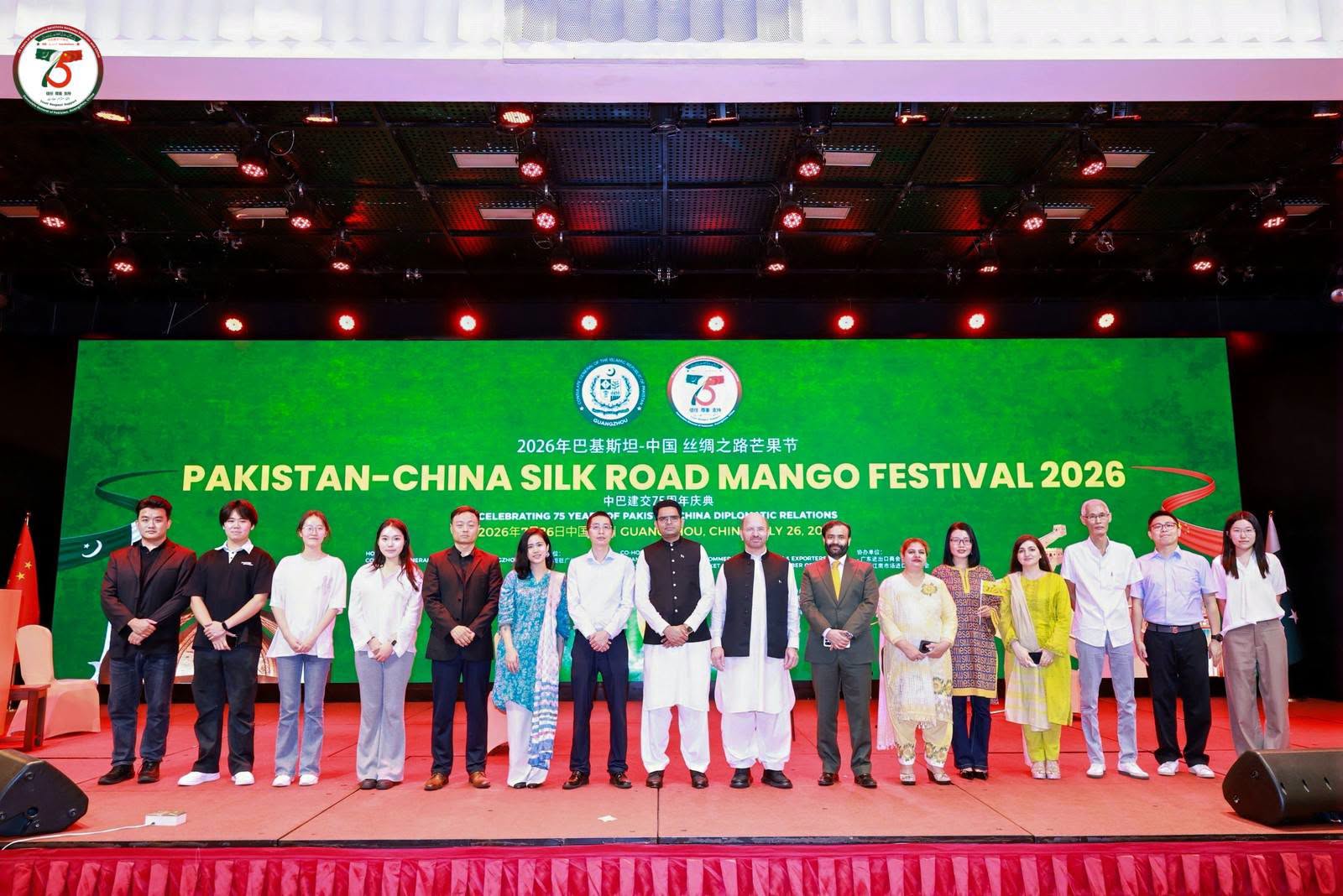
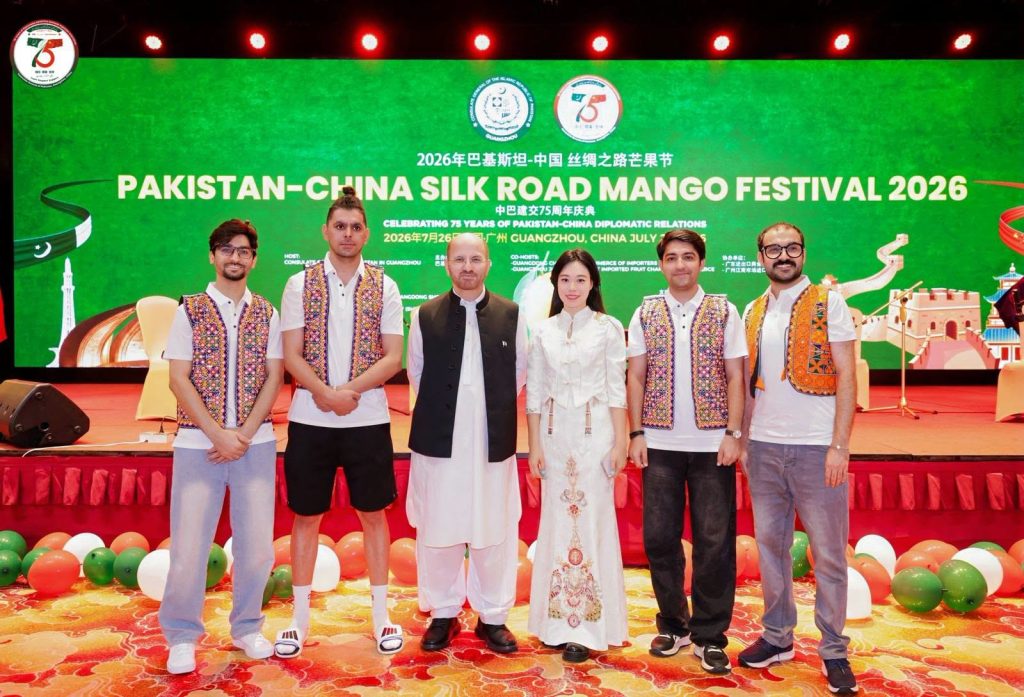
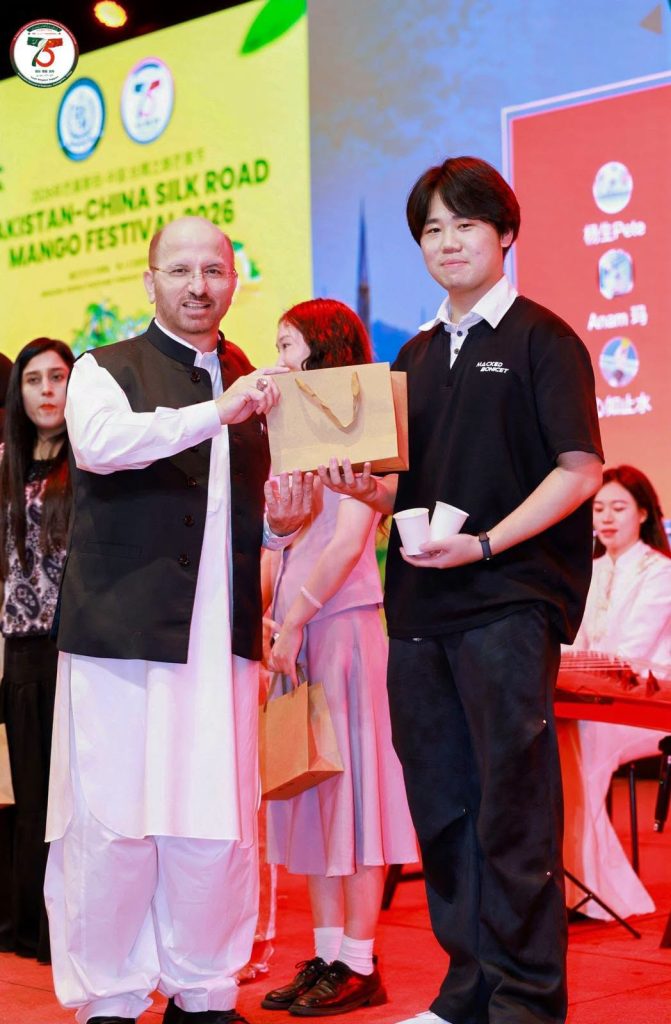
GUANGZHOU — The Consulate General of Pakistan in Guangzhou brought a taste of South Asian summer to southern China on 26 July 2026, organising the Silk Road Mango Festival 2026 as part of nationwide celebrations marking the 75th anniversary of diplomatic relations between Pakistan and China. The festival, co-hosted with the Guangdong Chamber of Commerce of Importers & Exporters and the Guangzhou Jiangnan Market Imported Fruit Chamber of Commerce, turned mangoes into a symbol of a friendship that has spanned three-quarters of a century.
A Diplomatic Milestone Wrapped in Mango Season
Pakistan and China established diplomatic relations in 1951, and 2026 marks 75 years of what both governments routinely describe as an “All-Weather Strategic Cooperative Partnership.” Throughout the year, Pakistani missions across China — from Beijing to Guangzhou — have organised a series of cultural and trade events to commemorate the milestone, with mangoes emerging as an especially popular centerpiece. Earlier this month, the Pakistan Embassy in Beijing hosted a similar festival at Pakistan House, drawing hundreds of guests. The Guangzhou edition extended that celebration to southern China’s commercial hub, a region with deep and growing import ties to Pakistani agricultural produce.
The Guangzhou event drew a wide cross-section of the city’s diplomatic and business community, including Consuls General, representatives of the Consular corps, officials from Foreign Affairs Offices, chamber of commerce leaders, entrepreneurs, scholars, students, and members of the local Pakistani community. The gathering reflected how food and trade diplomacy have become an effective bridge for building people-to-people ties alongside formal government engagement.
Mangoes as Ambassadors
Guests at the festival sampled a curated spread of Pakistan’s most celebrated mango varieties — Sindhri, Chaunsa, and Anwar Ratol — prized internationally for their fragrance, sweetness, and rich pulp. Beyond fresh fruit, the festival offered a range of mango-based creations, including mango milkshakes, mango yogurt shakes, mango custard, and mango ice cream, giving attendees a full sensory introduction to Pakistan’s mango culture.
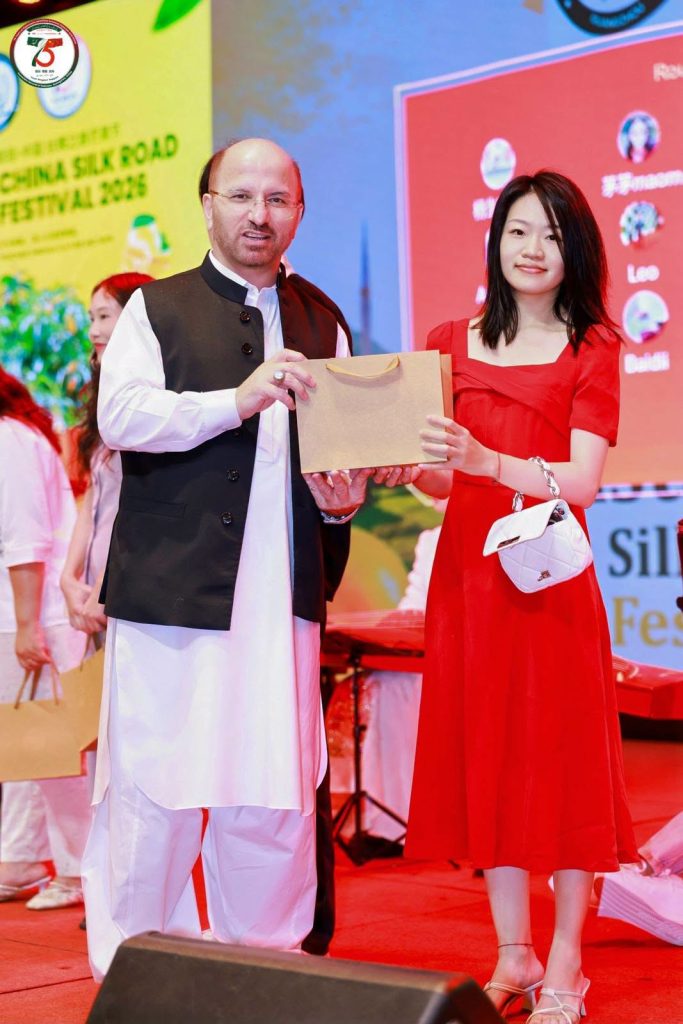
Pakistan is among the world’s top mango producers, with orchards concentrated in Sindh and Punjab that have supplied the fruit to South Asian, Gulf, and increasingly Chinese markets for years. Chinese demand for Pakistani mangoes has grown steadily as trade facilitation and cold-chain logistics have improved, making events like this festival as much about commerce as culture. Local co-hosts, the Guangdong Chamber of Commerce of Importers & Exporters and the Guangzhou Jiangnan Market Imported Fruit Chamber of Commerce, represent exactly the kind of trade networks that move Pakistani produce into Chinese supermarkets and fruit markets, underscoring the festival’s dual purpose of celebration and commercial promotion.
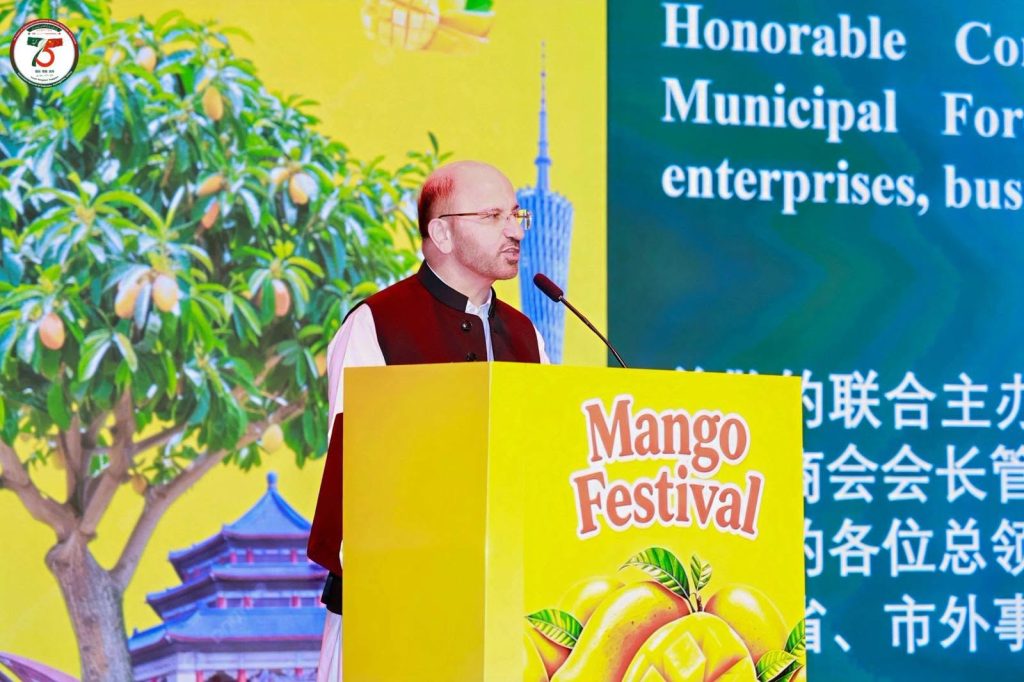
Music, Performance, and a Shared Stage
Beyond the fruit tables, the festival featured cultural performances blending Pakistani and Chinese traditional music, offering guests a live demonstration of how the two nations’ artistic traditions can share a single stage. Such performances have become a recurring feature of Pakistan-China cultural diplomacy, reinforcing the idea that the relationship extends well beyond government offices and trade ledgers into classrooms, concert halls, and community gatherings.
Pakistan’s Deeper Roots on the Silk Road
The festival’s name is no accident. Pakistan’s geography places it at a historic crossroads of the ancient Silk Road, the network of trade routes that once linked China to Central Asia, Persia, the Indian subcontinent, and the Mediterranean world. Regions of present-day Pakistan — including Gilgit-Baltistan, the Karakoram corridor, and the Indus Valley — served as vital passageways for caravans moving silk, spices, textiles, and ideas between Chinese dynasties and civilizations to the west. The legendary Karakoram Highway, built in the twentieth century along ancient trade paths through the Himalayas, is often called the “modern Silk Road” for the way it retraces those same historic connections between the two countries.
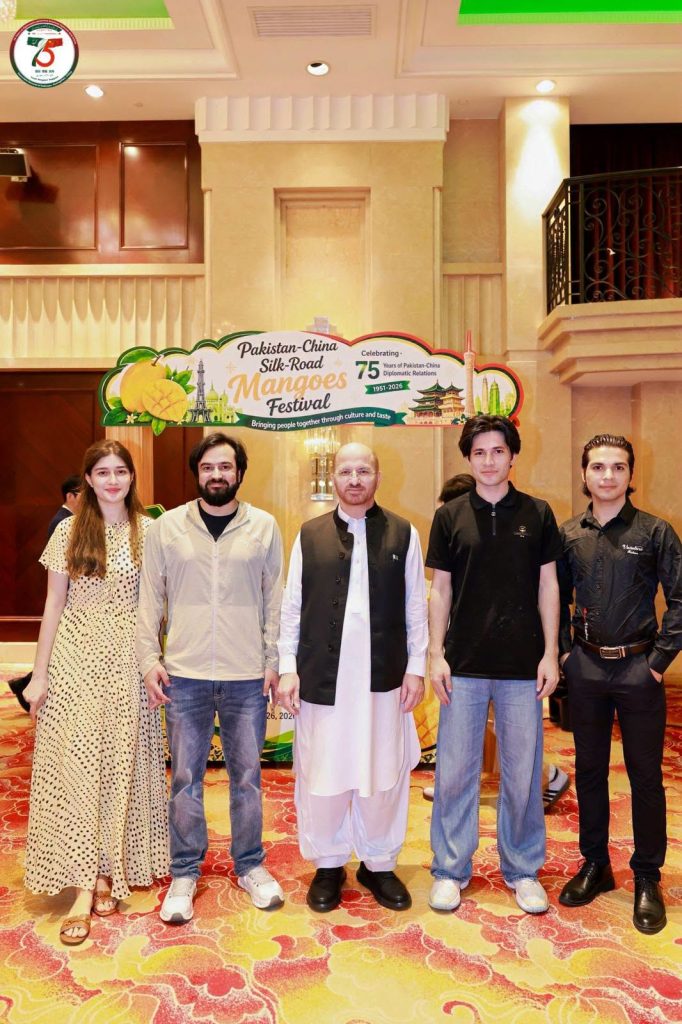
That centuries-old exchange of goods and culture laid the groundwork for the deep trust that characterizes Pakistan-China relations today. From the Silk Road’s caravans to the China-Pakistan Economic Corridor, a flagship project connecting Gwadar Port to western China, the throughline is continuity: two civilizations repeatedly finding new routes, literal and symbolic, to reach each other. Framing a mango festival under the “Silk Road” banner deliberately draws on this history, positioning modern trade in fruit as a continuation of an exchange that predates the modern nation-state itself.
A Sweet Symbol of a Strategic Partnership
In remarks shared around the event, Pakistani officials described the relationship using an apt metaphor: like the mango, the All-Weather Strategic Cooperative Partnership between Pakistan and China is rooted in trust, nourished by cooperation, and ripened by the warmth of the people on both sides. It is a fitting image for a relationship that Pakistani officials frequently describe as “higher than the mountains and deeper than the oceans,” now recast in the more approachable language of shared meals and shared harvests.
Cultural Connectivity Through Cuisine
What events like the Silk Road Mango Festival ultimately reveal is that diplomacy often travels most effectively through a dinner table rather than a conference room. Food has a unique capacity to dissolve language barriers and formality, inviting people to experience another culture directly rather than simply hearing about it. When Chinese guests in Guangzhou tasted Sindhri and Chaunsa mangoes alongside Pakistani milkshakes and custards, they were not just sampling fruit — they were participating in a centuries-old tradition of culinary exchange that has connected China with South Asia since the earliest Silk Road caravans carried dried fruits, spices, and recipes alongside silk and porcelain.
This is why cuisine so often anchors cultural diplomacy: a shared meal creates common ground faster than a shared communique. Pakistani biryani nights in Chinese cities, Chinese culinary festivals in Pakistani universities, and now mango festivals like this one in Guangzhou all serve the same purpose — turning abstract diplomatic language about “friendship” and “partnership” into something tangible that people can taste, discuss, and remember. As Pakistan and China look toward the next 75 years of relations, it is this kind of cultural connectivity — built one mango, one dish, and one shared table at a time — that may prove just as enduring as any formal treaty.
About the Author