

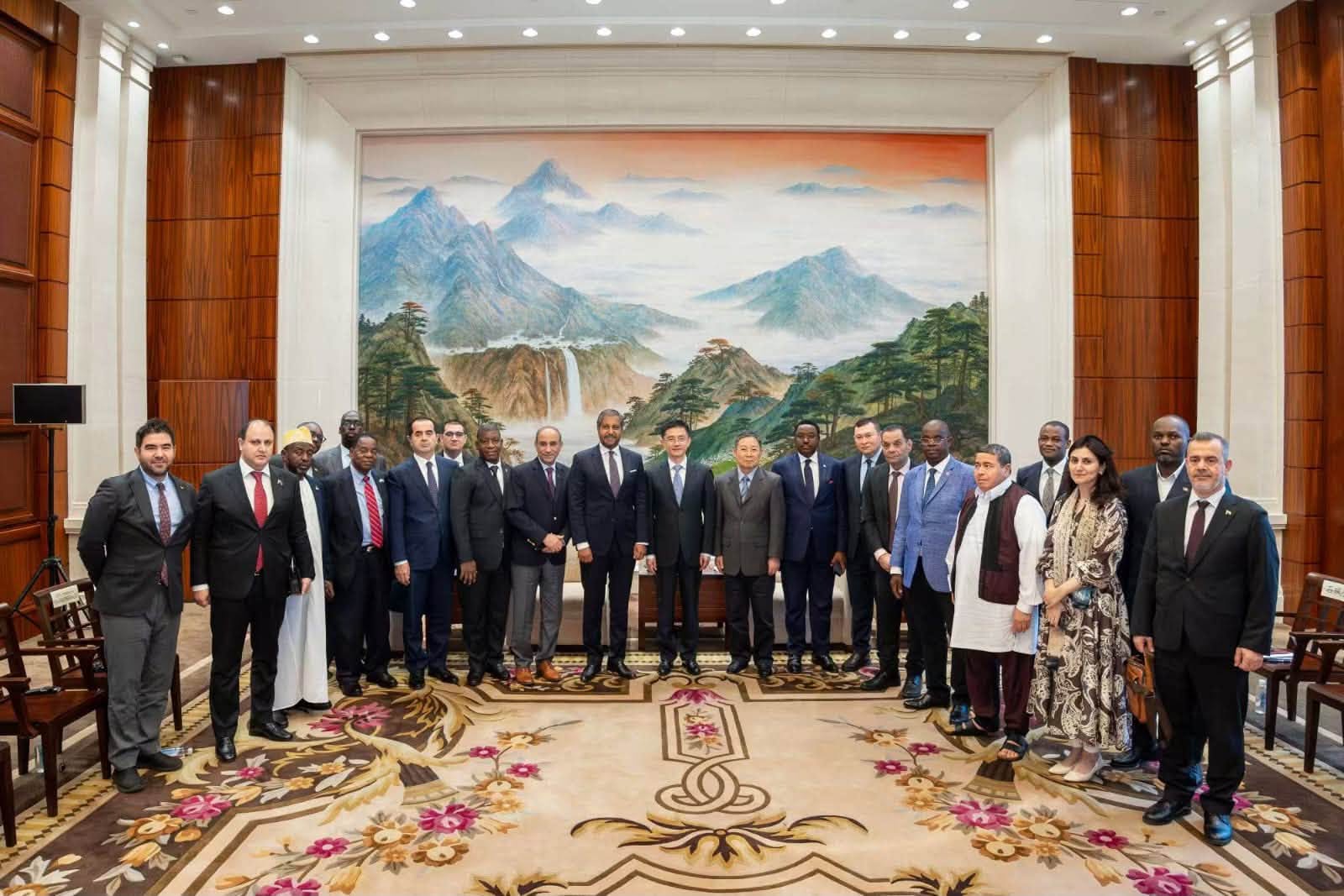
China Hosts A high-level OIC delegation representing 20 Member States to strengthen dialogue on political, economic, and cultural cooperation.
China Hosts a high-level OIC delegation representing 20 Member States and the General Secretariat, from September 3–8, 2026, to strengthen dialogue on political, economic, and cultural cooperation
OIC Delegation’s visit to Aims to Strengthen Dialogue and Cooperation in Cultural, Technology, Health and Development sectors
A high-level delegation representing 20 Organisation of Islamic Cooperation (OIC) Member States and the OIC General Secretariat is undertaking an official visit to the People’s Republic of China from September 3 to 8, 2026, at the invitation of China’s Ministry of Foreign Affairs. The visit forms part of what both sides describe as a constructive and ongoing dialogue between the OIC and China.
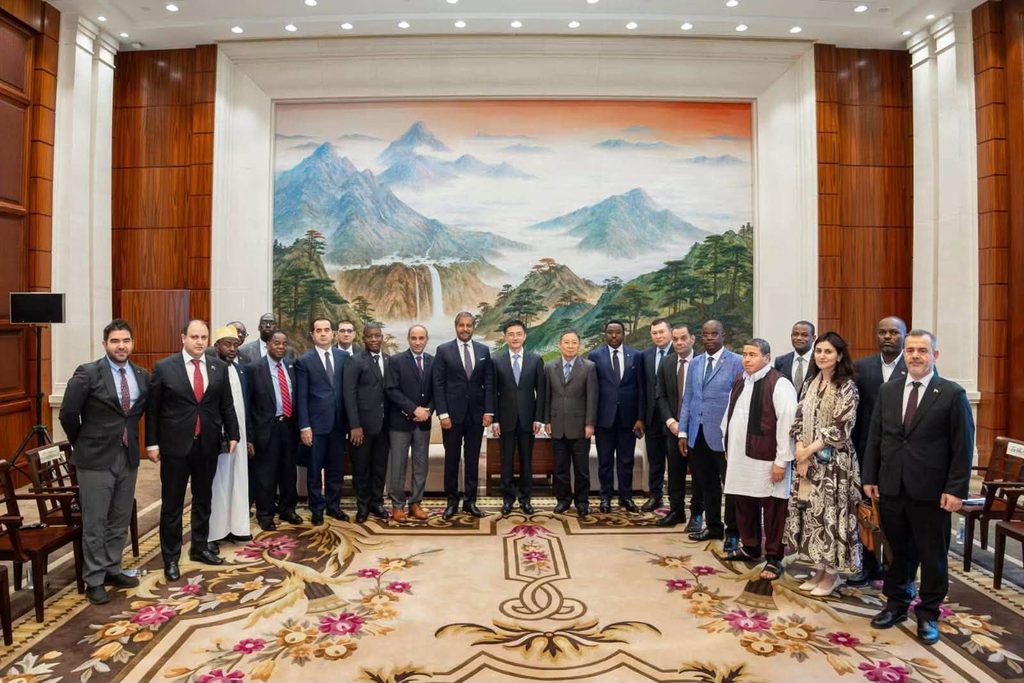
China Hosts A high-level OIC delegation representing 20 Member States to strengthen dialogue on political, economic, and cultural cooperation.
A Delegation Spanning Three Geographical Groups
The visiting delegation brings together ambassadors, delegates and representatives from across the OIC’s diverse membership, reflecting the organization’s three geographical groups. Among the senior figures leading the delegation is His Excellency Ambassador Dya-Eddine Said Bamakhrama, Ambassador of the Republic of Djibouti and Dean of the Diplomatic Corps in the Kingdom of Saudi Arabia, whose presence lends additional diplomatic weight to the mission. He is joined by a number of other delegates and representatives drawn from OIC Member States across the organization’s regional groupings.
The OIC General Secretariat itself is represented by His Excellency Mr. Yousef bin Mohammed Al-Dobeay, Assistant Secretary-General for Political Affairs, whose involvement signals the institutional importance the OIC has attached to the visit. His participation places the trip within the broader context of the OIC’s political engagement strategy, rather than treating it as a purely ceremonial or symbolic exercise.
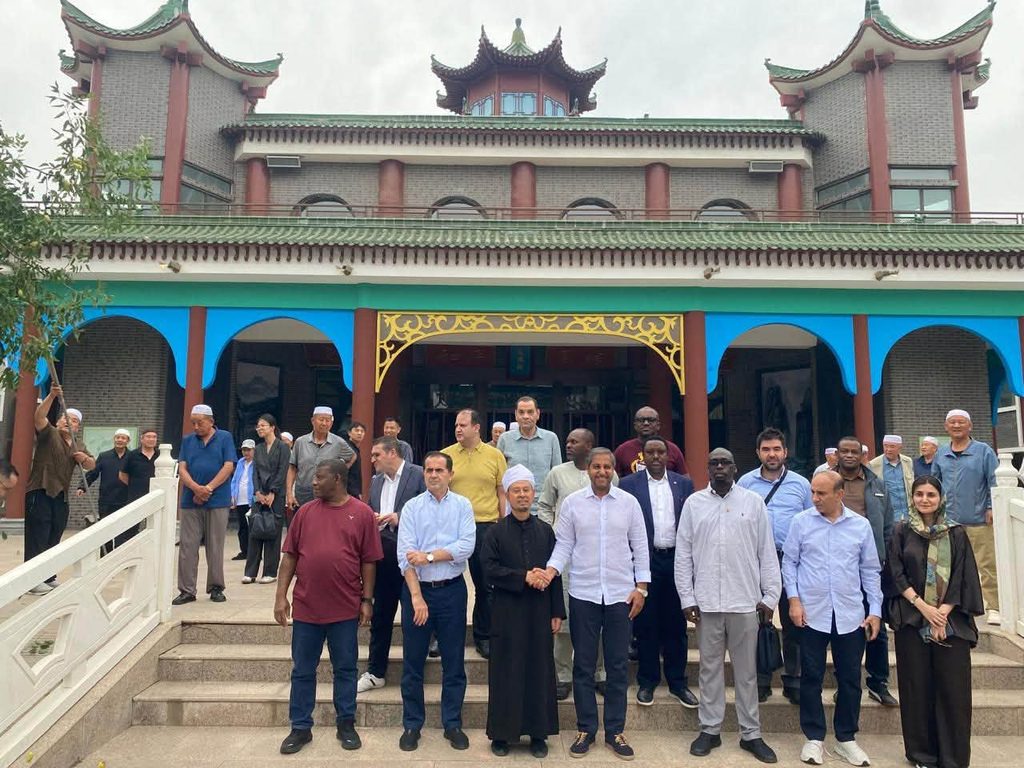
China Hosts A high-level OIC delegation representing 20 Member States to strengthen dialogue on political, economic, and cultural cooperation.
From Shanghai to Ningxia: A Multi-City Itinerary
The delegation’s visit began on Thursday, September 3, 2026, in Shanghai, one of China’s principal commercial and diplomatic hubs. There, delegates met with a number of high-ranking Chinese officials and visited several sites of particular significance to the visit’s themes, including the historic Shanghai Mosque — a landmark reflecting the long history of Muslim communities in China — as well as leading Chinese companies operating in the technology, health, and development sectors.
The itinerary is set to continue in the days following the Shanghai leg, taking the delegation to several cities in China’s Ningxia Hui Autonomous Region, an area home to a substantial Muslim population. According to details of the visit, this leg of the trip is intended to allow delegates to assess conditions faced by the Muslim community in Ningxia directly, alongside holding official meetings with representatives of China’s Ministry of Foreign Affairs and regional authorities. Officials have indicated that this stage of the visit is meant to help strengthen constructive dialogue and communication between the OIC and China across a range of fields.
Technology, Health and Development on the Agenda
The choice to include visits to Chinese companies in the technology, health, and development sectors during the Shanghai leg points to an agenda that extends beyond traditional diplomatic and religious-affairs discussions. By exposing delegates to Chinese firms operating in these fields, the visit appears designed to explore potential areas of practical cooperation between OIC Member States and China — areas that could feed into future economic, scientific, or development partnerships between Beijing and the Muslim-majority world.
This dimension of the visit reflects a broader pattern in China’s engagement with international partners in recent years, in which cultural and diplomatic exchanges are frequently paired with exposure to China’s commercial and technological sectors, positioning Chinese companies as potential partners for cooperation alongside government-to-government dialogue, and cultural connectivity for better understanding.
Assessing Conditions of Muslim Communities in China
A notable feature of the visit’s itinerary is the planned assessment of conditions faced by the Muslim population in Ningxia. This component of the trip suggests that the visit is intended, at least in part, to provide OIC representatives with a firsthand, on-the-ground perspective on the situation of Muslim communities in China — a subject that has drawn significant international attention and scrutiny in recent years, particularly concerning Muslim minority populations in other regions of the country. The inclusion of Ningxia, rather than other regions, focuses the delegation’s direct observations on a Hui Muslim community with a long-established presence in Chinese society.
Backgrounder: China and the Islamic World in a New Era
The OIC delegation’s visit comes against the backdrop of an increasingly active relationship between China and the broader Islamic world. Over the past decade, China has significantly deepened its engagement with Muslim-majority countries, driven in large part by the Belt and Road Initiative, which has drawn extensive Chinese investment into infrastructure, energy, and trade projects across the Middle East, Central Asia, South Asia, and parts of Africa — regions home to many OIC Member States.
Beyond economic ties, China has periodically sought to position itself as a partner for dialogue with the Islamic world on political and cultural matters, including through periodic high-level exchanges with the OIC itself, an organization that represents 57 member states and serves as the collective voice of the Muslim world on the international stage. Such engagements have typically sought to balance discussion of economic cooperation with attention to cultural and religious dimensions of the relationship, including the standing of China’s own Muslim population, which includes both the Hui community — concentrated in regions such as Ningxia — and other Muslim ethnic groups elsewhere in the country.
This visit, bringing together representatives from 20 OIC Member States alongside senior OIC leadership, represents one of the more substantial recent efforts to formalize and expand this dialogue, combining diplomatic meetings, exposure to China’s commercial and technological sectors, and direct engagement with Muslim communities within China itself.
Conclusion
The week-long visit by the OIC high-level delegation — spanning meetings in Shanghai and an extended itinerary in Ningxia — reflects a deliberate effort by both the OIC and China to broaden their dialogue beyond purely diplomatic exchanges into economic, technological, and community-level engagement. With senior representation from both the OIC General Secretariat and a wide cross-section of Member States, the visit signals continued momentum in China’s outreach to the Islamic world, even as questions about the treatment of Muslim communities in China remain part of the broader international conversation. The outcomes of the delegation’s meetings with Chinese officials in the coming days are likely to shape the next phase of OIC-China dialogue on political, economic, and cultural cooperation.
This article is based on the official details of the delegation’s visit as provided. The backgrounder section draws on general, publicly known context regarding China’s relations with OIC Member States and the Belt and Road Initiative; I was not able to independently verify additional specifics through web search, as browsing is not currently enabled in this conversation.
About the Author