

[ad_1]
-
Xinjiang — The Historic and Modern Gateway of Silk Road Connectivity
-
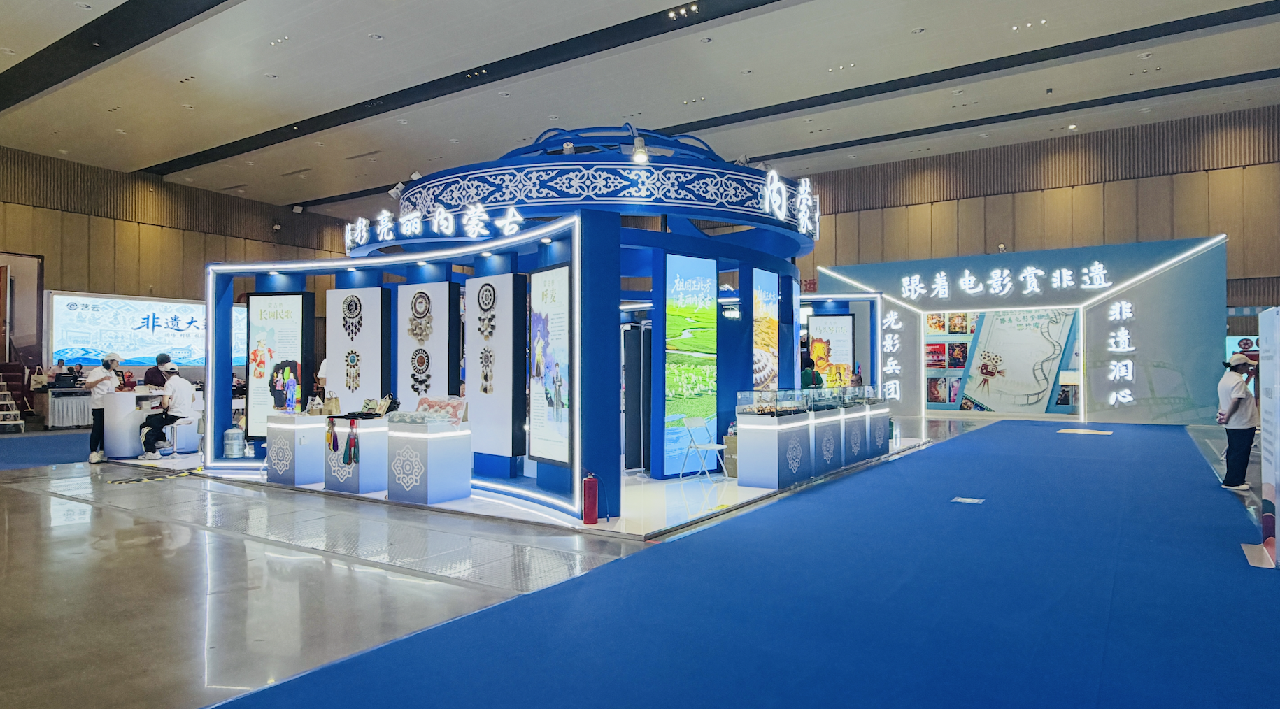
Xinjiang Hosts Cultural heritage artisans and classic folk artworks from across China at an exhibition in Shihezi county of Xinjiang.
By: Muhammad Arif, Editor NSN.Asia
Urumqi: An intangible cultural heritage exhibition has opened in Shihezi, Xinjiang, bringing together intangible cultural heritage artisans and classic folk artworks from across China.
From paper-cutting and clay sculpture to diverse ethnic costumes, and from traditional delicacies to folk song and dance performances, the event serves as a key cultural platform, enabling locals to experience the diversity of Chinese traditional cultures and promoting knowledge of China’s national intangible cultural heritage across the region.
Beyond on-site exhibitions, intangible cultural heritage inheritors from across China engaged in in-depth dialogues, co-created integrated cultural works, and built long-term partnerships to advance the innovation and inheritance of traditional folk culture.
-
Xinjiang — The Historic and Modern Gateway of Silk Road Connectivity
For more than two millennia, Xinjiang has served as one of Eurasia’s most important crossroads, linking China with Central Asia, South Asia, the Middle East, and Europe. From the caravans of the ancient Silk Road to today’s high-speed rail corridors and logistics hubs, the region has remained central to transcontinental connectivity.
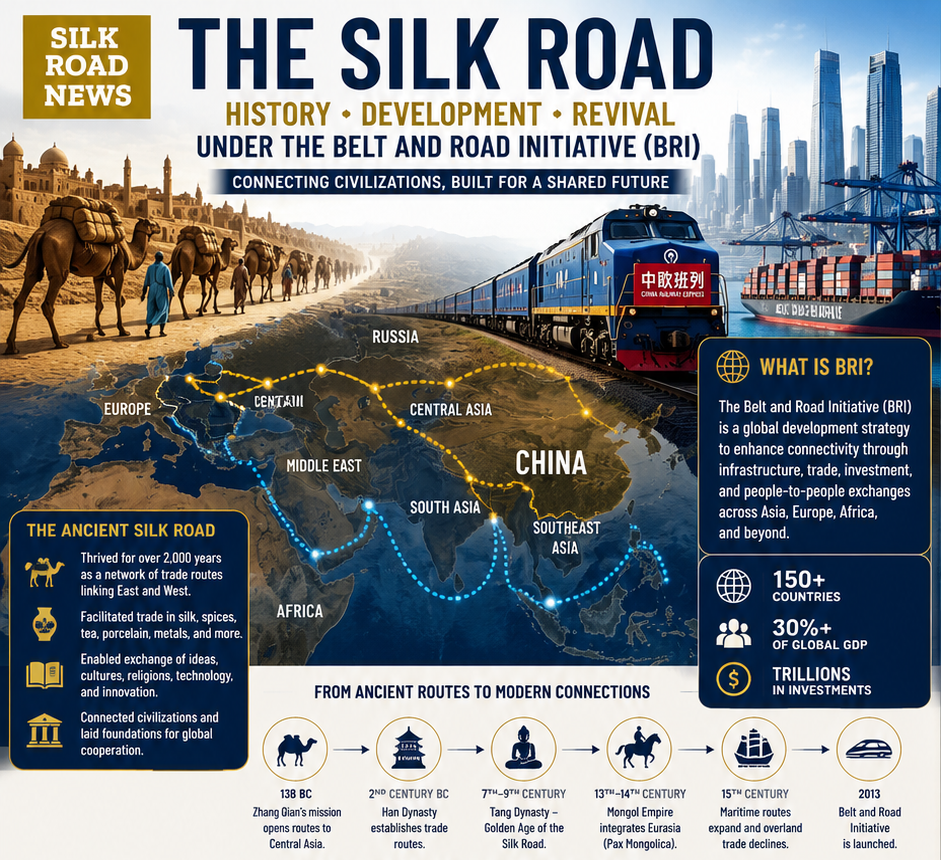
Beginning during the Han Dynasty, merchants, scholars, diplomats, and pilgrims traversed the Tarim Basin through oasis cities such as Kashgar, Hotan, Yarkand, and Turpan. These settlements became vibrant centers of commerce where silk, jade, spices, horses, paper, and porcelain were exchanged alongside religions, languages, scientific knowledge, and cultural traditions. Xinjiang connected East Asia with Persia, the Arab world, and ultimately Europe, making it one of history’s greatest corridors of civilization.
-
Present-Day Strategic Role
In the 21st century, this region has re-emerged as a pivotal gateway under China’s Belt and Road Initiative (BRI). Owing to its strategic location bordering eight countries, the region provides China’s principal overland access to Central Asia and onward to Europe through highways, railways, pipelines, and logistics networks. Cities such as Urumqi and Kashgar have developed into major transport and commercial hubs supporting international trade and regional connectivity.
-
Rail and Logistics Connectivity
The Urumqi International Land Port has become a major node for China–Europe freight services, linking manufacturing centers in eastern China with destinations across Central Asia, Russia, and Europe. Modern multimodal infrastructure—including rail terminals, expressways, dry ports, and customs facilities—has significantly reduced transport times compared with traditional maritime shipping for many categories of goods.
This automous region of China also anchors the northern end of the China–Pakistan Economic Corridor (CPEC), connecting Kashgar with Pakistan’s Gwadar Port through the Khunjerab Pass and the Karakoram Highway. This corridor is designed to strengthen trade, energy cooperation, industrial development, and regional economic integration between western China, Pakistan, and the Arabian Sea, while complementing broader Belt and Road connectivity across Eurasia.
-
Looking Ahead
As global supply chains continue to diversify, this city’s geographic position places it at the intersection of emerging trade corridors linking East Asia, Central Asia, South Asia, the Middle East, and Europe. Supporters view the region as a cornerstone of Eurasian connectivity and economic integration, while international observers also note that discussions surroundingthe this region encompass broader geopolitical and human rights issues beyond transport and trade
[ad_2]
About the Author