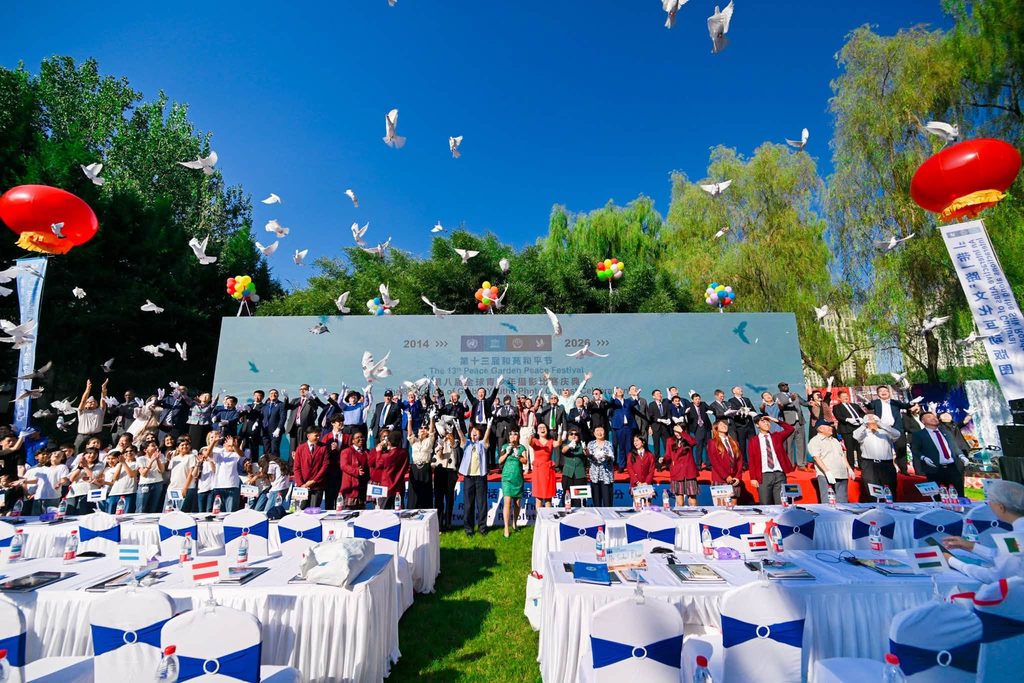
The 13th Peace Garden Peace Festival opened in Beijing on 21 September 2026, bringing the United Nations’ International Day of Peace into direct conversation with a narrative China and its regional partners have spent over a decade cultivating: the Silk Road Spirit. Held under the theme “New Silk Road, New Thinking Route: International Network Dialogue, Resolutions of Divergences and Conflicts,” the festival drew a formal greeting from Shanghai Cooperation Organisation Secretary-General Nurlan Yermekbayev, delivered on his behalf by Deputy Secretary-General Sohail Khan — a message that offers a compact case study in how two very different peacebuilding traditions, one rooted in universal UN mandate and the other in cultural and civilisational narrative, are increasingly being woven together.
A Theme Built for the Moment
The timing was no coincidence: organisers deliberately scheduled this year’s festival to coincide with the International Day of Peace. The theme itself is worth sitting with, too. It does not simply invoke the Silk Road as a historical metaphor for connection, but explicitly frames it as a “thinking route” — a pathway not for goods or capital, but for dialogue capable of resolving divergence and conflict. That framing positions cultural and intellectual exchange as a peacebuilding tool in its own right, on equal footing with the diplomatic and security mechanisms more conventionally associated with conflict resolution.
The SCO’s Message: Diversity as Resource, Not Risk
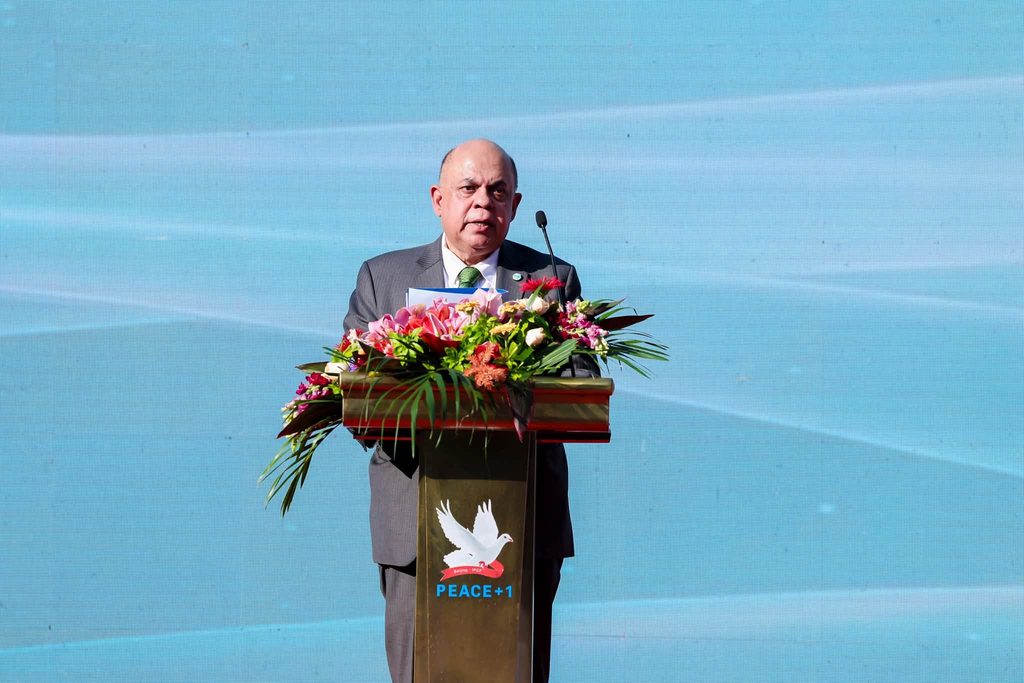
SCO Secretary-General Nurlan Yermekbayev’s greeting to festival participants, delivered on his behalf by Deputy Secretary-General Sohail Khan, articulated a specific philosophical position on the relationship between cultural diversity and international stability. “The SCO proceeds from the premise that the diversity of civilizations and cultures is an important resource for international cooperation,” Yermekbayev stated. “At the same time, culture remains a universal language of communication that helps maintain dialogue and form a solid foundation for peace, good-neighbourliness and sustainable development.”
This is a notable framing choice. In much international discourse, civilisational and cultural diversity is treated primarily as a source of friction to be managed — a variable requiring careful diplomatic handling to prevent misunderstanding or conflict. Yermekbayev’s message inverts that framing, presenting diversity instead as a resource that strengthens cooperation, provided it is channelled through sustained dialogue. He added that this understanding is precisely why SCO member states have been steadily expanding interaction along the cultural and humanitarian track — an indication that, within the organisation’s broader architecture spanning security, economic, and political cooperation, cultural exchange is increasingly treated as a deliberate, formalised pillar rather than a peripheral gesture.
The choice to have Deputy Secretary-General Sohail Khan personally deliver the message, rather than issuing a written statement alone, also signals the weight the organisation placed on ensuring direct representation at the event.
Backgrounder: How the World Arrived at a Fixed Peace Day
The International Day of Peace did not begin as the fixed, globally synchronised observance it is today. The United Nations General Assembly first proclaimed the day in 1981 through resolution 36/67, initially anchoring its observance to the third Tuesday of September — a date that shifted each year depending on the calendar. Two decades later, in 2001, the General Assembly unanimously adopted resolution 55/282, fixing the date permanently at 21 September starting in 2002, and crucially designating it as a day of global ceasefire and non-violence.
That shift, from a floating calendar date to a fixed one carrying an explicit ceasefire mandate, mattered. It transformed the day from a loosely symbolic gesture into something with a concrete, if largely aspirational, ask directed at every UN member state and, implicitly, at parties to conflict everywhere: lay down arms, even briefly, on this one date. In the years since, that ask has been kept visible less through enforcement — the UN has no mechanism to compel a ceasefire — than through the accumulation of public observances, humanitarian appeals, and cultural events held annually around the world, of which Beijing’s Peace Garden Peace Festival is one recurring example.
Two Traditions, One Convening Point
What makes this year’s festival notable is not the SCO’s presence alone, but the specific alignment between two peacebuilding vocabularies that don’t automatically overlap. The UN’s Peace Day rests on universal, treaty-based legitimacy — a single date observed, at least nominally, by every member state regardless of political system or regional alignment, built around a concrete, if unenforceable, demand. The Silk Road Spirit is a more particular narrative, rooted in a specific historical memory of trade and exchange along ancient routes connecting China with Central Asia, the Middle East, and beyond, and has become a recurring rhetorical anchor for China’s Belt and Road Initiative and, increasingly, for institutions closely aligned with it, including the SCO.
These two traditions are not naturally identical, but they share a structural premise: that sustained contact and dialogue between different peoples and systems reduces, rather than increases, the likelihood of conflict. Beijing’s festival, by explicitly theming itself around a “New Silk Road” of dialogue on the same date the UN has set aside for global ceasefire, functions as a deliberate point of convergence between the two — one that allows an organisation like the SCO to situate its own cultural diplomacy squarely within a universally recognised international observance, lending it a legitimacy that a purely China-specific framing might not carry on its own.
Conclusion: What the Convergence Is Worth
Whether this convergence between UN Peace Day and Silk Road Spirit amounts to more than complementary rhetoric is the harder question, and one that a single festival greeting cannot answer. Cultural dialogue is, by most measures, a necessary but insufficient condition for peace — valuable for building the kind of sustained familiarity that makes cooperation easier, but not, on its own, capable of halting an active conflict or resolving a territorial dispute. The UN’s own experience with the International Day of Peace over more than four decades illustrates the point: the observance has grown in visibility and symbolic weight without acquiring any binding force, and armed conflicts have continued, in many years, on 21 September itself.
What events like the Peace Garden Peace Festival offer is narrower but not therefore negligible: a recurring, low-cost opportunity for institutions and individuals across different political and cultural traditions to use a shared vocabulary — dialogue, diversity as resource, civilisational exchange — even when their underlying interests and systems diverge sharply elsewhere. The real test of the Silk Road Spirit’s convergence with the UN’s peace ideal will not be found in any single greeting or festival theme, but in whether the habits of engagement they promote outlast the ceremony — whether the “New Thinking Route” this year’s festival invoked proves capable of carrying difficult conversations, not just celebratory ones, once the Peace Garden’s lanterns are packed away and the next 21 September approaches with its own unresolved conflicts still waiting for the ceasefire the day was designed to call for.
]]>Digital Infrastructure and E-Commerce as Connective Tissues linking China with ASEAN under Silk Road Spirit
## AI Takes Center Stage: A Marketplace Built for Matchmaking
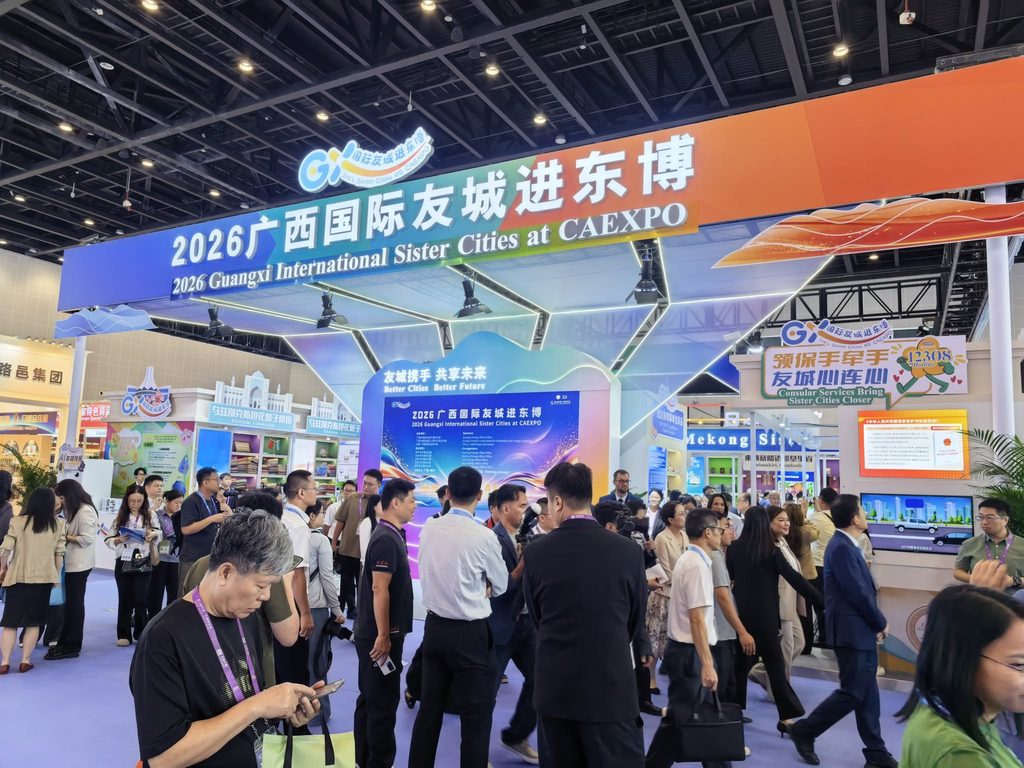
The most striking evidence of this shift is the expo’s first-of-its-kind AI marketplace, featuring more than 500 AI products organized across a dedicated main venue and sub-venue, each with a distinct focus. Rather than functioning as a general technology showcase, the marketplace has been deliberately structured as a matchmaking mechanism, designed to connect specific Chinese AI solutions directly with identified ASEAN needs.
This approach marks a meaningful evolution from earlier trade-fair models. Instead of leaving digital cooperation to develop organically through general business networking, organizers have built infrastructure — quite literally — to pair supply with demand at scale. A new exhibition area introduced this year reinforces the point, spotlighting specific ASEAN country demand for projects and applications across transport, smart logistics, AI, urban management, and industrial park development, effectively turning the expo floor into a live demand-mapping exercise for the region’s digital transformation.
## Digital Infrastructure and E-Commerce as Connective Tissue
Beyond AI specifically, this year’s expo has placed sustained emphasis on the broader digital infrastructure and e-commerce architecture needed to knit China and ASEAN economies together. The event’s roughly 170,000 square meters of exhibition space includes dedicated sections on digital communications alongside AI and green development, reflecting an understanding among organizers that artificial intelligence adoption cannot be separated from the underlying connectivity — networks, logistics platforms, and cross-border digital payment and trade systems — that allows it to scale regionally.
E-commerce, in particular, has become one of the more tangible expressions of China-ASEAN digital integration in recent years, with cross-border online retail platforms increasingly serving as an accessible entry point for small and medium enterprises on both sides to reach new markets without the capital investment traditionally required for physical trade infrastructure. The expo’s more than 50 trade and investment promotion activities held throughout the week provide structured venues for exactly this kind of enterprise-level deal-making, layered underneath the broader diplomatic and policy programming.
## Green Development as a Parallel Track
Running alongside the digital and AI focus is a dedicated green development track, underscoring that China-ASEAN cooperation under CAFTA 3.0 is not treated as a single-issue agenda. The pairing is a deliberate one: digital infrastructure and green industry are increasingly discussed together in regional economic planning, given that data centers, AI computing, and digital logistics all carry significant energy demands — and both China and ASEAN economies face pressure to scale these technologies without abandoning climate and sustainability commitments.
## CAFTA 3.0: The Framework Behind the Push
This year’s theme, “CAFTA 3.0 Opportunities, Better Life,” makes explicit what the expo’s programming implies: that the latest upgrade to the China-ASEAN Free Trade Area is intended to formally expand coverage into exactly these digital-era sectors, alongside more traditional goods trade. The AI marketplace, the digital communications section, and the e-commerce-oriented promotional activities are best understood as an early, applied expression of what a CAFTA 3.0 framework is meant to enable — moving the trade relationship’s center of gravity toward services, data, and technology alongside physical goods.
## Guangxi’s Expanding Role as a Digital Gateway
The choice of Guangxi as host continues to carry strategic logic in this new digital context. During the expo, ASEAN Secretary-General Dr. Kao Kim Hourn met with Guangxi Governor H.E. Wei Tao, discussing cooperation spanning trade and investment, connectivity, tourism, and people-to-people exchanges. Dr. Kao specifically described Guangxi’s role as a gateway connecting China and ASEAN, encouraging deeper collaboration under the ASEAN-China Comprehensive Strategic Partnership.
That “gateway” framing, historically tied to Guangxi’s physical geography and border proximity to Vietnam, is increasingly being extended to the digital domain as well — positioning the region not just as a logistics corridor for goods, but as a coordination hub for the platforms, standards, and partnerships needed to scale AI and e-commerce cooperation across a diverse set of ASEAN economies at very different stages of digital development.
Timor-Leste’s debut as co-host this year adds a further dimension to this expanding footprint, bringing one of ASEAN’s newer and still-developing economies directly into an event increasingly oriented around next-generation digital and green industries — a signal that the digital cooperation agenda is meant to be inclusive of ASEAN’s full range of members, not concentrated only among its most digitally advanced.
## Conclusion: Connectivity for the AI Age
For two decades, the China-ASEAN Expo’s core narrative was one of physical connectivity — roads, ports, and cross-border trade volumes echoing the ancient Silk Road’s caravan routes. This year’s edition suggests that narrative is being rewritten for a different kind of terrain. The routes now being built run through data infrastructure, AI marketplaces, and e-commerce platforms as much as through highways and shipping lanes, and the “gateway” that Guangxi represents is increasingly digital as well as geographic.
Whether this Digital Silk Road matures into deep, mutually beneficial integration will depend on questions that go well beyond any single expo: how ASEAN’s diverse economies absorb and adapt AI technologies developed elsewhere, how e-commerce and digital infrastructure investment translate into local capacity rather than dependency, and how green development commitments keep pace with the energy demands of the digital systems being built. What is clear from Nanning this year is the direction of travel — a Silk Road Spirit of openness and mutual benefit now being explicitly extended into servers and algorithms, with the region’s next chapter of connectivity being written as much in code as in concrete.
AI Takes Center Stage at the 23rd China-ASEAN Expo held in Nanning, south China’s Guangxi Zhuang Autonomous Region,China
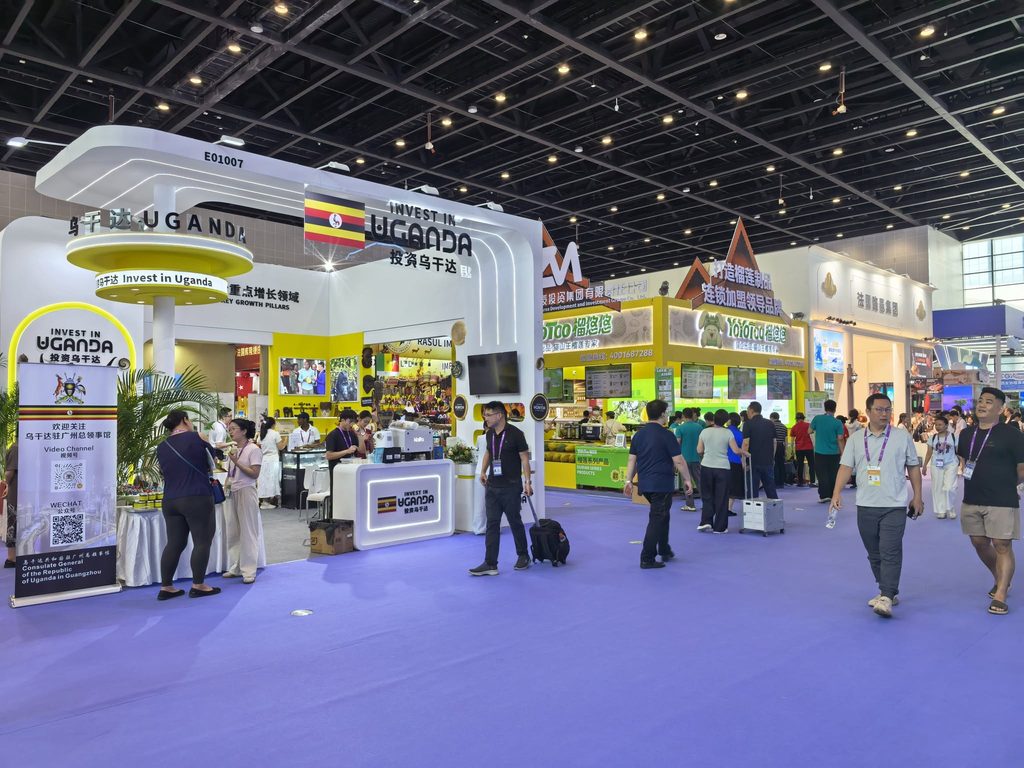
Nearly a quarter-century after China and ASEAN first launched their annual the 23rd China-ASEAN Expo as a platform for goods trade, this year’s 23rd edition in Nanning, Guangxi Zhuang Autonomous Region, signals a distinctly different kind of connectivity taking shape. Running from September 17 to 21 and drawing more than 3,400 companies from over 70 countries and regions, the expo’s headline moments this year center less on shipping containers and more on servers, algorithms, and digital supply chains — a shift that organizers and officials alike are framing as an extension of the Silk Road Spirit into the digital and AI era.

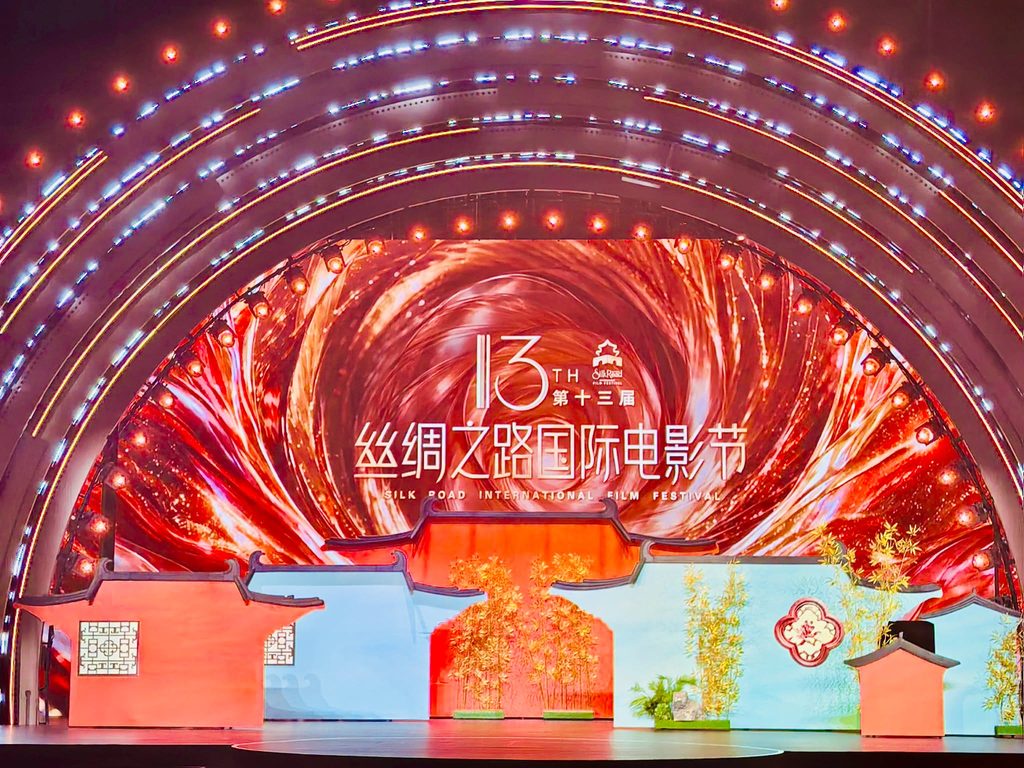
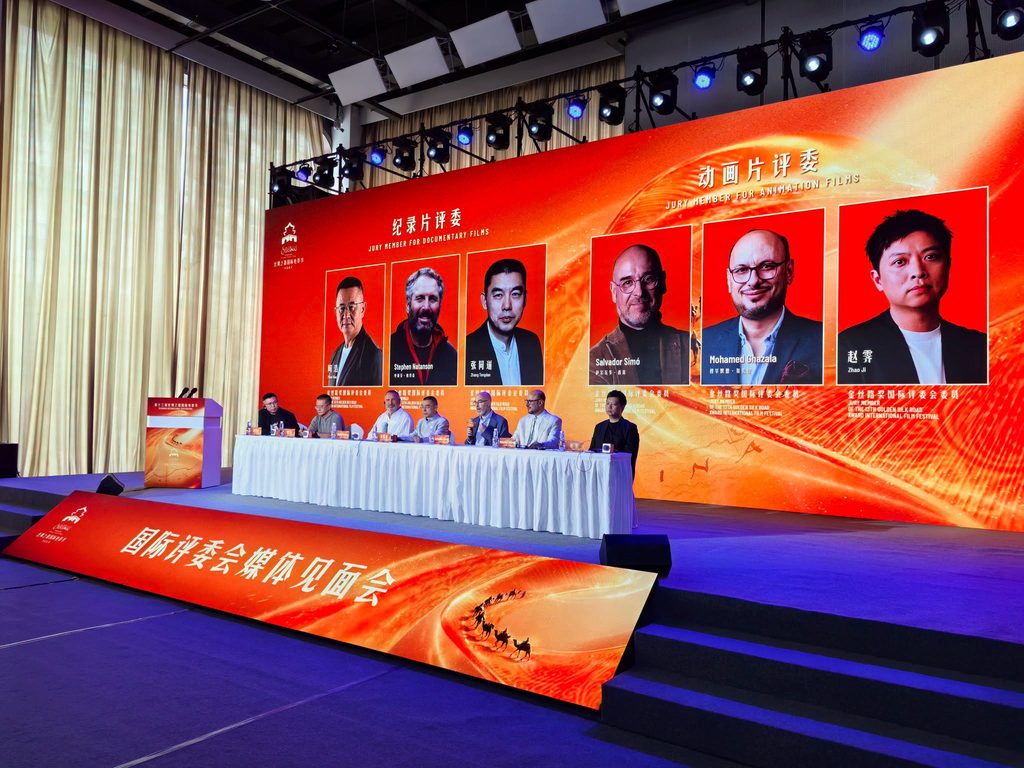
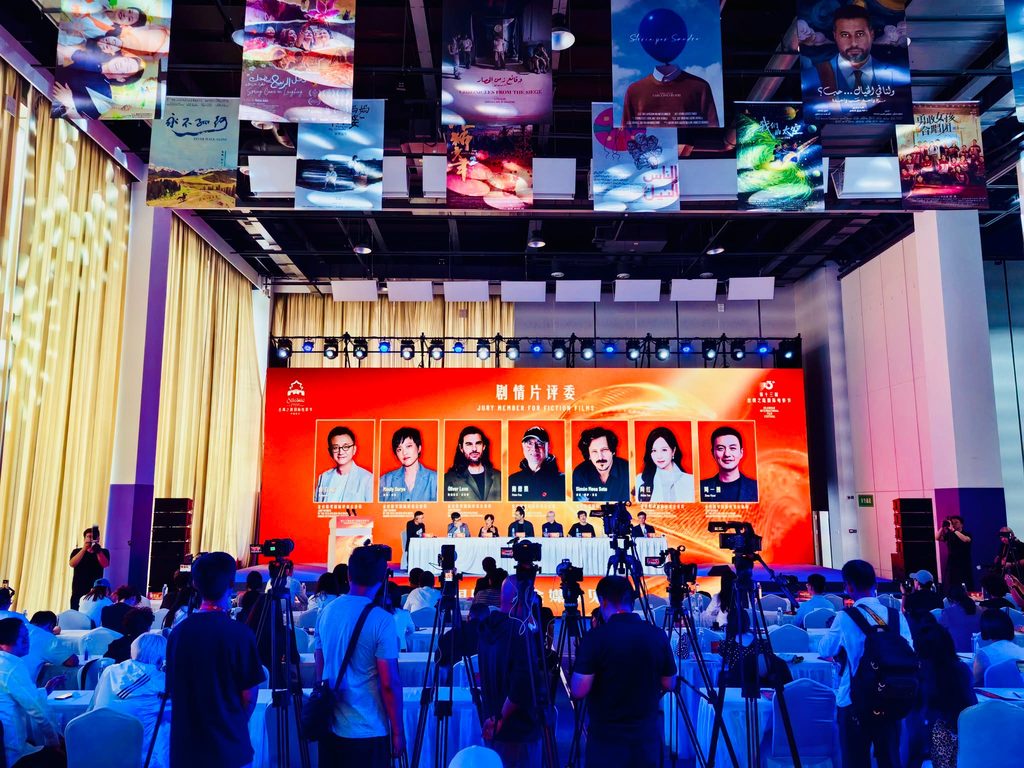
The 13th Silk Road International Film Festival opened in Xi’an City, Shaanxi Province, running from September 19 to 23, 2026, bringing together filmmakers, industry professionals, and audiences from across the Silk Road region and beyond. Now well into its second decade, the festival has become one of China’s most prominent platforms for positioning cinema as a vehicle for cross-border cultural exchange under the framework of the Belt and Road Initiative.
A Festival Rooted in the Belt and Road Framework
Officially established in 2014, the Silk Road International Film Festival is hosted alternately by Shaanxi and Fujian provinces — two regions chosen for their historical resonance with the ancient Silk Road’s overland and maritime routes respectively. This year’s edition was organized by the People’s Government of Shaanxi Province, the People’s Government of Fujian Province, and China Media Group, with the Ministry of Culture and Tourism formally approving and filing the hosting of the event in August 2026.
The festival’s structure reflects its founding purpose: rather than functioning purely as a domestic showcase, it is explicitly designed as an international platform connecting film industries across the dozens of countries linked, historically and symbolically, by Silk Road trade routes.
From Global Call for Entries to Cairo Screen Dialogue
The road to this year’s festival began months earlier. In May 2026, the Competition Section of the 13th edition officially opened its call for entries to filmmakers worldwide, with submissions closing at midnight on July 10, 2026.
In between, organizers took the festival’s outreach on the road quite literally. In early July 2026, the Silk Road International Film Festival’s Executive Committee, together with the Western Film Group and other partner organizations, held the opening ceremony of the “Chang’an–Cairo Screen Dialogue – 2026 China-Egypt Western Film Week” in Cairo, Egypt. The event was designed to deepen film-cultural exchange between China and Egypt, build anticipation for the Xi’an festival, and directly invite participation from the Egyptian film industry. The Cairo programme was structured around three core components: film screenings, institutional matchmaking between industry stakeholders, and broader cultural exchange activities — a format that underscores how the festival increasingly functions as a year-round diplomatic and industry engagement effort rather than a single week-long event.
Registration Standards Aimed at Global Competitiveness
The festival’s registration specifications reflect an effort to maintain international competition standards. Feature films and animated films submitted for competition were required to run no less than 70 minutes, while documentaries needed a minimum runtime of 60 minutes. All eligible films had to have been completed after January 1, 2025, ensuring the competition showcased recent work. Films with dialogue in languages other than Mandarin Chinese were required to carry English or Chinese subtitles, while any Chinese films submitted for evaluation needed to hold a valid Public Screening License. The required technical screening format was DCP (Digital Cinema Package), the industry standard for theatrical exhibition. Under equal conditions, organizers indicated that priority would be given to films receiving their World Premiere or International Premiere at the festival — a standard practice among major film festivals seeking to establish prestige and draw premiere-seeking filmmakers.
Backgrounder: The Silk Road Spirit and the Case for Cultural Connectivity
The ancient Silk Road, which for roughly two millennia linked China with Central Asia, the Middle East, Africa, and Europe through overland and maritime trade routes, has long been invoked in Chinese cultural diplomacy as a symbol of exchange predating modern geopolitics — a historical precedent for connection built on commerce, ideas, and mutual curiosity rather than confrontation. Since the launch of the Belt and Road Initiative in 2013, Chinese officials have frequently framed contemporary infrastructure and economic cooperation as an extension of what is often termed the “Silk Road Spirit”: peace and cooperation, openness and inclusiveness, mutual learning, and mutual benefit.
Cultural and cinematic connectivity forms a specific strand of this broader initiative, running parallel to the infrastructure and trade corridors more commonly associated with Belt and Road projects. Film festivals, in particular, offer a lower-cost, high-visibility mechanism for cultural diplomacy: they generate media coverage, facilitate direct industry relationships between producers and distributors across borders, and create opportunities for audiences in participating countries to encounter cinema — and by extension, cultural narratives — from nations they might otherwise have limited exposure to.
The Cairo Screen Dialogue exemplifies this approach in practice. Rather than simply issuing an open call for international submissions, organizers proactively built relationships with a specific national film industry months ahead of the main event, treating festival participation as something to be cultivated through direct institutional engagement rather than left to organic interest.
The Way Forward
As the Silk Road International Film Festival enters its second decade, its trajectory offers a useful lens on how China is refining its approach to cultural diplomacy: less reliant on symbolism alone, and increasingly structured around sustained institutional relationships, industry matchmaking, and international outreach efforts conducted well ahead of the festival itself. Whether this year’s edition succeeds in expanding genuine international participation — as opposed to primarily domestic and regional entries — will likely shape how much further organizers invest in initiatives like the Cairo dialogue for future editions, as the festival continues positioning cinema as connective tissue within the broader Belt and Road framework.
]]>BISHKEK — Kyrgyzstan and China have taken a landmark step in their bilateral relationship, with President Sadyr Japarov and Chinese President Xi Jinping signing a Treaty on Everlasting Good-Neighborliness, Friendship, and Cooperation between the two nations. The historic signing ceremony took place in Bishkek following extensive bilateral talks between the two leaders, marking a new chapter in Kyrgyz-Chinese relations.
The agreement comes as Bishkek hosts a series of high-level discussions on pressing international issues, with the talks unfolding on the sidelines of the Shanghai Cooperation Organisation (SCO) Summit — one of the most significant multilateral gatherings of the year.
A Foundation for Deeper Strategic Partnership
Speaking ahead of the signing, President Sadyr Japarov emphasized the treaty’s long-term significance, noting that the document will “lay a solid foundation for the further qualitative development of the comprehensive strategic partnership” between Kyrgyzstan and China. The treaty formalizes decades of growing cooperation between the two neighboring nations and signals a deepened commitment to mutual trust, regional stability, and economic collaboration.
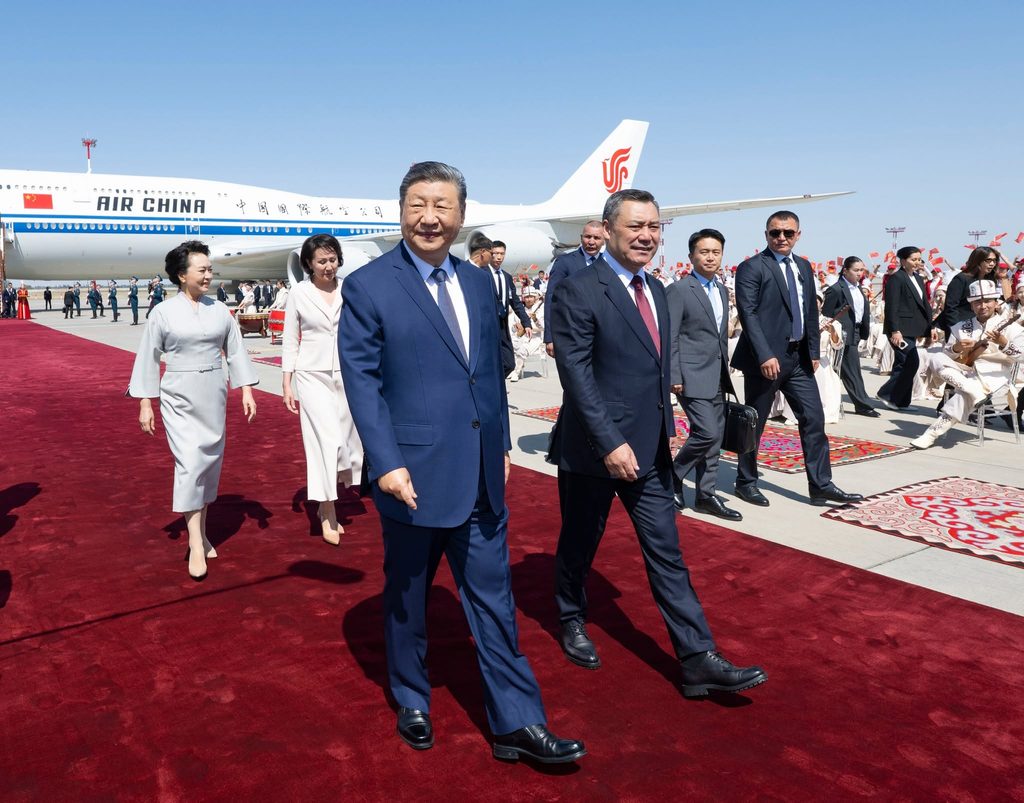
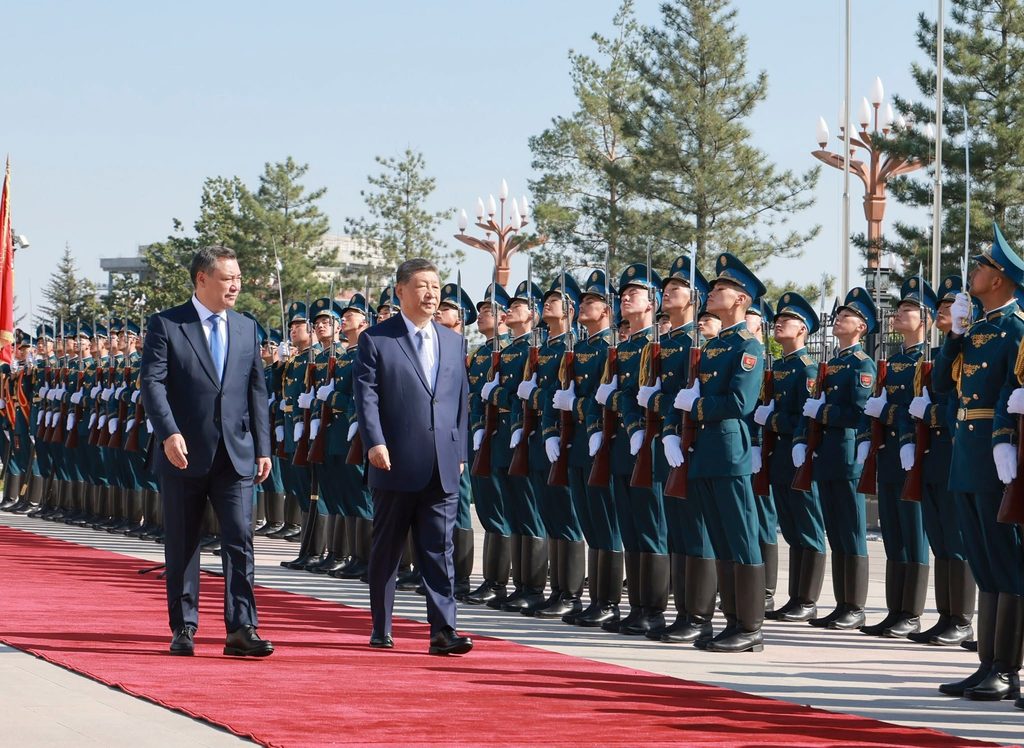
Chinese President Xi Jinping arrived in Bishkek to attend the Shanghai Cooperation Organization Summit 2026 and pay a state visit to Kyrgyzstan.
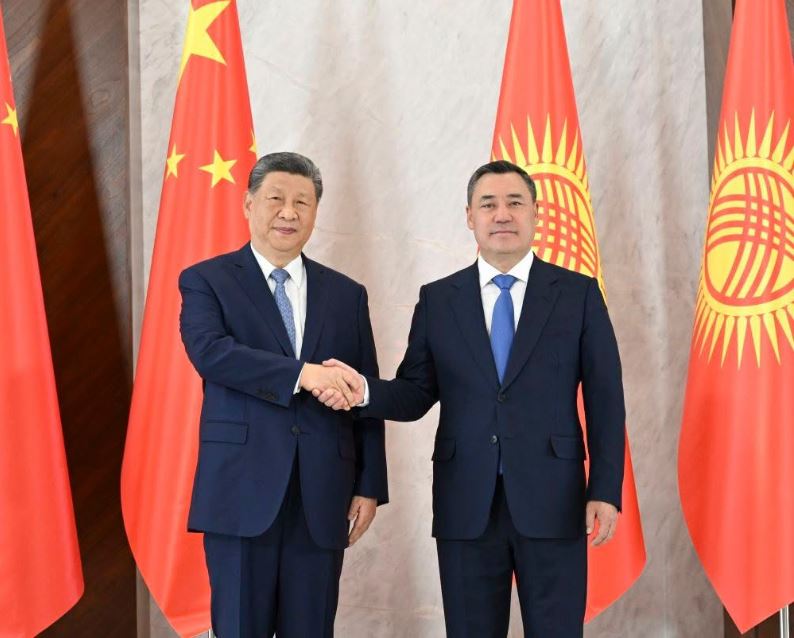
In total, 32 documents were signed during the talks between the two delegations. Beyond the central friendship treaty, the remaining agreements span a wide array of sectors, reflecting the breadth of cooperation between the two governments. These include accords at the Cabinet of Ministers and departmental levels covering:
- Border management and security
- Operations at the Bedel checkpoint
- Trade and economic cooperation
- Transport and infrastructure connectivity
- Agriculture
- Science and technology
- Education
- Culture
- Media and information exchange
The breadth of these agreements underscores the scale of the strategic relationship Kyrgyzstan and China are building, extending far beyond diplomatic symbolism into concrete, actionable cooperation across nearly every sector of governance and public life.
Xi Jinping’s State Visit and SCO Participation
Chinese President Xi Jinping is currently in Kyrgyzstan on an official state visit, one that coincides with his participation in two major multilateral events: the SCO Council of Heads of State meeting and the SCO Plus summit. His presence in Bishkek highlights the growing importance Beijing places on Central Asia as a strategic and economic partner, particularly amid shifting global geopolitical dynamics.
The two-day Shanghai Cooperation Organization summit officially began in Bishkek on Monday, August 31, drawing a high-profile roster of world leaders. Alongside Xi Jinping, Russian President Vladimir Putin and more than a dozen other heads of state and government are taking part in the summit, making it one of the largest diplomatic gatherings hosted by Kyrgyzstan in recent memory.
The SCO, which brings together major Eurasian powers to coordinate on security, economic, and political matters, has increasingly become a platform for countries seeking alternatives to Western-led international frameworks. Bishkek’s role as host this year places Kyrgyzstan firmly at the center of regional diplomacy.
Xi Jinping Highlights “Community With a Shared Future”
During his meeting with President Japarov, Xi Jinping outlined China’s vision for the future of bilateral relations, stating that Beijing is ready to work with Kyrgyzstan to “better align development strategies, deepen exchanges of experience in governance, deliver more tangible and accessible outcomes of practical cooperation, and make substantive progress in building a China-Kyrgyzstan community with a shared future.”
Xi noted that under the joint guidance of the two leaders, bilateral relations have “made a leap forward,” with cooperation flourishing across all areas in recent years. This language echoes China’s broader foreign policy framework of building “communities with a shared future” with partner nations — a diplomatic concept Beijing has increasingly applied to its relationships across Central Asia and beyond.
Major Infrastructure Projects Advance
Among the concrete achievements Xi pointed to was the steady progress of major cooperation projects, most notably the China-Kyrgyzstan-Uzbekistan railway — a long-anticipated infrastructure initiative that has been a cornerstone of regional connectivity ambitions for years. Xi said the railway and other joint projects have “provided effective support for the development of both countries,” while also benefiting local populations and contributing to peace, stability, and prosperity across the wider region.
The China-Kyrgyzstan-Uzbekistan railway, once completed, is expected to significantly reshape trade routes across Central Asia, offering China a more direct land corridor to markets in Central and South Asia while giving Kyrgyzstan and Uzbekistan enhanced access to Chinese and international trade networks. Analysts have long viewed the project as a flagship initiative under China’s Belt and Road framework, with implications for regional economic integration well beyond the three countries directly involved.
Regional and Global Significance
The signing of the Everlasting Friendship Treaty, paired with the broader SCO Summit proceedings, reflects Kyrgyzstan’s growing diplomatic profile on the world stage. Hosting leaders such as Xi Jinping and Vladimir Putin simultaneously — alongside more than a dozen other heads of state — positions Bishkek as a temporary nerve center for Eurasian geopolitics.
For Kyrgyzstan, the treaty offers reassurance of long-term Chinese investment and partnership, particularly important for a country seeking to diversify its economic ties and strengthen its infrastructure, trade, and governance capacity. For China, the agreement reinforces its strategic foothold in Central Asia, a region increasingly central to its Belt and Road Initiative and broader geopolitical ambitions.
As the SCO Summit continues in Bishkek over the coming day, further bilateral and multilateral discussions are expected, with officials likely to address regional security cooperation, economic integration, and coordinated responses to global challenges. The Kyrgyzstan-China treaty signed on the summit’s sidelines may well set the tone for how deeper bilateral partnerships are formalized among SCO member states going forward.
The full implications of the 32 signed agreements — spanning security, trade, culture, and infrastructure — are expected to unfold in the months ahead as both governments begin implementing the frameworks established during this historic visit.
]]>Tracking the interconnected world of the Silk Road
- Silk Road
Marco Polo’s Silk Road Journey: The 10,000-Kilometer Voyage from Venice to Beijing
How a 13th-century Venetian merchant’s overland trek reshaped Europe’s understanding of the Far East — and left behind a trail of bazaars, mountain passes, and desert caves still standing today.
Background
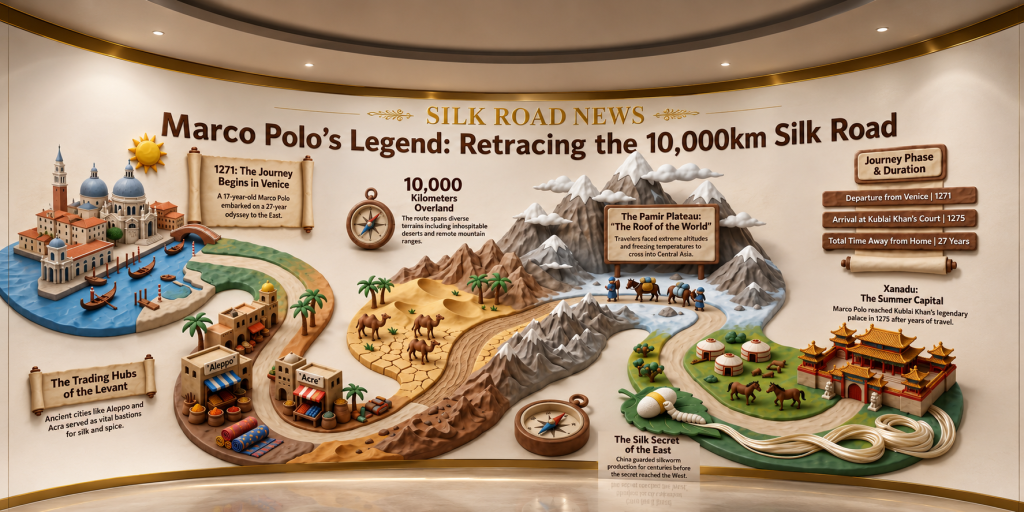
In 1271, a 17-year-old Venetian named Marco Polo left the canals of his home city with his father Niccolò and uncle Maffeo, bound for the court of the Mongol emperor Kublai Khan. What followed was a nearly four-year overland odyssey spanning roughly 10,000 kilometers — through the Levant, the Persian plateau, the high passes of Central Asia, and the deserts of western China — before reaching the glittering Yuan Dynasty capital of Khanbaliq, present-day Beijing.
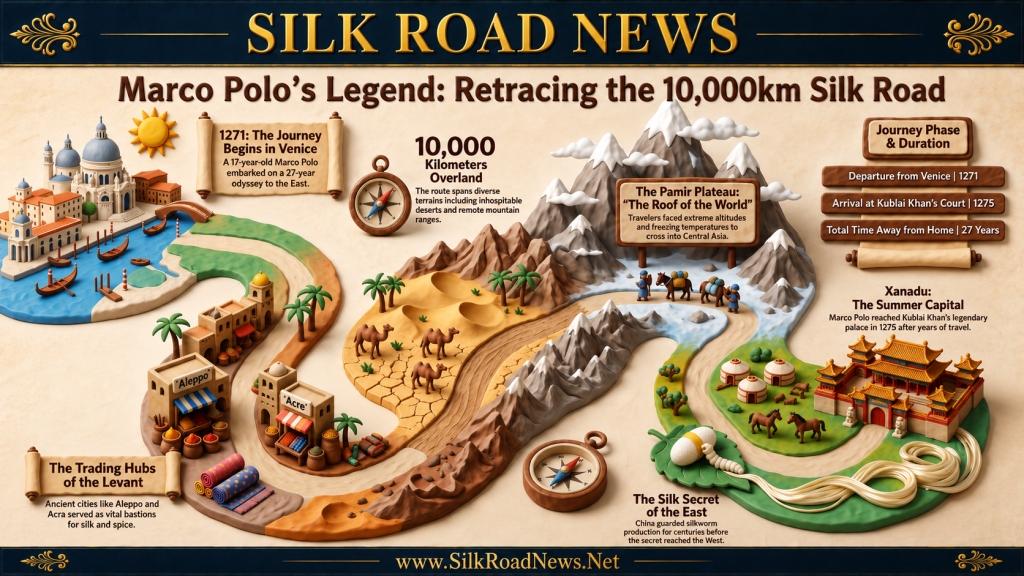
Marco Polo would spend nearly 17 years in the service of the Mongol court before returning home. His account of the journey, later dictated in a Genoese prison and published as The Travels of Marco Polo (also known as Il Milione), became one of the most influential travel narratives in European history. It introduced the West to paper currency, coal, and the scale and sophistication of Chinese cities — planting the seeds of the Age of Exploration that followed two centuries later.
Today, the route Polo traveled remains one of the world’s richest heritage corridors, recognized by UNESCO as part of the Silk Roads network of sites connecting Europe and East Asia.
Timeline of Marco Polo’s Journey Along the Silk Road
1271 — Departure from Venice
The Polo family departs Venice by ship, crossing the Mediterranean toward the Levantine coast, carrying a letter from Pope Gregory X to Kublai Khan.
Israel and the Levantine Coast
The travelers pass through the Holy Land region, then under Crusader and Mamluk influence, gathering holy oil from Jerusalem that Polo’s account notes was intended as a gift for the Khan.
Syria — The Bazaars of Aleppo
Moving inland, the party reaches Aleppo, then one of the great commercial hubs of the Islamic world. Its covered souks — among the oldest and largest covered markets on Earth — were already centuries old, trading in spices, textiles, and metalwork from across three continents. Sections of Aleppo’s historic souks, though damaged in recent conflict, remain a UNESCO World Heritage Site and a symbol of the city’s trading legacy.
Iran — Crossing the Persian Plateau
The route continues through Persia, via cities such as Tabriz, Kerman, and Hormuz, where Polo documented silk and textile production, desert caravanserais, and the region’s famed carpet weaving traditions — craft economies that had sustained Silk Road trade for a millennium.
Afghanistan — The Pamir Passes
Polo’s account describes crossing the rugged terrain of Badakhshan in present-day Afghanistan, noting local lapis lazuli and ruby mining. This is widely regarded as the gateway to the “Roof of the World.”
Tajikistan — The Pamir Mountains
The expedition traverses the Pamir Mountains, among the most physically demanding legs of the entire route. Polo’s descriptions of the high, cold plateau are considered among the earliest European accounts of this remote mountain range, later dubbed “Marco Polo sheep” territory after the wild argali sheep he documented there.
Western China — The Ancient Caves of Dunhuang
Descending into the Taklamakan Desert and the Hexi Corridor, the party reaches Dunhuang, a critical Silk Road oasis. The nearby Mogao Caves — a complex of Buddhist grottoes filled with murals and manuscripts dating back over a thousand years — stood as a spiritual and artistic crossroads where Chinese, Central Asian, and Indian traditions merged. The site is now a UNESCO World Heritage location.
Jade and Silk Along the Corridor
Traveling through Khotan and the Hexi Corridor, Polo recorded local jade mining traditions and silk-weaving workshops, industries that had defined the region’s identity and export economy since antiquity, and that historians still reference when verifying the accuracy of his accounts.
1275 — Arrival in Khanbaliq (Beijing)
After roughly three and a half years of travel, the Polos reach Kublai Khan’s summer capital and eventually Khanbaliq, the Yuan Dynasty capital that would become modern Beijing. Marco Polo is received into the Khan’s court, beginning a period of service that included travels throughout the empire, including to the southern city of Hangzhou.
Hangzhou — “The City of Heaven”
Polo’s writings describe Hangzhou, then possibly the largest and wealthiest city on Earth, with striking admiration — its canals, bridges, and markets leading him to call it the finest and most splendid city in the world. His account helped cement Hangzhou’s reputation in the European imagination long before any other Westerner had seen it.
1295 — Return to Venice
After nearly 17 years away, Marco Polo returns to Venice. His later account of the journey, dictated during captivity in Genoa, would go on to shape European geography, cartography, and ambition for centuries.
Historical and Architectural Significance
The route Polo traveled is not a single road but a network of trade corridors linking dozens of civilizations. Its surviving landmarks — Aleppo’s souks, the Mogao Caves of Dunhuang, the caravanserais of Persia, and the canal cities of southern China — represent one of the most architecturally diverse heritage systems in the world, blending Islamic, Buddhist, Persian, and Chinese design traditions shaped entirely by centuries of trade rather than conquest.
Many of these sites now hold UNESCO World Heritage status, and modern “Silk Road” tourism and heritage-preservation initiatives across Central Asia and the Middle East continue to draw on Polo’s account as a reference point for reconstructing the routes and rhythms of medieval trade.
Conclusion: Silk Road Memories
More than 750 years after Marco Polo set out from Venice, his journey remains a benchmark for understanding how trade, faith, and curiosity connected the medieval world. The bazaars of Aleppo, the passes of the Pamirs, the caves of Dunhuang, and the canals of Hangzhou endure — some restored, some fragile, all carrying the memory of a road that was never really about silk alone, but about the exchange of ideas between civilizations. Polo’s account, however embellished by later retellings, remains the clearest thread connecting Europe’s medieval imagination to the vast, interconnected world of the Silk Road — a legacy still walked, studied, and preserved today.
]]>Peshawar’s ancient treasures — from a 2,000-year-old museum to a Silk Road-era merchant house — draw international praise as four Khyber Pakhtunkhwa sites enter UNESCO’s World Heritage Tentative List.
Introduction
Khyber Pakhtunkhwa’s ancient Gandhara civilization is once again capturing global attention. In a series of high-profile visits, international diplomats have toured the region’s most treasured archaeological sites, praising the provincial government’s efforts to preserve a heritage that once linked South Asia, Central Asia, and China along the fabled Silk Road. The visits coincide with a landmark development: UNESCO’s World Heritage Centre has formally added four major heritage sites from Khyber Pakhtunkhwa to its prestigious World Heritage Tentative List, a significant step toward eventual world heritage status.
UN Representative Visits Peshawar Museum
Pernille Ironside, the United Nations Representative in Pakistan, recently visited the Peshawar Museum, one of South Asia’s most important repositories of Gandhara art and Buddhist-era artifacts. During her tour, she explored the museum’s extensive collection of sculptures, relics, and archaeological finds that trace the region’s role as a crossroads of civilizations.
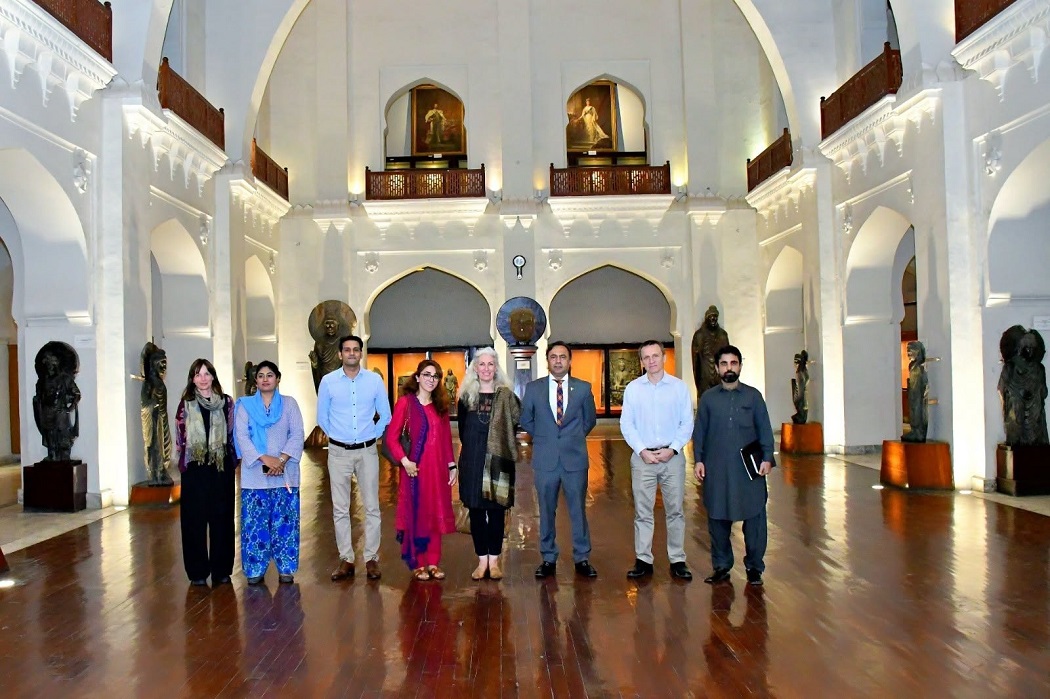
Ironside commended the Government of Khyber Pakhtunkhwa for its sustained commitment to preserving and promoting the province’s archaeological and cultural wealth. She specifically appreciated the efforts of the Directorate General of Archaeology & Museums, KP, for its continued work in protecting these historic treasures and making them accessible to scholars, tourists, and the public alike.
The Peshawar Museum, established during the colonial era and later expanded, houses one of the world’s finest collections of Gandhara sculpture — stone and stucco artworks that blend Greco-Roman artistic techniques with Buddhist religious themes. These pieces stand as physical evidence of the cultural fusion that flourished in the region roughly two thousand years ago.
Chinese Diplomats Tour Historic Sethi House
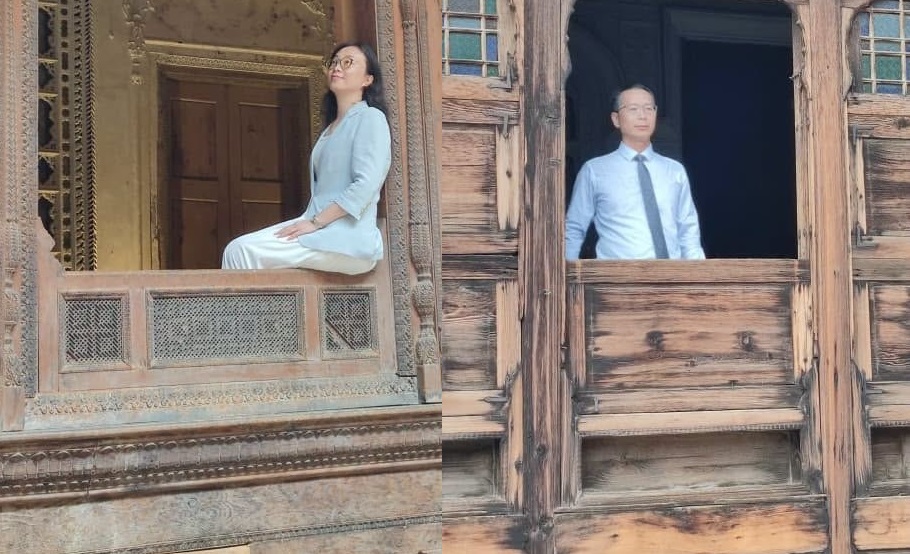
In a separate but equally significant visit, a delegation of Chinese diplomats toured the historic Sethi House in Peshawar, one of the city’s most architecturally distinctive heritage buildings. Built by wealthy merchants who traded along Silk Road routes stretching from Peshawar to Central Asia and China, Sethi House is renowned for its intricate woodwork, ornate interiors, and design elements reflecting influences from across the trade routes it once serviced.
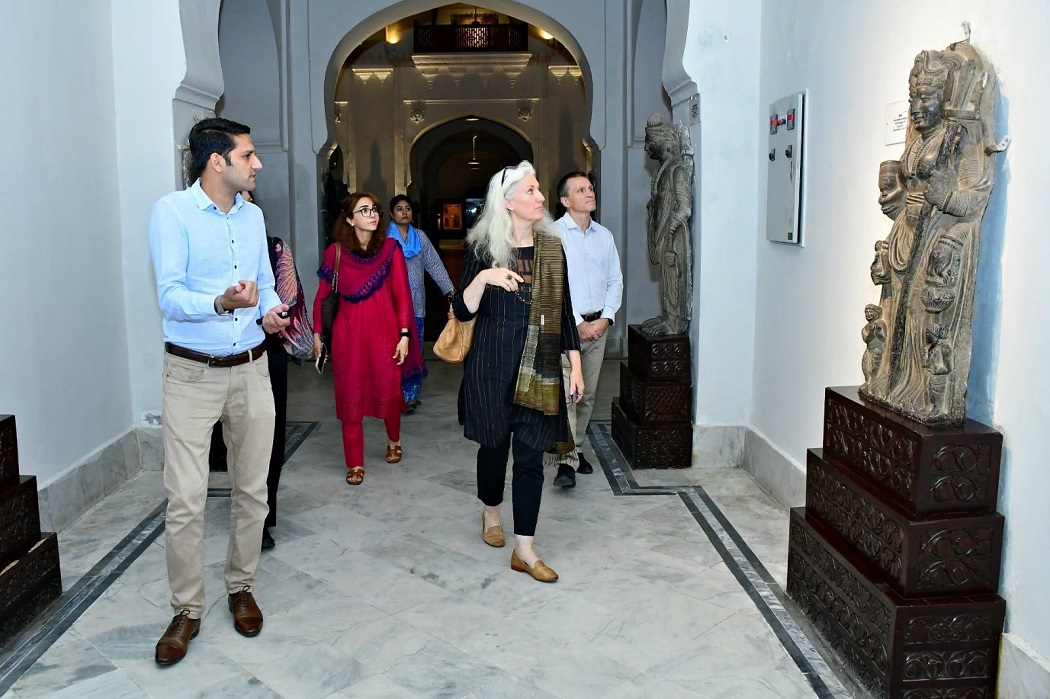
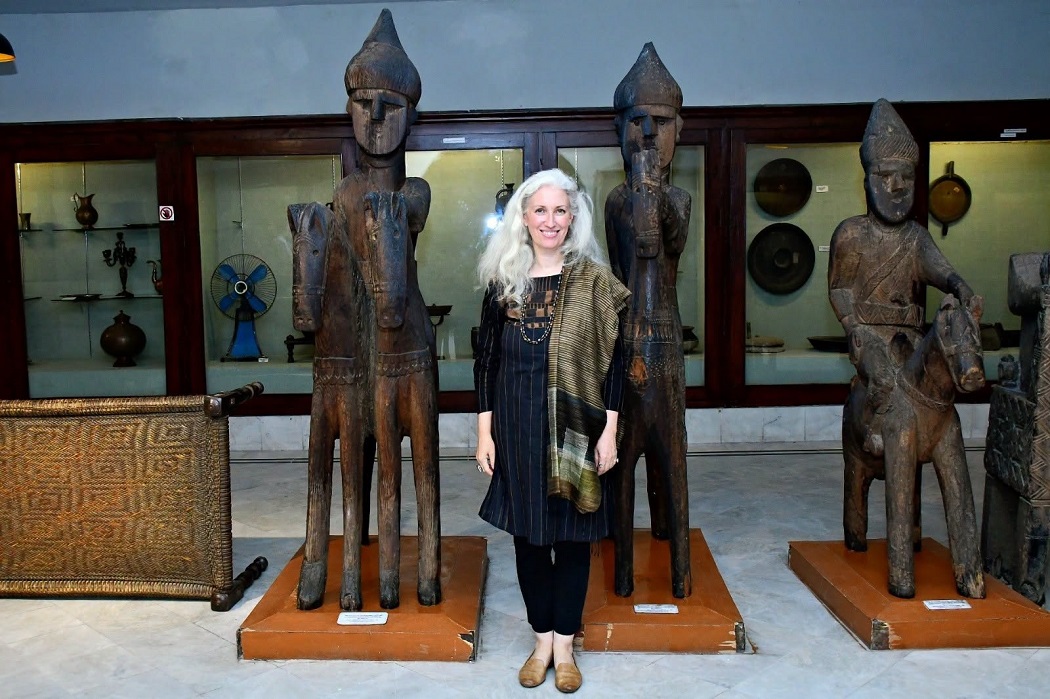
The Chinese delegation praised the Directorate General of Archaeology & Museums, KP, for its continued efforts to preserve and promote this rare architectural legacy. Their visit carries particular symbolic weight given the historic trade and cultural links between the merchants of Peshawar and China during the Silk Road era — links that Sethi House itself embodies in brick, timber, and craftsmanship.
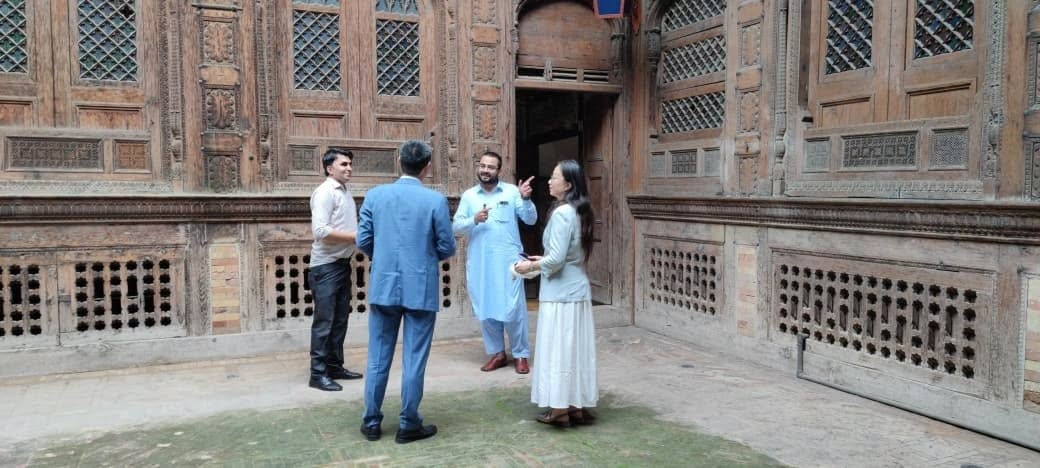
The visit also comes at a moment of renewed recognition for the building: Sethi House has now been included in UNESCO’s World Heritage Tentative List, an achievement described by heritage officials as a proud recognition of its historical and architectural significance.
Background: The Gandhara Civilization and the Silk Road
To understand why these visits matter, it helps to look back at the deep history behind them. The Gandhara civilization flourished in what is now Khyber Pakhtunkhwa and parts of northern Pakistan and eastern Afghanistan, reaching its peak between the 1st and 5th centuries CE. Positioned at the crossroads of the Indian subcontinent, Central Asia, Persia, and China, Gandhara became one of antiquity’s great melting pots — a place where Buddhist philosophy, Greco-Roman artistic traditions (introduced following Alexander the Great’s campaigns), and local South Asian culture merged into a distinctive artistic and architectural style.
This region sat directly along branches of the Silk Road, the network of trade routes that connected East Asia to the Mediterranean world for centuries. Caravans carrying silk, spices, precious stones, and ideas passed through cities like Peshawar (ancient Purushapura) and Taxila, turning the region into a thriving center of commerce, scholarship, and religious exchange. Buddhist monks, traders, and pilgrims traveled these routes, and it was here that some of the earliest depictions of the Buddha in human form were created — a fusion of Hellenistic sculptural technique and Buddhist iconography that came to define Gandhara art.
Today, that legacy survives in stone stupas, monastic ruins, ancient city remains, and elegant merchant houses scattered across Khyber Pakhtunkhwa — physical memories of a time when this land was not a periphery but a hub of the ancient world.
A Proud Milestone: Four KP Sites Added to UNESCO’s Tentative List
The recent diplomatic visits align with a major recognition from UNESCO. The World Heritage Centre has added four significant archaeological and heritage sites from Khyber Pakhtunkhwa to its World Heritage Tentative List — the preparatory list of sites a country intends to nominate for full World Heritage status. The sites are:
- Bhamala, Haripur — home to a renowned Buddhist stupa and monastery complex, notable for its cruciform stupa design and rich collection of Gandhara-era relics.
- Sethi House, Peshawar — a 19th-century merchant mansion celebrated for its Silk Road-influenced architecture and craftsmanship.
- Barikot, Swat — an ancient urban settlement with layers of occupation dating back thousands of years, offering deep insight into the region’s continuous habitation and cultural evolution.
- Gor Khatri, Peshawar — a historic mound site in the heart of old Peshawar with a layered history spanning Buddhist, Mughal, and Sikh periods.
This inclusion marks a proud milestone for Khyber Pakhtunkhwa, positioning these sites on the path toward potential inscription as full UNESCO World Heritage Sites — a status that could bring greater international recognition, research collaboration, and cultural tourism to the province.
A Collaborative Effort to Safeguard Heritage
Officials have emphasized that this progress reflects sustained collaboration rather than isolated effort. The Government of Khyber Pakhtunkhwa, acting through the Directorate General of Archaeology & Museums, KP, has been working closely with Federal Archaeology authorities and UNESCO Pakistan to document, conserve, and promote the province’s archaeological wealth.
This partnership approach has become increasingly important as heritage sites across the region face pressures from urbanization, limited conservation funding, and the challenges of balancing preservation with public access. By pursuing UNESCO recognition, provincial authorities aim to secure not only prestige but also technical support, international attention, and long-term conservation frameworks for these irreplaceable sites.
The renewed diplomatic interest — from the United Nations to Chinese representatives — also signals growing international awareness of Khyber Pakhtunkhwa’s potential as a heritage and cultural tourism destination, one capable of drawing scholars, history enthusiasts, and travelers eager to walk in the footsteps of ancient traders and pilgrims.
Why This Matters for Heritage Tourism
For Khyber Pakhtunkhwa, heritage preservation is increasingly intertwined with economic opportunity. Well-preserved and internationally recognized sites can become anchors for cultural tourism, generating income for local communities, encouraging investment in conservation infrastructure, and creating educational opportunities tied to archaeology, history, and museum studies.
The Peshawar Museum and Sethi House already attract researchers and visitors interested in Gandhara art and Silk Road history. With UNESCO Tentative List status now attached to Bhamala, Sethi House, Barikot, and Gor Khatri, expectations are rising that these sites will see increased conservation funding, improved visitor facilities, and greater visibility on the global cultural map.
Conclusion: Preserving Gandhara Heritage and Silk Road Memories
The story of Khyber Pakhtunkhwa’s heritage is, in many ways, the story of the ancient Silk Road itself — a tale of civilizations meeting, trading, and shaping one another across centuries. From the Buddhist sculptures housed in Peshawar Museum to the ornate woodwork of Sethi House and the layered ruins of Barikot and Gor Khatri, these sites are living memories of a time when this region stood at the center of global exchange rather than its margins.
The recent visits by the UN Representative and Chinese diplomats, paired with UNESCO’s decision to add four KP sites to its World Heritage Tentative List, represent more than diplomatic goodwill — they mark a renewed international commitment to safeguarding Gandhara heritage for future generations. As the Government of Khyber Pakhtunkhwa continues its collaboration with federal authorities and UNESCO Pakistan, the province’s ancient Silk Road memories are being written back into the global story of shared human heritage, ensuring that the legacy of Gandhara endures not just in museums and monuments, but in the world’s collective memory.
]]>
-
Xinjiang — The Historic and Modern Gateway of Silk Road Connectivity
-
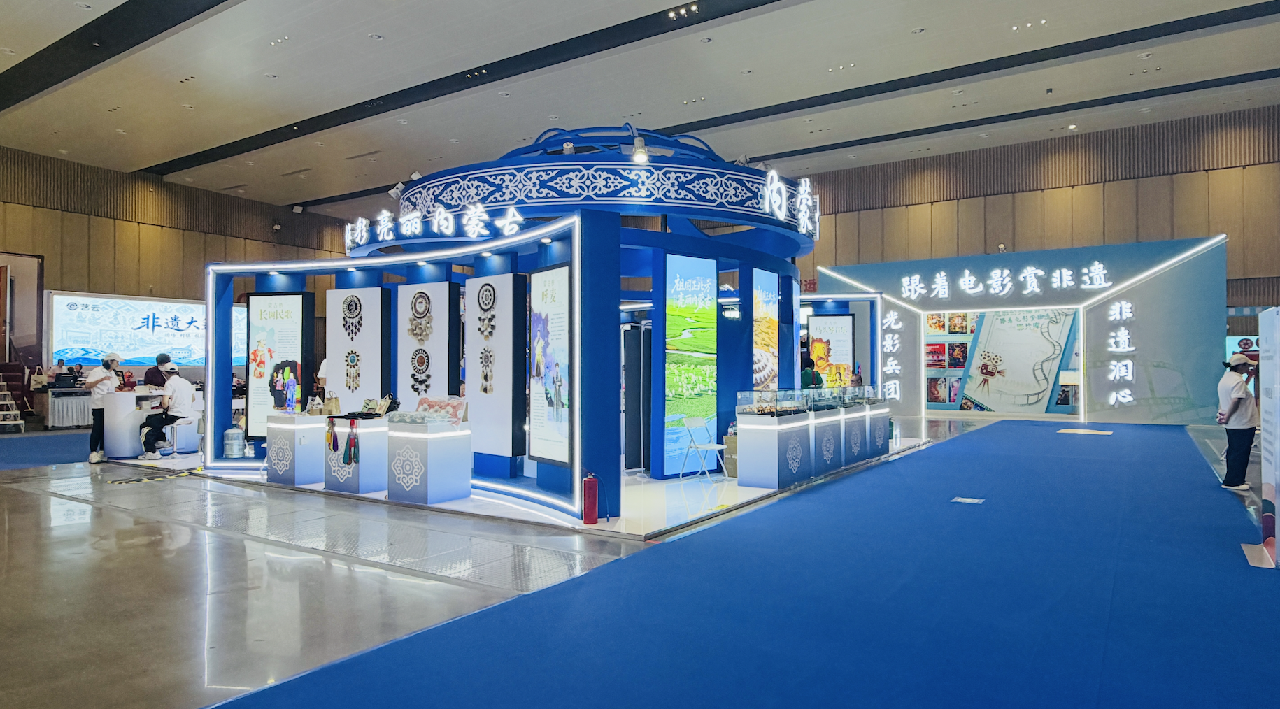
Xinjiang Hosts Cultural heritage artisans and classic folk artworks from across China at an exhibition in Shihezi county of Xinjiang.
By: Muhammad Arif, Editor NSN.Asia
Urumqi: An intangible cultural heritage exhibition has opened in Shihezi, Xinjiang, bringing together intangible cultural heritage artisans and classic folk artworks from across China.
From paper-cutting and clay sculpture to diverse ethnic costumes, and from traditional delicacies to folk song and dance performances, the event serves as a key cultural platform, enabling locals to experience the diversity of Chinese traditional cultures and promoting knowledge of China’s national intangible cultural heritage across the region.
Beyond on-site exhibitions, intangible cultural heritage inheritors from across China engaged in in-depth dialogues, co-created integrated cultural works, and built long-term partnerships to advance the innovation and inheritance of traditional folk culture.
-
Xinjiang — The Historic and Modern Gateway of Silk Road Connectivity
For more than two millennia, Xinjiang has served as one of Eurasia’s most important crossroads, linking China with Central Asia, South Asia, the Middle East, and Europe. From the caravans of the ancient Silk Road to today’s high-speed rail corridors and logistics hubs, the region has remained central to transcontinental connectivity.
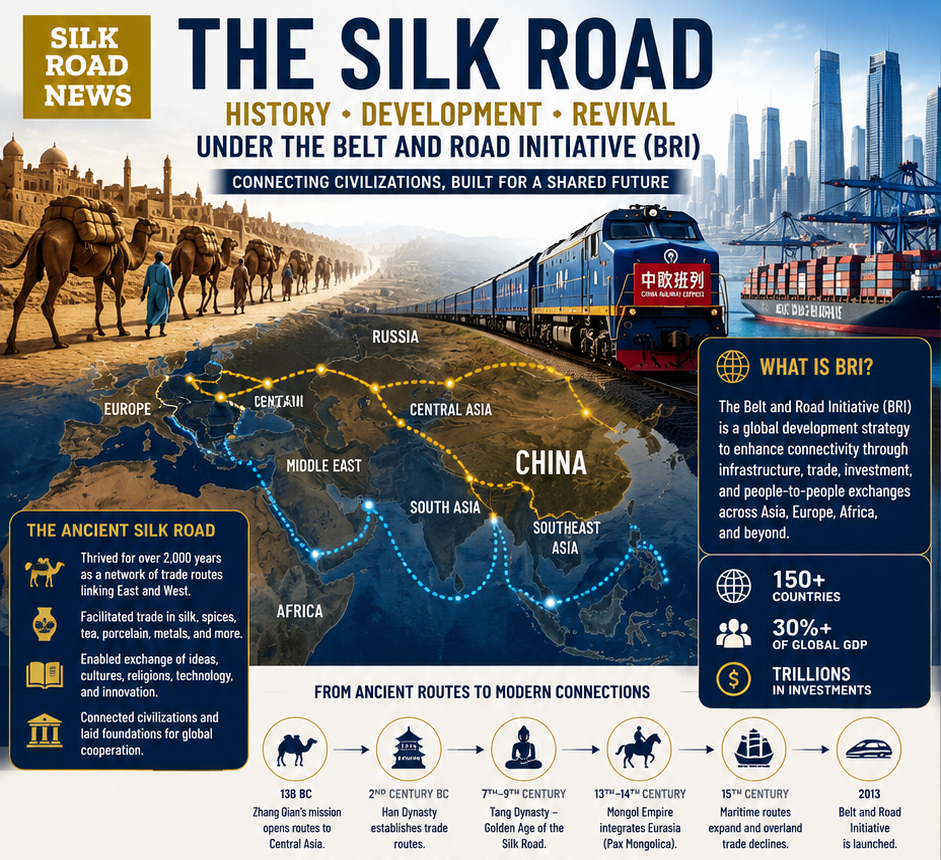
Beginning during the Han Dynasty, merchants, scholars, diplomats, and pilgrims traversed the Tarim Basin through oasis cities such as Kashgar, Hotan, Yarkand, and Turpan. These settlements became vibrant centers of commerce where silk, jade, spices, horses, paper, and porcelain were exchanged alongside religions, languages, scientific knowledge, and cultural traditions. Xinjiang connected East Asia with Persia, the Arab world, and ultimately Europe, making it one of history’s greatest corridors of civilization.
-
Present-Day Strategic Role
In the 21st century, this region has re-emerged as a pivotal gateway under China’s Belt and Road Initiative (BRI). Owing to its strategic location bordering eight countries, the region provides China’s principal overland access to Central Asia and onward to Europe through highways, railways, pipelines, and logistics networks. Cities such as Urumqi and Kashgar have developed into major transport and commercial hubs supporting international trade and regional connectivity.
-
Rail and Logistics Connectivity
The Urumqi International Land Port has become a major node for China–Europe freight services, linking manufacturing centers in eastern China with destinations across Central Asia, Russia, and Europe. Modern multimodal infrastructure—including rail terminals, expressways, dry ports, and customs facilities—has significantly reduced transport times compared with traditional maritime shipping for many categories of goods.
This automous region of China also anchors the northern end of the China–Pakistan Economic Corridor (CPEC), connecting Kashgar with Pakistan’s Gwadar Port through the Khunjerab Pass and the Karakoram Highway. This corridor is designed to strengthen trade, energy cooperation, industrial development, and regional economic integration between western China, Pakistan, and the Arabian Sea, while complementing broader Belt and Road connectivity across Eurasia.
-
Looking Ahead
As global supply chains continue to diversify, this city’s geographic position places it at the intersection of emerging trade corridors linking East Asia, Central Asia, South Asia, the Middle East, and Europe. Supporters view the region as a cornerstone of Eurasian connectivity and economic integration, while international observers also note that discussions surroundingthe this region encompass broader geopolitical and human rights issues beyond transport and trade
[ad_2]
]]>- Kashgar City’s winding alleyways, bustling bazaars and lively folk-dance performances offer visitors an immersive cultural experience
- Kashgar City provides an inviting gateway to a vibrant and multifaceted Xinjiang
By: Muhammad Arif, Editor NSN.Asia
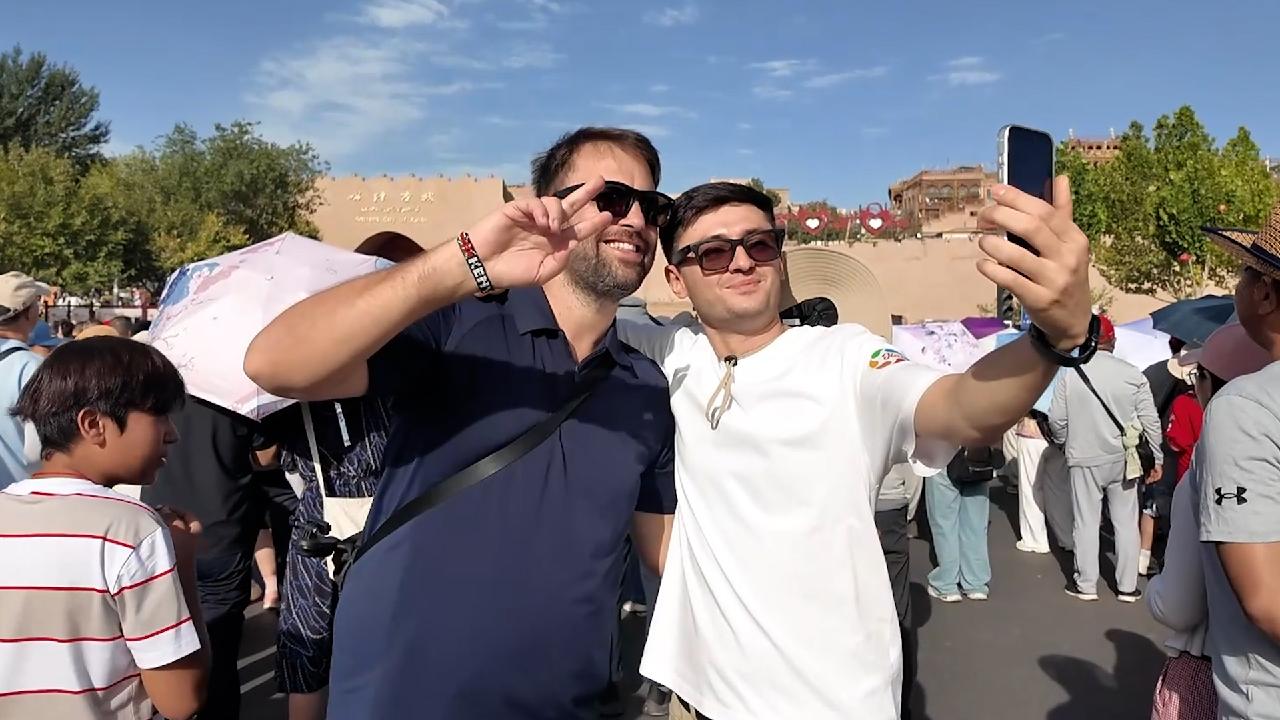
Silk Road Charms: Why Kashi Old City Remains Northwest China’s Living Time Capsule
Kashgar’s ancient quarter, one of Asia’s largest earthen-building complexes, is drawing renewed global attention as a rare window into 2,000 years of Silk Road heritage.
Tucked against the edge of the Tarim Basin, where the Pamir foothills meet the desert, sits a city that once decided whether a caravan carrying silk, spices, or jade would survive its journey west. Kashi — better known internationally as Kashgar — is not a museum reconstruction of the Silk Road. It is, in large part, the real thing: mudbrick alleys, teahouses, and bazaars that have hosted traders, pilgrims, and travelers for over two millennia.
As interest in slow travel and heritage tourism grows across Asia, Kashi Old City is emerging as one of northwest China’s most compelling — and least crowded — cultural destinations.
A Crossroads Older Than the Silk Road’s Name
Kashgar’s history predates the term “Silk Road” itself by centuries. In the Qin and Han dynasties, more than 2,000 years ago, the area was home to the ancient Kingdom of Shule, one of the thirty-six kingdoms of the Western Regions. Its fate changed permanently when the Han dynasty envoy Zhang Qian traveled west, opening formal contact between China and Central Asia and folding Kashgar into a vast trans-continental trade network.
From that point on, Kashgar sat at a genuinely unique geographic hinge: the point where the Silk Road’s northern, southern, and central routes converged before pushing on toward Central Asia, the Middle East, South Asia, and eventually Europe. Caravans loaded with Chinese silk moved west; wool, glassware, spices, and ideas moved east. Buddhism, Islam, and successive waves of migration all left visible marks on the city that remain today.
That layered history earned Kashgar a saying still repeated across Xinjiang: visiting the region without seeing Kashgar means not truly having seen Xinjiang at all.
Inside the Old City: Architecture Built to Outlast Empires
What makes Kashi Old City remarkable isn’t a single monument — it’s the density and continuity of everyday life preserved at scale. Spanning roughly 20 square kilometers, the old quarter is often described as Asia’s largest surviving complex of earthen and timber residential architecture. Structures rise two and three stories high, connected by covered “over-street” buildings that link rooftops across narrow lanes, a design that both maximized shade in the desert heat and created a labyrinth that still disorients first-time visitors in the best way.
On the eastern side, the Gaotai neighborhood preserves some of the oldest mudbrick homes in the city, some reportedly inhabited by the same families for generations. Nearby, the Kashgar Dongbazaar — a Central and West Asia international trade market — carries the bazaar tradition forward with dried fruit stalls, silk vendors, essential oil sellers, and the region’s famous handcrafted Yingjisha knives.
Wandering the alleys today, visitors pass wood-carving workshops, copper and metalwork stalls, hat and textile makers, and bakeries turning out fresh naan on open flame — much of it made using techniques passed down through generations of craftsmen rather than revived for tourism.
Id Kah Mosque and the Rhythm of Daily Life
At the heart of the old city stands Id Kah Mosque, Xinjiang’s largest mosque and a spiritual anchor for the surrounding community for centuries. The mosque’s open courtyard and the plaza in front of it remain a genuine gathering point rather than a roped-off attraction, giving visitors a sense of a living neighborhood rather than a preserved relic.
Just as central to the old city’s identity is its century-old teahouse culture. Traditional teahouses scattered through the lanes have long served as informal community hubs, where elders gather over pots of tea, sometimes accompanied by informal music, much as they have for generations.
Why Travelers Are Rediscovering Kashgar Now
Several factors are converging to put Kashi back on international travel radars in 2026. China’s expanded visa-free transit policies have made the country markedly easier to reach: travelers from more than fifty countries can now enter for short visa-free stays, with several nations enjoying stays of up to 30 days. That accessibility, combined with growing interest in destinations positioned as alternatives to over-touristed sites, has pushed lesser-known Silk Road cities into the spotlight.
Kashgar also benefits from its role as a gateway rather than an endpoint. Many itineraries pair a few days in the old city with the Sunday Livestock Market, considered one of Central Asia’s great traditional markets, and multi-day routes along the Karakoram Highway toward Tashkurgan, passing high-altitude landmarks such as Karakul Lake and the Stone City ruins en route to the Pakistan border.
For travelers building a broader Xinjiang itinerary, tour operators typically recommend two to three days focused on Kashgar’s core sites — the Old City, Id Kah Mosque, the century-old teahouse, and the Sunday markets — before extending outward toward the Pamirs.
A Cultural Crossroads, Preserved
What distinguishes Kashi Old City from many “ancient town” attractions elsewhere in China is the degree to which it has resisted becoming purely decorative. Families still live inside the old walls. Craftsmen still sell goods made using inherited techniques, not props. The layered influences of Han Chinese, Uyghur, and broader Central Asian culture are visible not in placards, but in architecture, food, language, and daily ritual.
For a global audience increasingly drawn to destinations with deep, tangible history — rather than reconstructed heritage sites — Kashi Old City offers something increasingly rare: a genuine Silk Road city that never stopped being lived in.
Planning a visit: Entry to Kashi Old City is generally free, though select historical buildings and museums within the complex charge separate admission. The most atmospheric times to visit are early morning, before the bazaars fill with day-trippers, and Sunday, when the surrounding livestock and general markets are in full swing.
[ad_2]
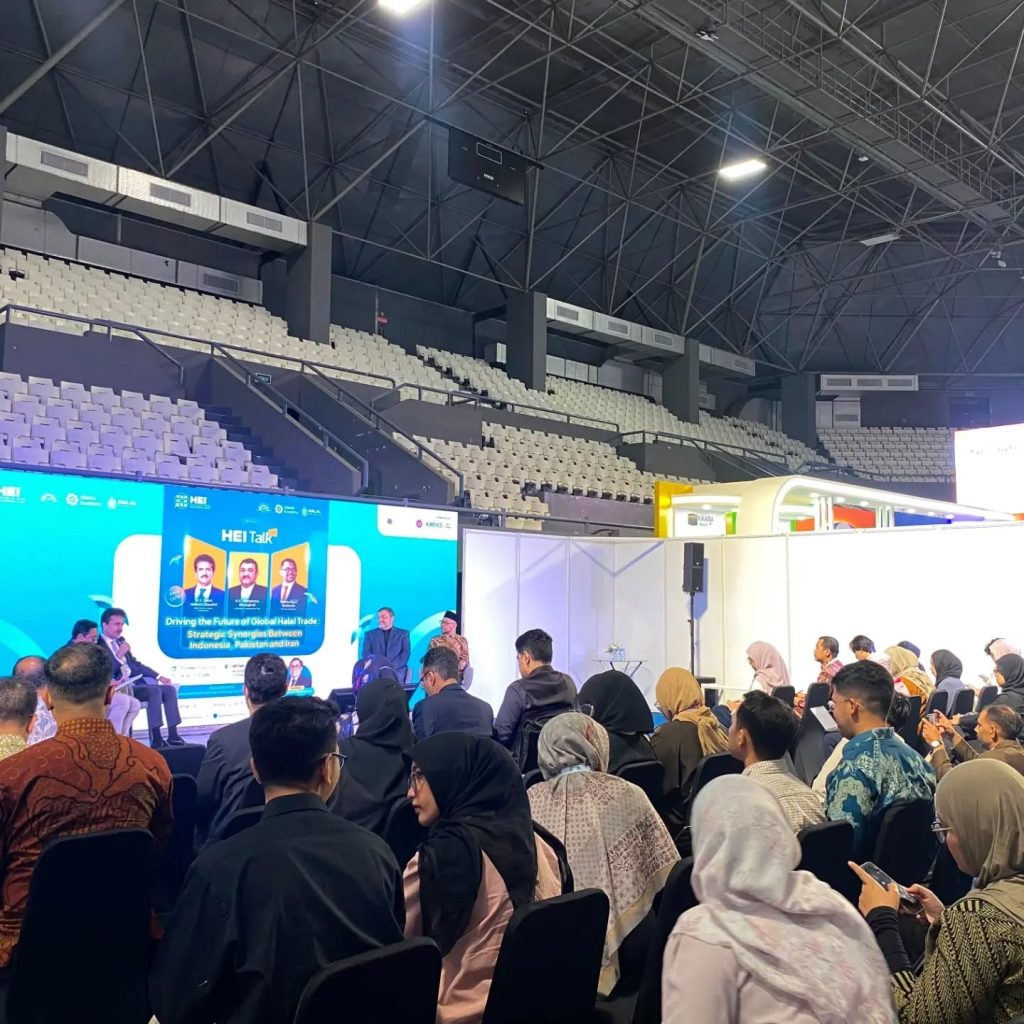
Speaking as a featured panelist during the D-8 Halal Expo Indonesia, Pakistan’s Ambassador to Indonesia, H.E. Zahid Hafeez Chaudhri, highlighted the enormous commercial potential of the international halal market, emphasizing that Pakistan is rapidly transforming into an emerging hub for halal manufacturing, agriculture, food processing, pharmaceuticals, Islamic finance, and value-added exports.
“The global halal economy has evolved into one of the fastest-growing sectors of international commerce, creating unprecedented opportunities for investment, innovation, and cross-border partnerships,” the Ambassador said.
He stressed that Pakistan offers significant untapped potential for international investors seeking access to expanding halal markets across South Asia, the Middle East, Central Asia, Africa, and beyond.
A US$7 Trillion Opportunity
The halal economy has grown far beyond its traditional association with food products.
Today, it encompasses an integrated economic ecosystem covering:
- Halal food and beverages
- Pharmaceuticals
- Cosmetics and personal care
- Islamic finance
- Fashion and textiles
- Tourism and hospitality
- Healthcare
- Logistics and cold-chain services
- Digital commerce
- Halal certification
- Biotechnology
- Food processing technologies
With the global Muslim population expected to approach three billion by 2060, demand for halal-certified products and services is projected to continue rising across both Muslim-majority and non-Muslim markets.
Consumers increasingly associate halal certification with quality assurance, food safety, ethical production, sustainability, and supply-chain transparency, making halal products attractive well beyond Islamic markets.
Pakistan’s Emerging Role in the Global Halal Industry
Ambassador Zahid Hafeez Chaudhri emphasized that Pakistan possesses many of the ingredients necessary to become a leading halal production and export hub.
Pakistan enjoys several strategic advantages:
- One of the world’s largest livestock populations
- A strong agricultural base
- Competitive food-processing industries
- Globally recognized pharmaceutical manufacturing
- Modern textile and leather sectors
- Expanding information technology capabilities
Strategic geographic location connecting South Asia, Central Asia, China, and the Middle East
Combined with improving halal certification systems and export-oriented industrial policies, these strengths position Pakistan to become a major supplier of halal products to international markets.
The country’s halal sector also aligns closely with national priorities of export diversification, industrial modernization, job creation, and attracting foreign direct investment.
Indonesia: The World’s Largest Halal Consumer Market
Indonesia occupies a unique position in the global halal landscape.
As the world’s largest Muslim-majority nation and Southeast Asia’s largest economy, Indonesia has developed an increasingly sophisticated halal ecosystem encompassing manufacturing, certification, Islamic finance, food processing, tourism, and digital innovation.
The Indonesian government’s commitment to becoming a global halal hub has accelerated investment in halal industrial parks, research institutions, certification infrastructure, and export promotion.
Its vast domestic market, combined with strong ASEAN connectivity, makes Indonesia an indispensable partner for countries seeking greater participation in the halal economy.
Pakistan and Indonesia: Natural Strategic Partners
Rather than competing, Pakistan and Indonesia possess highly complementary economic strengths.
Pakistan offers abundant agricultural resources, livestock, textiles, pharmaceuticals, surgical instruments, and food-processing capacity, while Indonesia contributes advanced halal certification systems, manufacturing expertise, consumer markets, logistics networks, and strong integration with ASEAN supply chains.
Together, they can establish one of the Islamic world’s most dynamic halal partnerships.
This cooperation can create integrated halal value chains extending from farms and factories to supermarkets and international consumers.
Building South Asia-ASEAN Halal Value Chains
During the D-8 Halal Expo Indonesia, Ambassador Chaudhri highlighted the importance of connecting South Asia with ASEAN markets through stronger commercial partnerships.
The Expo served as an important platform bringing together governments, investors, exporters, certification agencies, logistics providers, manufacturers, and technology companies.
For Pakistan, greater engagement with ASEAN represents an opportunity to diversify exports beyond traditional destinations while accessing one of the world’s fastest-growing consumer regions.
Indonesia can serve as Pakistan’s gateway into ASEAN’s more than 670 million consumers, while Pakistan provides Indonesia improved commercial access toward South Asia, Central Asia, and western China.
Expanding Bilateral Trade Through Halal Industries
Current Pakistan-Indonesia trade remains concentrated in palm oil, textiles, rice, chemicals, and manufactured goods.
The halal economy opens entirely new avenues for bilateral commerce.
Priority sectors include:
- Processed halal foods
- Meat exports
- Dairy products
- Rice and grains
- Pharmaceuticals
- Nutraceuticals
- Cosmetics
- Leather goods
- Islamic financial services
- Halal tourism
- E-commerce
These industries offer high-value export opportunities capable of significantly increasing bilateral trade over the coming decade.
Investment Opportunities
The halal economy is increasingly attracting international investors seeking stable, high-growth industries.
Pakistan offers investment opportunities in:
- Halal food processing
- Cold-chain logistics
- Agricultural technology
- Livestock development
- Pharmaceutical manufacturing
- Packaging industries
- Digital traceability systems
- Research and development
Indonesian companies can benefit from Pakistan’s competitive production costs and strategic geographic location, while Pakistani firms can leverage Indonesia’s established halal ecosystem and ASEAN market access.
Technology Driving the Halal Economy
Modern halal trade increasingly depends upon technology.
Emerging innovations include:
- Blockchain-based halal traceability
- Artificial intelligence for food quality monitoring
- Smart logistics
- Digital certification platforms
- QR-code verification systems
- E-commerce marketplaces
- Supply-chain analytics
Pakistan’s growing digital economy and Indonesia’s vibrant technology ecosystem provide fertile ground for collaborative innovation.
Joint ventures between technology companies can strengthen halal transparency and consumer confidence worldwide.

Harmonizing Halal Standards
One of the biggest challenges facing global halal commerce is the lack of harmonized certification standards.
Pakistan and Indonesia can play a leadership role by promoting:
- Mutual recognition of halal certificates
- Standardized regulatory frameworks
- Scientific testing laboratories
- Joint accreditation mechanisms
- Training programs for halal auditors
Greater standardization would reduce trade barriers while increasing international market confidence.
D-8: A Platform for Collective Leadership
The D-8 Organization for Economic Cooperation brings together eight major Muslim-majority developing economies whose combined population exceeds one billion people.
The D-8 Halal Expo demonstrates how member countries can collaborate to expand intra-D-8 trade, strengthen industrial partnerships, and develop integrated halal supply chains.
Pakistan and Indonesia, as influential D-8 members, are well positioned to lead initiatives that transform the organization into a major driver of the global halal economy.
Way Forward
To fully capitalize on the opportunities presented by the US$7 trillion halal economy, Pakistan and Indonesia should pursue a strategic roadmap:
- Upgrade bilateral trade cooperation with dedicated halal trade facilitation mechanisms.
- Establish a Pakistan-Indonesia Halal Business Council connecting exporters, investors, certification bodies, and chambers of commerce.
- Promote joint investment in halal industrial parks and food-processing zones.
- Develop integrated South Asia-ASEAN halal logistics corridors.
- Harmonize halal certification standards and pursue mutual recognition agreements.
- Encourage university partnerships focused on halal science, food technology, biotechnology, and Islamic economics.
- Expand cooperation in digital commerce, fintech, and blockchain-enabled halal supply chains.
- Organize annual Pakistan-Indonesia Halal Investment Forums under the D-8 framework.
- Launch joint branding initiatives to promote halal products in the Middle East, Africa, Europe, and Central Asia.
Conclusion
The global halal economy has evolved into a strategic engine of international trade, innovation, and sustainable development. Valued at more than US$7 trillion, it offers unprecedented opportunities for countries capable of building integrated production networks, trusted certification systems, and resilient supply chains.
The participation of Pakistan’s Ambassador, H.E. Zahid Hafeez Chaudhri, at the D-8 Halal Expo Indonesia reflects Islamabad’s determination to position Pakistan as an emerging halal production and investment hub. Equally, Indonesia’s globally recognized halal ecosystem and leadership within ASEAN make it an indispensable partner for realizing this vision.
By combining Pakistan’s agricultural strength, industrial capacity, and strategic location with Indonesia’s advanced halal infrastructure, large consumer market, and regional influence, the two nations can create a powerful South Asia–ASEAN halal corridor. Such a partnership would not only expand bilateral trade and attract investment but also strengthen food security, technological innovation, and economic resilience across the Islamic world.
As global demand for halal products and services continues to rise, Pakistan and Indonesia have a historic opportunity to move beyond traditional trade relations and jointly shape the future of the international halal economy—transforming shared values into shared prosperity.
]]>By NSN News Desk
The China-Europe Railway Express (CRE) has emerged as one of the most significant logistics achievements of the 21st century, reshaping the economic geography of Eurasia by connecting manufacturing hubs in China with consumer and industrial markets across Europe through Central Asia, Russia, the Caucasus, and beyond.
Once viewed as an ambitious component of China’s Belt and Road Initiative (BRI), the railway network has evolved into a mature international freight corridor carrying millions of tons of cargo annually. It has shortened transportation times, diversified supply chains, strengthened regional integration, and revived the historical spirit of the ancient Silk Road through modern rail infrastructure.
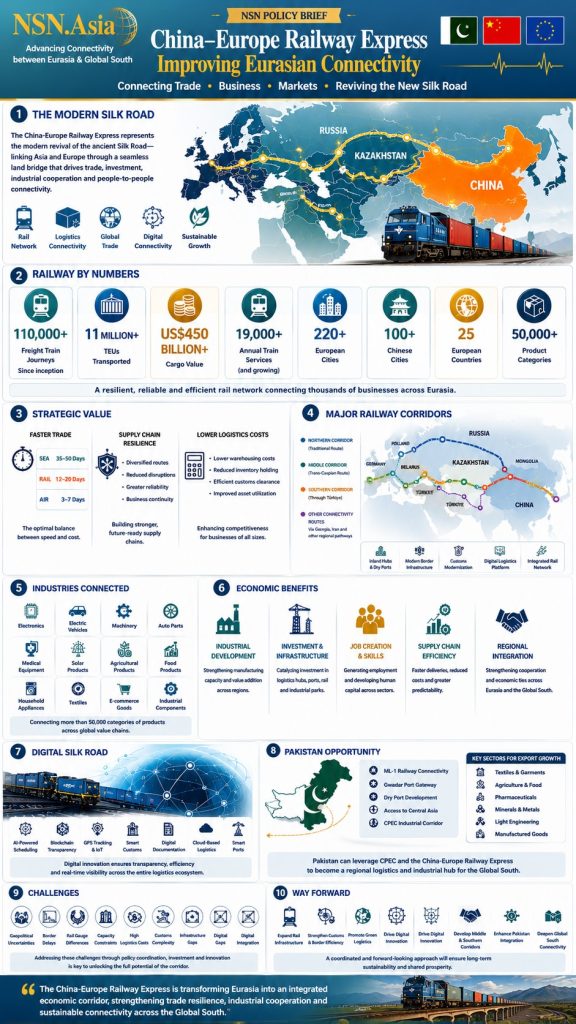
Today, the China-Europe Railway Express is more than a transport network—it is a strategic economic corridor linking industries, businesses, logistics providers, ports, customs authorities, and financial institutions across dozens of countries.
As global supply chains continue to diversify following the COVID-19 pandemic and ongoing geopolitical uncertainties, the China-Europe Railway Express has become increasingly important for ensuring resilient, efficient, and sustainable trade between Asia and Europe.
A Modern Revival of the Ancient Silk Road
More than two thousand years ago, the Silk Road connected China with Central Asia, Persia, the Middle East, and Europe, facilitating not only trade but also cultural exchanges, scientific discoveries, and diplomatic relations.
The China-Europe Railway Express represents the modern version of that historic route.
Instead of camel caravans carrying silk, spices, and porcelain, today’s freight trains transport:
- Electronics
- Electric vehicles
- Machinery
- Auto parts
- Medical equipment
- Solar products
- Household appliances
- Textile products
- Industrial components
- E-commerce goods
- Agricultural products
- Food products
Running through multiple international corridors, these trains have become the backbone of the Silk Road Economic Belt, the land component of the Belt and Road Initiative.
Rapid Growth Since Launch
The first China-Europe Railway Express departed from Chongqing in 2011.
Few observers expected that within little more than a decade the network would become one of the world’s busiest international freight rail systems.
Today, the network serves:
- More than 220 cities in Europe
- Over 100 Chinese cities
- Around 25 European countries
- Transit through Central Asia and neighboring regions
- Thousands of logistics enterprises
The railway has expanded from a handful of pilot services into a sophisticated network operating daily trains in both directions.
Its rapid development reflects growing confidence among manufacturers, exporters, importers, and logistics companies.
Record Cargo Volumes
The China-Europe Railway Express has experienced remarkable growth over the past decade.
Recent operational statistics indicate:
- More than 110,000 cumulative freight train journeys since operations began.
- Over 11 million TEUs (Twenty-foot Equivalent Units) transported.
- Cargo valued at well above US$450 billion.
- Annual train departures now exceed 19,000 services, with continued year-on-year growth.
- Rail services connect over 50,000 categories of products, ranging from industrial machinery to cross-border e-commerce goods.
The network has maintained steady expansion despite global disruptions such as the COVID-19 pandemic, shipping bottlenecks, and geopolitical tensions, demonstrating the resilience of rail freight as a strategic transport option.
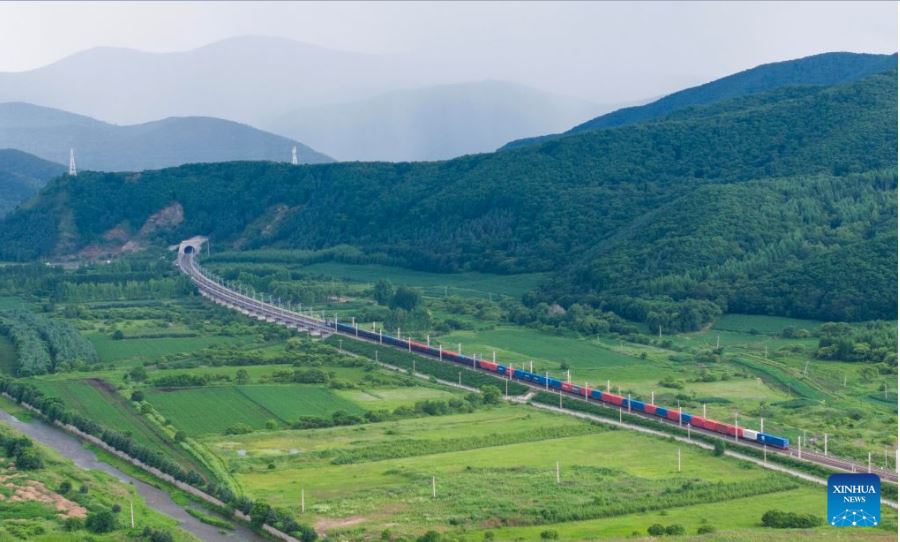
Connecting Eurasian Markets
The railway has fundamentally changed how businesses trade across Eurasia.
Previously, companies relied primarily on:
- Ocean shipping
- Air freight
- Limited overland trucking
Each option presented challenges.
Sea transport is economical but slow.
Air freight is fast but expensive.
Rail now offers a balanced alternative.
Average delivery times:
| Mode | Transit Time |
|---|---|
| Sea | 35–50 days |
| Rail | 12–20 days |
| Air | 3–7 days |
This middle-ground solution has attracted manufacturers seeking reliable delivery while controlling logistics costs.
Strengthening Regional Connectivity
The China-Europe Railway Express crosses numerous countries, including:
- China
- Kazakhstan
- Mongolia
- Russia
- Belarus
- Poland
- Germany
- Hungary
- Serbia
- Türkiye
- Uzbekistan
- Azerbaijan (via multimodal routes)
- Georgia
These corridors have encouraged investment in:
- Inland logistics hubs
- Dry ports
- Container terminals
- Border infrastructure
- Customs modernization
- Digital logistics platforms
Cities once considered remote inland locations have become major logistics centers.
Examples include:
- Xi’an
- Chongqing
- Chengdu
- Zhengzhou
- Wuhan
- Duisburg
- Lodz
- Budapest
Boosting International Trade
The railway supports trade by enabling:
- Faster inventory turnover
- Lower warehousing costs
- Improved supply chain predictability
- Better market access for SMEs
- Just-in-time manufacturing
For exporters, reduced delivery times improve competitiveness.
For importers, predictable schedules reduce inventory risks.
This has encouraged greater cross-border commercial activity across Eurasia.
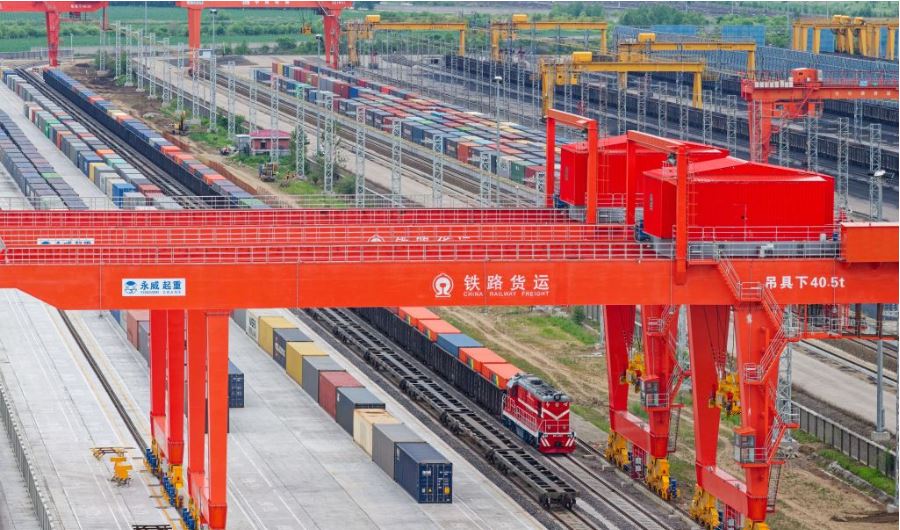
Driving Cross-Border E-Commerce
One of the fastest-growing users of the China-Europe Railway Express is the e-commerce industry.
Major online retailers increasingly depend on rail to transport:
- Consumer electronics
- Fashion
- Home appliances
- Sports equipment
- Furniture
- Toys
Rail offers:
- Faster delivery than sea
- Lower costs than air freight
- Reduced carbon emissions
As cross-border online shopping expands, rail logistics continues to gain market share.
Supporting Green Logistics
Compared with air transport, rail freight significantly reduces carbon emissions.
According to logistics industry estimates:
- Rail emits roughly 80–90% less CO₂ than air freight for equivalent cargo volumes.
- Energy-efficient rail systems contribute to national decarbonization goals.
- Electrified railway corridors support cleaner transport compared with diesel-dependent alternatives.
As governments pursue net-zero commitments, the China-Europe Railway Express aligns with global efforts to promote sustainable logistics.
Economic Benefits Across Eurasia
The railway generates wide-ranging economic benefits.
These include:
Job Creation
Expansion of logistics parks creates employment in:
- Warehousing
- Customs
- Freight forwarding
- Manufacturing
- Container handling
Industrial Development
Manufacturers increasingly locate production facilities near rail hubs.
Industrial clusters have developed around:
- Xi’an
- Chengdu
- Chongqing
- Zhengzhou
Similar developments are emerging in Central Asia and Eastern Europe.
SME Opportunities
Small and medium-sized enterprises now enjoy greater access to overseas markets without relying solely on maritime transport.
This supports export diversification.
Investment Attraction
Improved transport infrastructure encourages foreign direct investment.
Logistics reliability remains a key factor influencing investment decisions.
Importance for Central Asia
Central Asia has become a major beneficiary.
Kazakhstan, in particular, has transformed into one of Eurasia’s most important logistics gateways.
Major dry ports, including Khorgos, have become central transfer points between China’s standard-gauge railway and the broader Eurasian rail network.
Countries such as Uzbekistan and Kyrgyzstan are also improving transport links to integrate more closely into regional supply chains.
Opportunities for Pakistan
Although Pakistan is not yet directly connected to the China-Europe Railway Express network, significant opportunities exist through the China-Pakistan Economic Corridor (CPEC).
Future possibilities include:
- Integration of Gwadar Port with Eurasian logistics.
- Rail modernization under ML-1.
- Dry ports linked to Central Asia.
- Transit trade with Western China.
- Export corridors for textiles, agriculture, pharmaceuticals, and minerals.
Enhanced regional railway connectivity could eventually position Pakistan as a complementary gateway connecting maritime and overland trade routes.
Digital Transformation
Modern railway operations increasingly depend upon digital technologies.
These include:
- Electronic customs clearance
- AI-powered scheduling
- GPS cargo tracking
- Digital freight documentation
- Blockchain-enabled supply chain verification
- Smart logistics platforms
Digitalization reduces border delays while improving cargo visibility.
Challenges Ahead
Despite remarkable success, challenges remain.
These include:
Geopolitical uncertainty
International political tensions continue affecting certain transit routes.
Infrastructure bottlenecks
Border crossings occasionally experience congestion due to differing railway gauges and customs procedures.
Operational costs
Rail remains more expensive than sea freight for certain cargo categories.
Capacity constraints
Growing demand requires continued investment in:
- Rolling stock
- Container terminals
- Digital systems
- Customs modernization
Route diversification
Expansion of:
- Middle Corridor
- Caspian routes
- Southern corridors
will strengthen resilience.
Future Outlook
The future of the China-Europe Railway Express appears promising.
Emerging trends include:
- Greater integration with Central Asian railways.
- Increased multimodal transport combining rail, ports, and highways.
- Expansion of digital Silk Road technologies.
- Growth of green logistics initiatives.
- Increased use for electric vehicle exports.
- Better customs coordination.
- Wider participation by developing economies.
As Eurasian economies continue integrating, rail freight is expected to play an even greater role.
The Strategic Importance of the New Silk Road
The China-Europe Railway Express is not merely a transport service.
It represents:
- Economic integration
- Regional cooperation
- Supply chain resilience
- Infrastructure connectivity
- Shared development
The railway supports broader objectives including:
- Trade facilitation
- Industrial cooperation
- Investment promotion
- Regional development
- Sustainable transport
Its success illustrates how infrastructure can become a catalyst for economic transformation.
Way Forward
To maximize the benefits of the China-Europe Railway Express, governments and stakeholders should focus on:
- Expand Rail Infrastructure: Invest in additional tracks, intermodal terminals, and dry ports to increase capacity and reduce congestion.
- Enhance Customs Cooperation: Accelerate harmonization of customs procedures through digital platforms and mutual recognition agreements.
- Strengthen Multimodal Connectivity: Integrate rail with seaports, highways, inland waterways, and air cargo hubs to create seamless logistics networks.
- Promote Green Transport: Increase electrification, adopt renewable energy for logistics hubs, and incentivize low-carbon freight solutions.
- Support SMEs: Provide affordable logistics services, digital trade platforms, and export financing so that small and medium-sized enterprises can fully benefit from Eurasian rail connectivity.
- Diversify Routes: Expand the Middle Corridor and Southern Corridor to enhance resilience against geopolitical or operational disruptions.
- Integrate Emerging Economies: Countries such as Pakistan, through CPEC, can position themselves as complementary gateways by modernizing rail infrastructure and linking ports with inland logistics networks.
- Leverage Digital Innovation: Deploy artificial intelligence, blockchain, and smart customs systems to improve cargo tracking, security, and efficiency.
Conclusion
The China-Europe Railway Express has evolved from a visionary infrastructure project into one of the world’s most important transcontinental logistics networks. By significantly reducing transit times, connecting hundreds of cities across Asia and Europe, and carrying goods worth hundreds of billions of dollars, it has become a cornerstone of modern Eurasian trade.
Beyond freight transport, the railway symbolizes the revival of the New Silk Road—promoting connectivity, investment, industrial cooperation, and people-to-people exchanges across a vast region. As businesses seek resilient supply chains and governments prioritize sustainable infrastructure, the China-Europe Railway Express is well positioned to play an even greater role in shaping the future of global commerce.
For countries across the Global South, including Pakistan, the expanding Eurasian rail network presents new opportunities to integrate into regional value chains, diversify exports, and attract investment. Through strategic infrastructure development, digital innovation, and enhanced regional cooperation, the China-Europe Railway Express can continue to strengthen economic connectivity and foster shared prosperity across Eurasia for decades to come.
]]>