Ambassador Highlights Historical Ties and Investment Opportunities
PTDC Highlights Growing Cooperation and Regional Connectivity
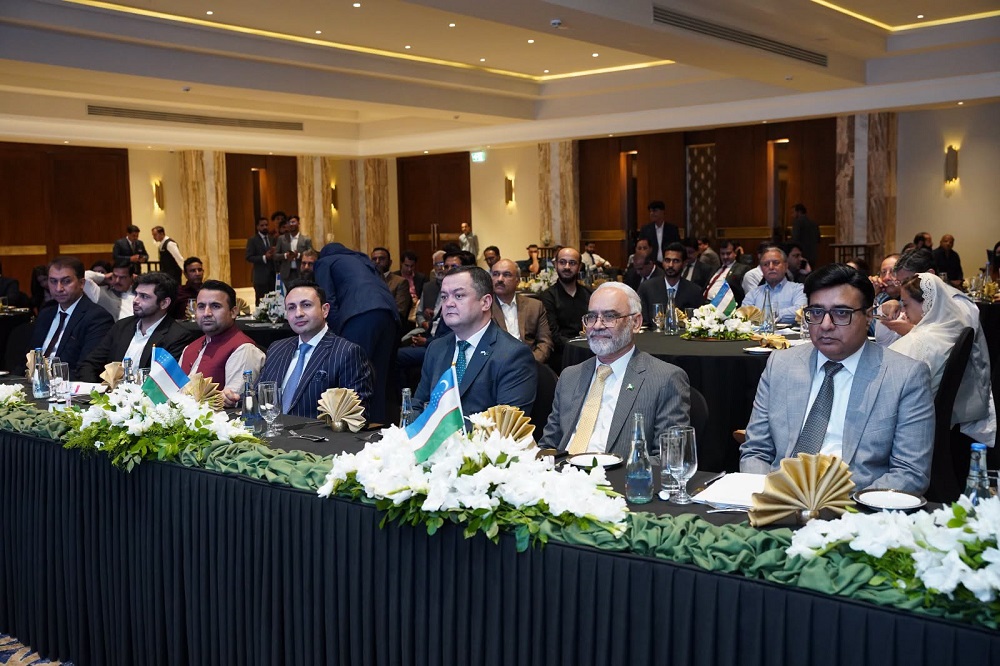
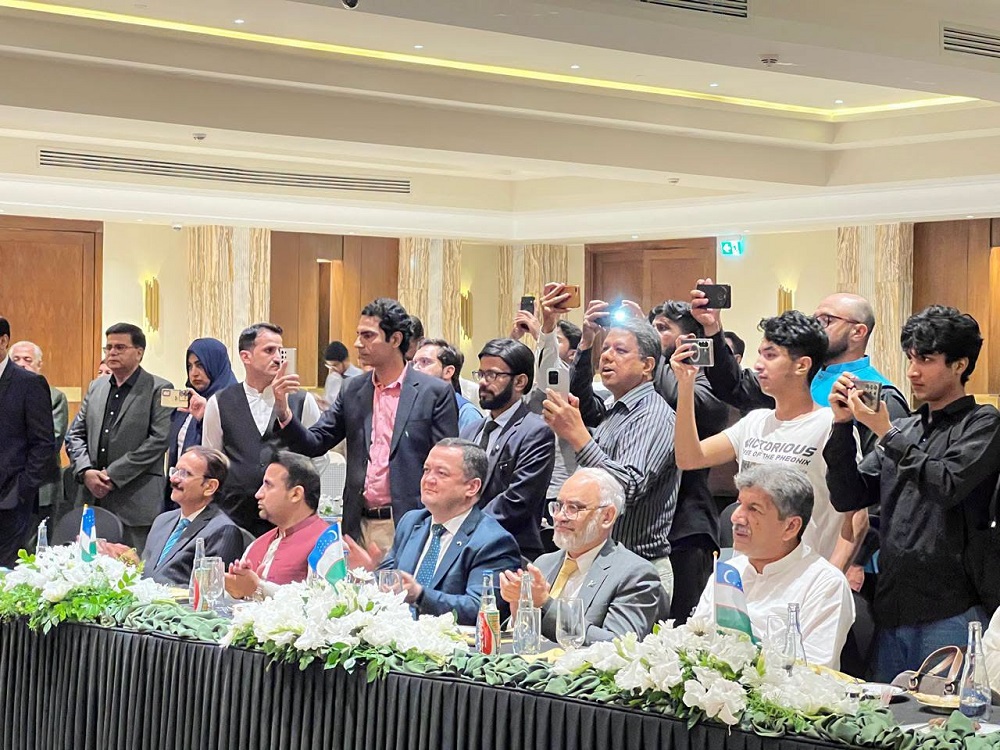
The Uzbekistan Tourism Road Show & Tourism Excellence Awards 2026, organized by the Embassy of Uzbekistan in Pakistan as part of Uzbekistan Tourism Days in Pakistan, brought together senior government officials, travel industry leaders, and key stakeholders to celebrate the steadily expanding partnership between the two countries.
The event served as a platform to recognize outstanding contributions to bilateral travel and leisure romotion while showcasing country’s tourism potential to Pakistani travellers, tour operators, and investors.
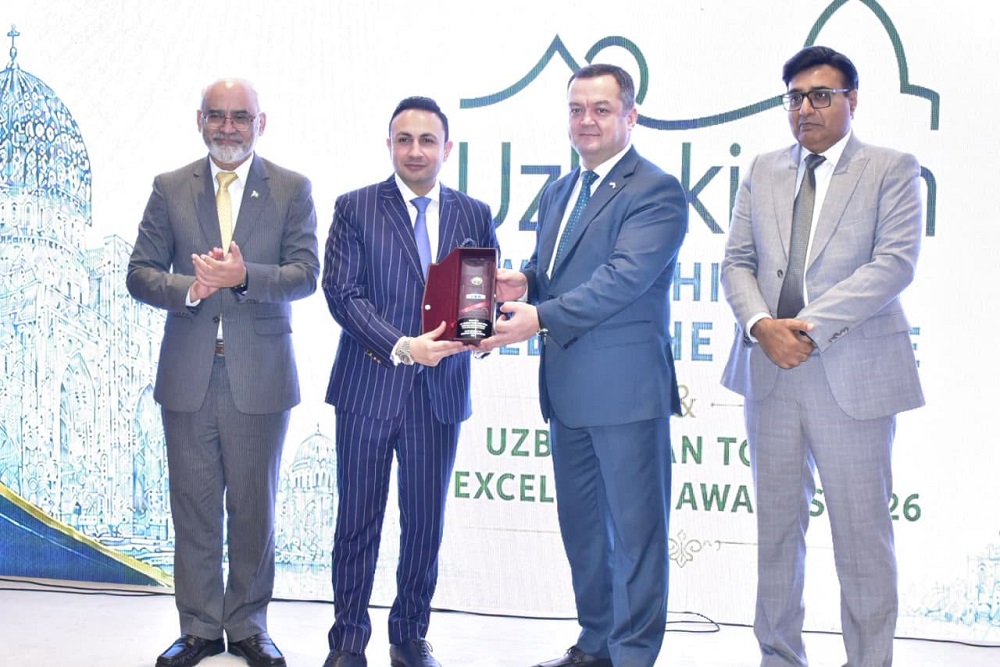
Tourism Excellence Awards Recognize Key Contributors
During the ceremony, His Excellency the Ambassador of Uzbekistan to Pakistan presented the Travel Excellence Awards to a number of individuals and institutions recognized for their role in strengthening travel and mobility ties between the two nations. Award recipients included:
- Sardar Yasir Ilyas Khan, National Coordinator to the Prime Minister on Tourism
- Mr. Aftab-ur-Rehman Rana, Managing Director, PTDC
- Other prominent mobility stakeholders who have contributed to promoting bilateral tourism between Pakistan and Uzbekistan
The awards underscored the growing institutional commitment on both sides to elevate traveling as a pillar of the broader bilateral relationship.
Ambassador Highlights Historical Ties and Investment Opportunities
Addressing the gathering, the Ambassador of Uzbekistan spoke about the deep historical and cultural connections shared by Pakistan and Uzbekistan — ties rooted in centuries of trade, culture, and people-to-people exchange along the historic Silk Road. He outlined emerging opportunities for travel investment in Uzbekistan and reaffirmed a shared vision for expanding cooperation in the years ahead, positioning mobility as a natural extension of the two countries’ longstanding friendship.
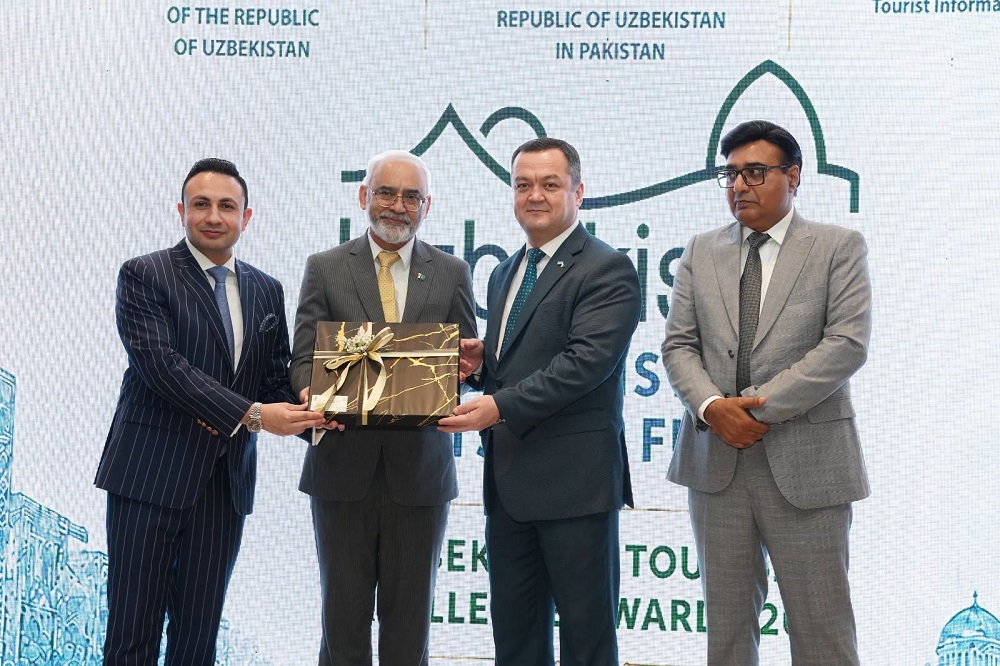
PTDC Highlights Growing Cooperation and Regional Connectivity
Speaking at the event, Mr. Aftab-ur-Rehman Rana, Managing Director PTDC, appreciated the Embassy’s efforts in organizing the Road Show and highlighted the steadily growing traveling cooperation partnership between Pakistan and Uzbekistan. He shared details of several ongoing initiatives designed to enhance travel exchanges between the two countries, including:
- Cooperation in travel education and training
- Building stronger linkages between tour operators on both sides
- Working toward improved air connectivity to facilitate easier travel
- Exploring opportunities for greater regional cooperation through upcoming ECO (Economic Cooperation Organization) and SCO (Shanghai Cooperation Organization) tourism engagements planned in Lahore
Mr. Rana’s remarks reflected PTDC’s broader strategy of using multilateral platforms to position Pakistan as a connected and accessible destination within the Central and South Asian travel corridor.
Government Reaffirms Commitment to Mobility Facilitation
Speaking as Chief Guest, Sardar Yasir Ilyas Khan, National Coordinator to the Prime Minister on Tourism, highlighted the immense travel and investment potential present in both Pakistan and Uzbekistan. He reaffirmed the Government of Pakistan’s commitment to facilitating travel between the two countries, encouraging greater travel exchanges, and strengthening people-to-people connections as a foundation for long-term bilateral cooperation.
Backgrounder: A Growing Pakistan–Uzbekistan Mobility Partnership
Pakistan and Uzbekistan have, in recent years, steadily expanded cooperation across trade, connectivity, culture, and traveling, building on historical and civilizational links dating back to the Silk Road era. The Uzbekistan Tourism Days in Pakistan initiative reflects a deliberate diplomatic and economic push by both governments to translate these historical ties into tangible tourism and economic outcomes.
Both countries have worked toward easing visa processes, expanding air links, and encouraging direct engagement between tour operators, hoteliers, and tourism boards. Uzbekistan, home to iconic Silk Road cities such as Samarkand, Bukhara, and Khiva, has been actively promoting itself as a premier heritage and cultural traveling destination for South Asian travellers, while Pakistan — with its diverse landscapes, from the northern mountains to rich cultural heritage sites — offers reciprocal appeal to Central Asian visitors.
The Tourism Excellence Awards 2026 mark a continuation of this momentum, formally recognizing individuals and institutions driving bilateral traveling forward, and signaling that traveling has become a strategic pillar — alongside trade and connectivity — in the broader Pakistan–Uzbekistan relationship.
Conclusion: Building Regional Bridges Through Mobility
The travel show 2026 highlighted not only the achievements of individuals and institutions driving bilateral tourism, but also the strategic importance of sustained promotion of Pakistan–Uzbekistan cooperation going forward. Strengthening this partnership will require continued focus on connectivity — particularly improved air links, streamlined travel facilitation, and closer coordination between tour operators and tourism boards on both sides.
Looking ahead, the planned ECO and SCO tourism engagements in Lahore present a significant opportunity to elevate this bilateral momentum into a broader regional tourism agenda, positioning both countries as key nodes in an increasingly connected Central and South Asian travel corridor. As both governments continue to prioritize traveling facilitation and people-to-people exchange, Pakistan looks forward to welcoming more travellers from Uzbekistan and across Central Asia, while building stronger, lasting traveling bridges across the wider region.
]]>
Push for a Chinese Universities Education Expo in Pakistan
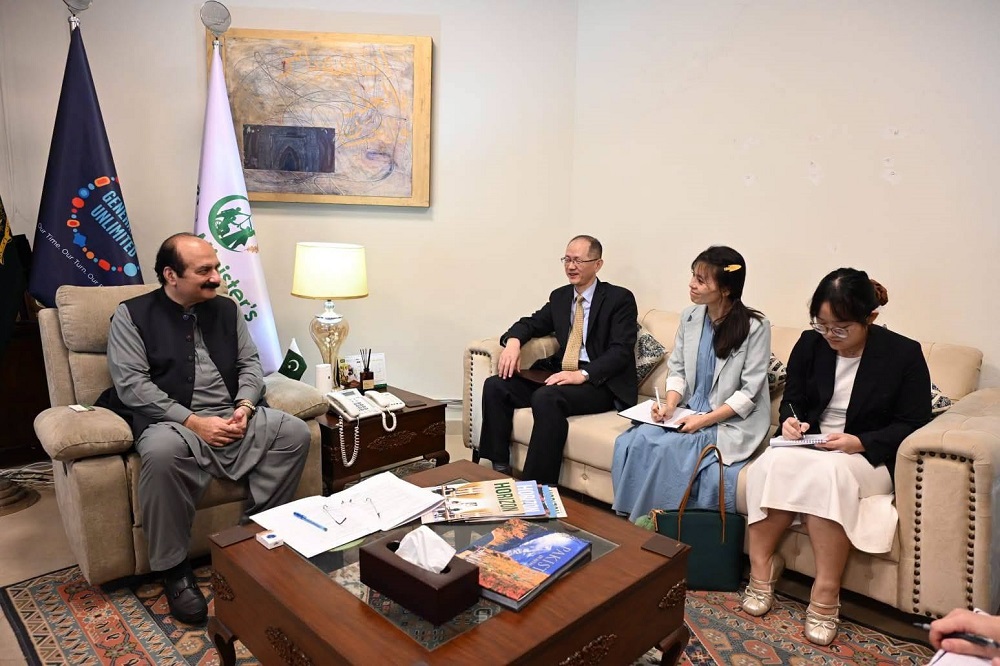
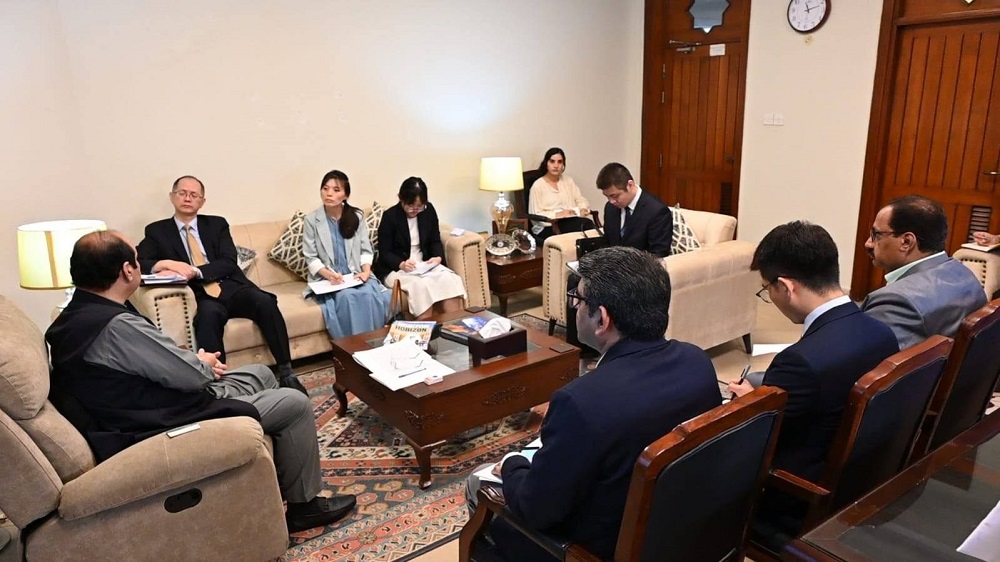
Islamabad: A high-level meeting was held at the Prime Minister’s Office between Chairman of the Prime Minister’s Youth Programme (PMYP), Rana Mashhood Ahmed Khan, and Shi Yuanqiang, Charge d’Affaires of the Embassy of the People’s Republic of China, to discuss avenues for strengthening Pakistan–China cooperation in youth development, education, skills, employment, technology, innovation, research and youth exchanges.
Chairman Rana Mashhood Ahmed Khan extended a warm welcome to Shi Yuanqiang and the accompanying Chinese delegation. The meeting was also attended by PMYP Joint Secretary Dr. Muhammad Ali Malik, along with other senior officers from the Programme.
Push for a Chinese Universities Education Expo in Pakistan
Opening the discussion, Chairman Rana Mashhood Ahmed Khan highlighted the strong and growing interest among Pakistani youth in pursuing higher education at Chinese universities. He proposed the organization of a dedicated Chinese Universities Education Expo in Pakistan, where leading Chinese institutions could directly engage with Pakistani students, showcase academic programmes and scholarships, and provide first-hand information on admission pathways.
He described the initiative as an education-focused platform functioning much like a job fair — bringing universities and prospective students together under one roof to simplify access to information and opportunity.
Reinforcing the “Iron Brother” Relationship Through Youth Engagement
The Chairman reaffirmed Pakistan’s commitment to deepening the longstanding Pakistan–China “iron brother” relationship, placing particular emphasis on people-to-people and youth-to-youth engagement. He stressed the importance of expanding exchanges in culture, technology, research, education and skills development to create meaningful, forward-looking opportunities for young people in both countries.
Rana Mashhood Ahmed Khan also revealed that PMYP Secretariats have already been established in China, a development he described as reflective of the growing institutional engagement between the two countries in the youth sector.
He expressed appreciation to the Government and people of China for their continued support to Pakistan, acknowledging the role of China’s advanced technology and capabilities in strengthening bilateral cooperation. Highlighting progress in the space sector, he noted that Pakistan’s first astronaut is expected to join China’s space station by the end of this year — a milestone he called a significant marker of Pakistan–China cooperation in science, technology and space exploration.
China Praises Digital Youth Hub, Seeks Wider Collaboration
Speaking at the meeting, Shi Yuanqiang emphasized the unique and enduring nature of Pakistan–China relations, reiterating the characterization of the two nations as “iron brothers.” He underlined the importance of expanding youth exchanges in culture, technology and research to promote greater interaction, mutual understanding and long-term collaboration between the younger generations of both countries.
The Chinese envoy specifically praised the Digital Youth Hub (DYH), a flagship initiative of the Prime Minister’s Youth Programme, describing it as an innovative and centralized platform that connects young people with diverse opportunities in one place. He commended PMYP for developing a mechanism that effectively engages, connects and empowers youth across the country.
Shi Yuanqiang further expressed China’s interest in exploring greater involvement of Chinese universities, companies, development organizations and private-sector partners with the Digital Youth Hub — a step that could significantly expand the range of opportunities available to Pakistani youth.
PMYP’s 4Es Framework and National Youth Employment Policy
Chairman Rana Mashhood Ahmed Khan briefed the Chinese delegation on PMYP’s flagship initiatives operating under its 4Es Framework — Education, Employment, Engagement and Environment. These include the Prime Minister’s Youth Skills Development Programme, Prime Minister’s Youth Laptop Scheme, Prime Minister’s Youth Business & Agriculture Loan Scheme, Prime Minister’s National Innovation Award, Prime Minister’s National Volunteer Corps, the Digital Youth Hub, Talent Hunt & Youth Sports League, and the Green Youth Movement.
He underscored the importance of collaboration on Pakistan’s National Youth Employment Policy, particularly in expanding employment, skills development, entrepreneurship and international opportunities for Pakistani youth. To this end, he proposed a structured mechanism with the Chinese Embassy to identify relevant opportunities through Chinese institutions, universities, companies and development organizations.
Joint Secretary PMYP Dr. Muhammad Ali Malik added that the Programme would work closely with the Chinese government on the National Youth Employment Policy, exploring areas of cooperation that could directly contribute to employment generation, skills development and professional opportunities for young Pakistanis.
Way Forward: Focal Persons and a Formal Cooperation Framework
As a concrete way forward, both sides agreed to designate focal persons to maintain regular communication, facilitate coordination and identify actionable areas of collaboration. It was further proposed that the two sides work towards developing a formal framework of cooperation with the Embassy of China, covering the National Youth Employment Policy and broader youth employment opportunities.
The meeting concluded on a note of shared commitment to deepen Pakistan–China cooperation in the youth sector, with both sides expressing optimism about translating the two countries’ longstanding friendship into practical, meaningful opportunities for young people.
Conclusion
The discussions between the Pakistan Prime Minister’s Youth Programme and the Chinese Embassy mark another step forward in institutionalizing Pakistan–China cooperation beyond traditional economic and strategic domains. As both nations look to equip their youth for an increasingly technology-driven future, sustained collaboration in education, skills development, employment generation, research and innovation will be essential. Initiatives such as the proposed Chinese Universities Education Expo, the Digital Youth Hub and a structured youth employment framework represent tangible pathways for turning the “iron brother” relationship into lasting opportunities for the younger generations of both countries. Continued high-level engagement, backed by clear implementation mechanisms and dedicated focal persons, will be key to ensuring that this momentum translates into measurable outcomes — reinforcing Pakistan–China friendship as a partnership that actively invests in the future of its youth.
]]>PM Shehbaz Sharif unveils action plan themed “Turning Vision into Action, Connectivity, Innovation and Shared Prosperity” as Islamabad takes the helm at the Bishkek summit
Pakistan’s Contribution to Eurasia’s Peaceful Development
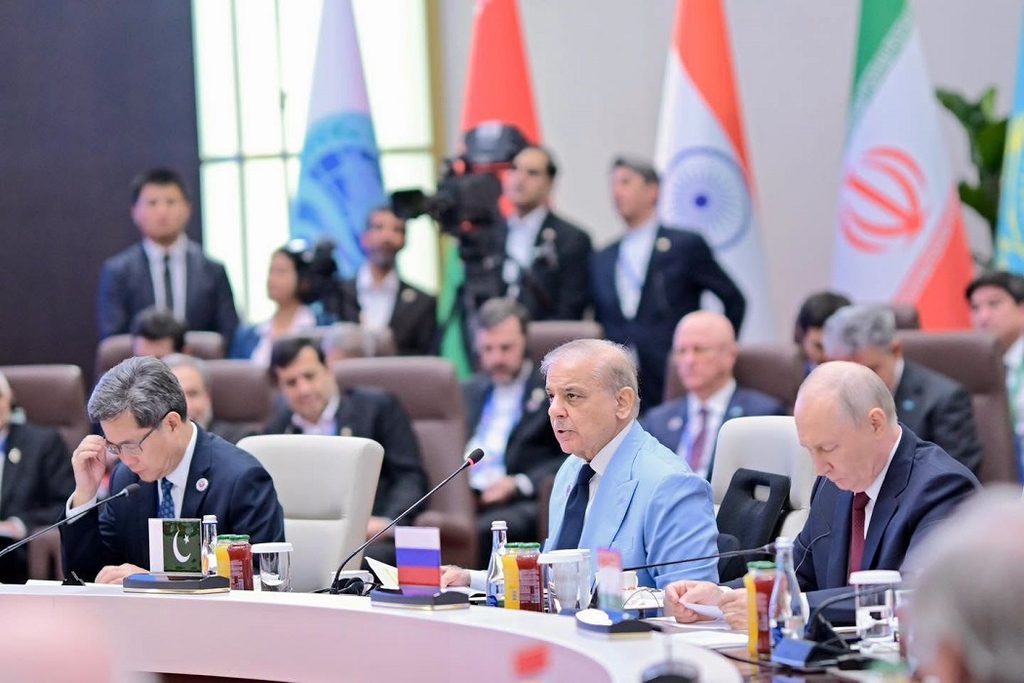
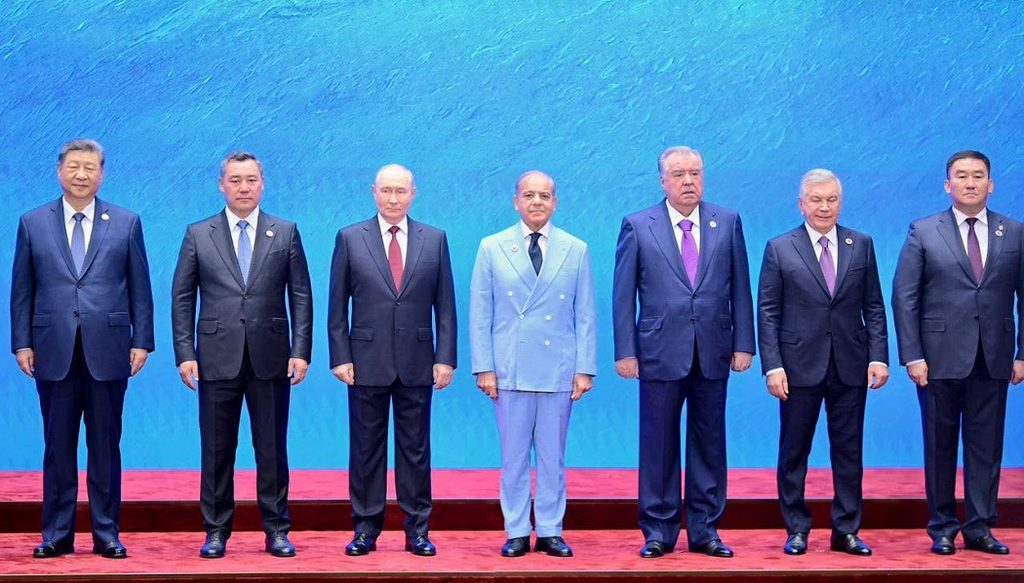
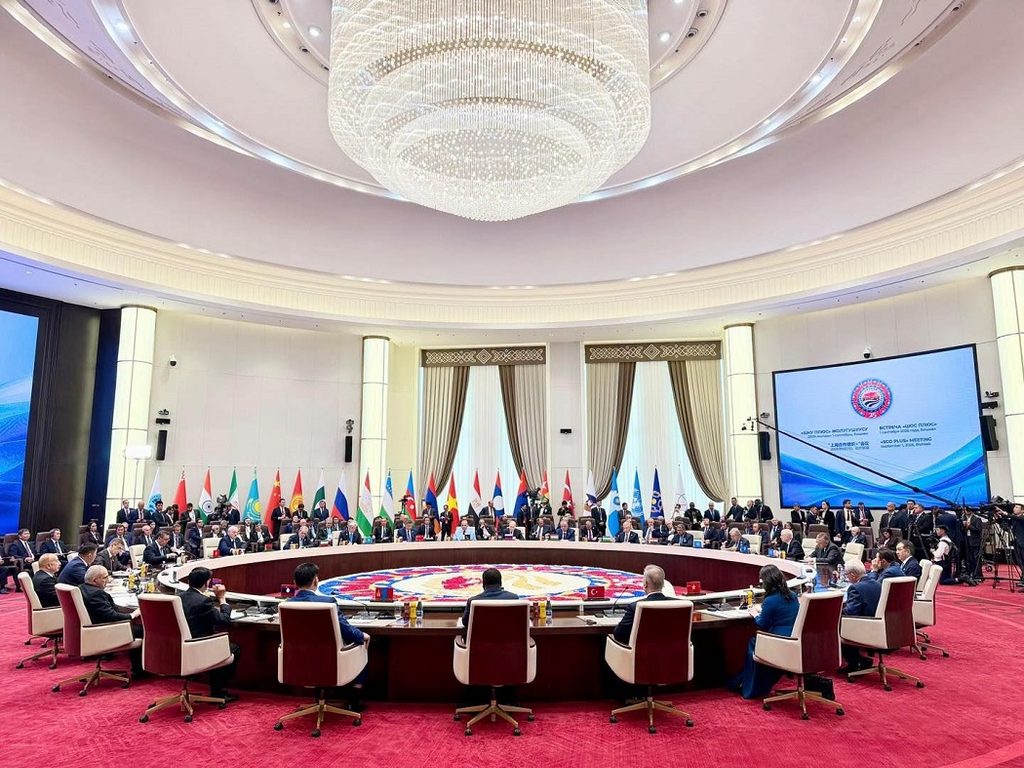
Bishkek/Kyrgyzstan : Pakistan has formally assumed the chairmanship of the SCO Plus, taking over the mantle at the Council of Heads of State Summit in Bishkek, Kyrgyzstan. Prime Minister Muhammad Shehbaz Sharif, addressing the summit, said Pakistan takes on the role “with a clear resolve to advance regional peace, prosperity and cooperation, uphold the UN Charter, support reform of the UN, protect shared water resources, combat terrorism, and prioritize IT and AI, energy development, poverty reduction, disaster management, health, culture and sports.”
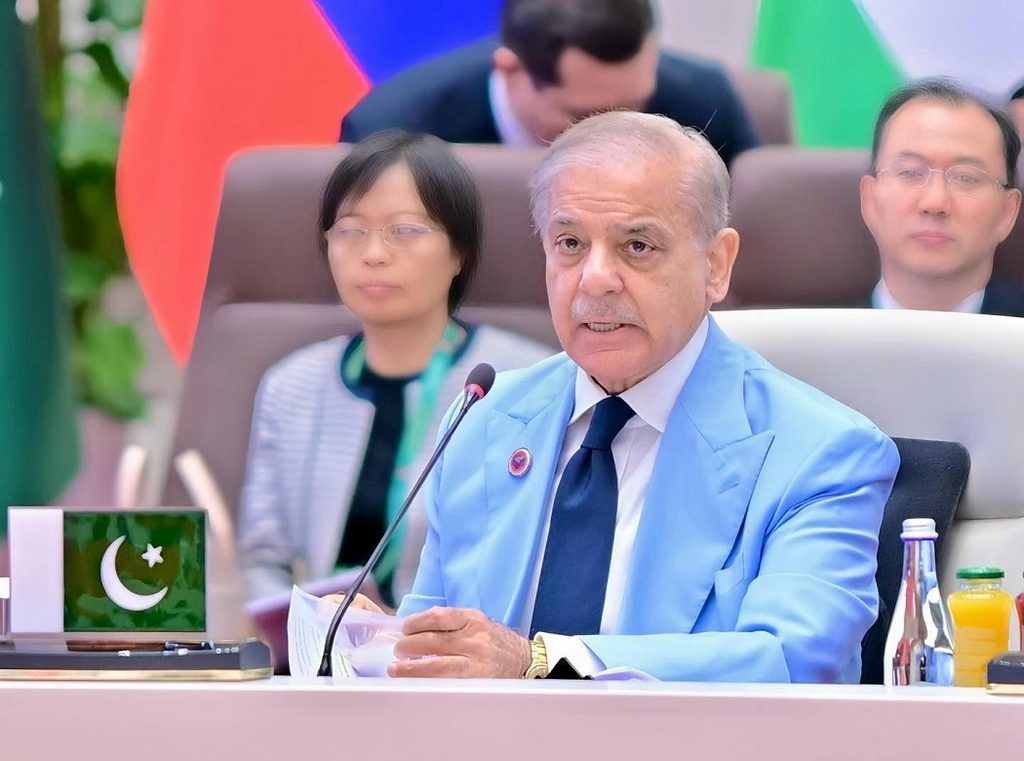
The handover positions Islamabad to steer the SCO’s agenda over the coming year, marking one of Pakistan’s most prominent turns on the multilateral stage since it joined the organization as a full member in 2017.
Pakistan’s Role as Host and Chair of the SCO
Outlining the priorities of Pakistan’s tenure, PM Shehbaz Sharif told the summit: “As Pakistan assumes the chairmanship of the SCO, we are proposing an action plan that shall prioritize key sectors including IT and AI, energy development, poverty reduction, disaster management, health, culture and sports. Pakistan’s SCO chairmanship shall be pursued under the theme ‘Turning Vision into Action, Connectivity, Innovation and Shared Prosperity.’ We undertake this responsibility with humility, hope and abiding faith that connectivity will bring our peoples closer, innovation will open new doors of opportunity and shared prosperity will reach every home.”
As chair, Pakistan takes on responsibility for coordinating the SCO’s ministerial meetings, working groups, and preparatory sessions over the coming year, while steering the thematic priorities laid out in Islamabad’s action plan. Chairing nations typically use the position to spotlight issues of particular national and regional interest, and Pakistan has signaled it will emphasize counterterrorism cooperation, regional connectivity, and expanded trade and economic integration across South and Central Asia.
The chairmanship places Pakistan at the center of high-level Eurasian diplomacy, working alongside heads of state from across the SCO’s ten-member bloc — including China, Russia, India, Kazakhstan, Kyrgyzstan, Tajikistan, Uzbekistan, Iran, and Belarus — a grouping that spans South Asia, Central Asia, the Middle East, and Eastern Europe.
Speaking separately at the SCO Plus Meeting 2026 in Bishkek, PM Shehbaz Sharif underscored connectivity as central to his government’s regional vision: “For years, I have strongly advocated regional connectivity as the key to our prosperity. Today, connectivity is no longer a choice. It is a strategic imperative. The recent crisis has also proven that diversified transport networks, secure energy corridors and resilient supply chains are indispensable to our collective security. The China-Pakistan Economic Corridor continues to serve as a gateway linking the regional economies to the Arabian Sea.” He added that “as the permanent chair of the Special Working Group of the SCO on poverty reduction, Pakistan will continue to strengthen social protection and promote inclusive and sustainable development across the SCO region.”
For Pakistan, the chairmanship carries both opportunity and complexity. It offers a platform to reinforce ties with key partners like China, while also managing the SCO’s characteristic dynamic of bringing together member states with unresolved bilateral tensions — most notably its own relationship with fellow SCO member India — under one cooperative framework. Analysts note that Pakistan’s tenure will be watched closely for how it balances national priorities with the consensus-driven, non-confrontational diplomatic style the SCO has cultivated among its members.
Pakistan’s assumption of the chair also comes with practical responsibilities: convening senior officials’ meetings, foreign ministers’ councils, and sectoral dialogues on security, trade, and cultural cooperation throughout the year, building toward the transfer of the chairmanship at the next summit.
Pakistan’s Contribution to Eurasia’s Peaceful Development
Beyond the ceremonial weight of the chairmanship, Pakistan has increasingly positioned itself as a contributor to Eurasia’s broader connectivity and stability agenda — a role it is expected to lean into during its tenure at the SCO’s helm. Central to this is the China-Pakistan Economic Corridor (CPEC), the flagship project of China’s Belt and Road Initiative (BRI), which links Pakistan’s deep-water port at Gwadar to western China through a network of highways, energy projects, and industrial zones. Islamabad has consistently framed CPEC not merely as a bilateral undertaking but as a node in a wider Eurasian connectivity architecture, one that ties South Asia into overland trade routes stretching toward Central Asia, the Middle East, and beyond.
Digital connectivity has emerged as another pillar of Pakistan’s regional contribution. Investments in fiber-optic infrastructure, cross-border data corridors, and e-commerce facilitation are increasingly framed by Islamabad as extensions of the same connectivity logic underpinning CPEC and the BRI — efforts to knit Eurasia together not just through physical trade routes but through digital trade and communication links as well. Pakistani officials have pointed to these initiatives as part of a broader push to position the country as a transit and digital hub bridging South Asia with Central Asian and Chinese markets.
Pakistan has also cast itself as a stakeholder in regional peace and stability, arguing that its own security cooperation — including counterterrorism coordination through SCO mechanisms — supports the broader stability needed for Eurasian connectivity projects to succeed. Officials in Islamabad frequently note that sustained economic corridors like CPEC depend on a secure operating environment, and that Pakistan’s engagement on counterterrorism and border security within the SCO framework is therefore inseparable from its economic connectivity ambitions. As chair, Pakistan is expected to use this framing to advocate for closer coordination between the SCO’s security and economic tracks, presenting connectivity and stability as mutually reinforcing goals for the wider region.
News Backgrounder: The Shanghai Cooperation Organization
The SCO was formally established in 2001, evolving out of the “Shanghai Five” mechanism created in the 1990s by China, Russia, Kazakhstan, Kyrgyzstan, and Tajikistan to resolve border disputes and ease military tensions among post-Soviet neighbors. Since then, it has grown from a narrow security arrangement into a ten-member bloc spanning South Asia, Central Asia, the Middle East, and Eastern Europe.
Membership now includes China, Russia, Kazakhstan, Kyrgyzstan, Tajikistan, Uzbekistan, India, Pakistan, Iran, and Belarus — with India and Pakistan admitted in 2017, Iran in 2023, and Belarus in 2024.
Mandate: The organization’s scope has broadened considerably beyond its original security focus to encompass:
- Security cooperation, including coordinated counterterrorism efforts and confidence-building measures among member states
- Economic cooperation, including trade facilitation, regional connectivity projects, and discussions around a proposed SCO development bank
- Cultural cooperation, including exchange programs and joint cultural initiatives across the region
The chairmanship of the SCO rotates annually among member states, with the chairing country responsible for hosting that year’s Council of Heads of State Summit and setting priorities for the organization’s work throughout its term.
Conclusion
Pakistan’s assumption of the SCO Plus chairmanship, under the theme “Turning Vision into Action, Connectivity, Innovation and Shared Prosperity,” marks a significant milestone in its engagement with the organization, positioning Islamabad to shape the bloc’s priorities in the year ahead. As PM Shehbaz Sharif told the Bishkek summit, Pakistan takes on the role with “humility, hope and abiding faith that connectivity will bring our peoples closer, innovation will open new doors of opportunity and shared prosperity will reach every home.” As the SCO continues to grow in both membership and mandate, Pakistan’s tenure at the helm offers a test of the organization’s core premise — that dialogue across security, economic, and cultural lines can hold together a diverse group of states, including some with longstanding bilateral tensions. For Pakistan, and for the wider region, the chairmanship underscores the SCO’s continuing role as a driver of Eurasian regional connectivity and cooperation, linking South Asia, Central Asia, and beyond within a single cooperative framework.
Pakistan’s Role as Host of SCO 2027
As chair, Pakistan takes on responsibility for coordinating the SCO’s ministerial meetings, working groups, and preparatory sessions in the lead-up to the 2027 summit, while also setting thematic priorities for the year ahead. Chairing nations typically use the position to spotlight issues of particular national and regional interest, and Pakistan is expected to emphasize themes central to its own foreign policy agenda — including counterterrorism cooperation, regional connectivity, and expanded trade and economic integration across South and Central Asia.
Hosting the 2027 summit will place Pakistan at the center of high-level Eurasian diplomacy, welcoming heads of state from across the SCO’s ten-member bloc — including China, Russia, India, Kazakhstan, Kyrgyzstan, Tajikistan, Uzbekistan, Iran, and Belarus — to Islamabad or another host city for a gathering that brings together countries spanning South Asia, Central Asia, the Middle East, and Eastern Europe.
For Pakistan, the chairmanship carries both opportunity and complexity. It offers a platform to reinforce ties with key partners like China, while also managing the SCO’s characteristic dynamic of bringing together member states with unresolved bilateral tensions — most notably its own relationship with fellow SCO member India — under one cooperative framework. Analysts note that Pakistan’s tenure will be watched closely for how it balances national priorities with the consensus-driven, non-confrontational diplomatic style the SCO has cultivated among its members.
Pakistan’s assumption of the chair also comes with practical responsibilities: convening senior officials’ meetings, foreign ministers’ councils, and sectoral dialogues on security, trade, and cultural cooperation throughout the year, all building toward the transfer of the chairmanship at the 2027 summit itself.
News Backgrounder: The Shanghai Cooperation Organization
The SCO was formally established in 2001, evolving out of the “Shanghai Five” mechanism created in the 1990s by China, Russia, Kazakhstan, Kyrgyzstan, and Tajikistan to resolve border disputes and ease military tensions among post-Soviet neighbors. Since then, it has grown from a narrow security arrangement into a ten-member bloc spanning South Asia, Central Asia, the Middle East, and Eastern Europe.
Membership now includes China, Russia, Kazakhstan, Kyrgyzstan, Tajikistan, Uzbekistan, India, Pakistan, Iran, and Belarus — with India and Pakistan admitted in 2017, Iran in 2023, and Belarus in 2024.
Mandate: The organization’s scope has broadened considerably beyond its original security focus to encompass:
- Security cooperation, including coordinated counterterrorism efforts and confidence-building measures among member states
- Economic cooperation, including trade facilitation, regional connectivity projects, and discussions around a proposed SCO development bank
- Cultural cooperation, including exchange programs and joint cultural initiatives across the region
The chairmanship of the SCO rotates annually among member states, with the chairing country responsible for hosting that year’s Council of Heads of State Summit and setting priorities for the organization’s work throughout its term.
Conclusion
Pakistan’s assumption of the SCO chairmanship marks a significant milestone in its engagement with the organization, positioning Islamabad to shape the bloc’s priorities in the run-up to the 2027 summit. As the SCO continues to grow in both membership and mandate, Pakistan’s tenure at the helm offers a test of the organization’s core premise — that dialogue across security, economic, and cultural lines can hold together a diverse group of states, including some with longstanding bilateral tensions. For Pakistan, and for the wider region, the chairmanship underscores the SCO’s continuing role as a driver of Eurasian regional connectivity and cooperation, linking South Asia, Central Asia, and beyond within a single cooperative framework.
]]>Peshawar’s ancient treasures — from a 2,000-year-old museum to a Silk Road-era merchant house — draw international praise as four Khyber Pakhtunkhwa sites enter UNESCO’s World Heritage Tentative List.
Introduction
Khyber Pakhtunkhwa’s ancient Gandhara civilization is once again capturing global attention. In a series of high-profile visits, international diplomats have toured the region’s most treasured archaeological sites, praising the provincial government’s efforts to preserve a heritage that once linked South Asia, Central Asia, and China along the fabled Silk Road. The visits coincide with a landmark development: UNESCO’s World Heritage Centre has formally added four major heritage sites from Khyber Pakhtunkhwa to its prestigious World Heritage Tentative List, a significant step toward eventual world heritage status.
UN Representative Visits Peshawar Museum
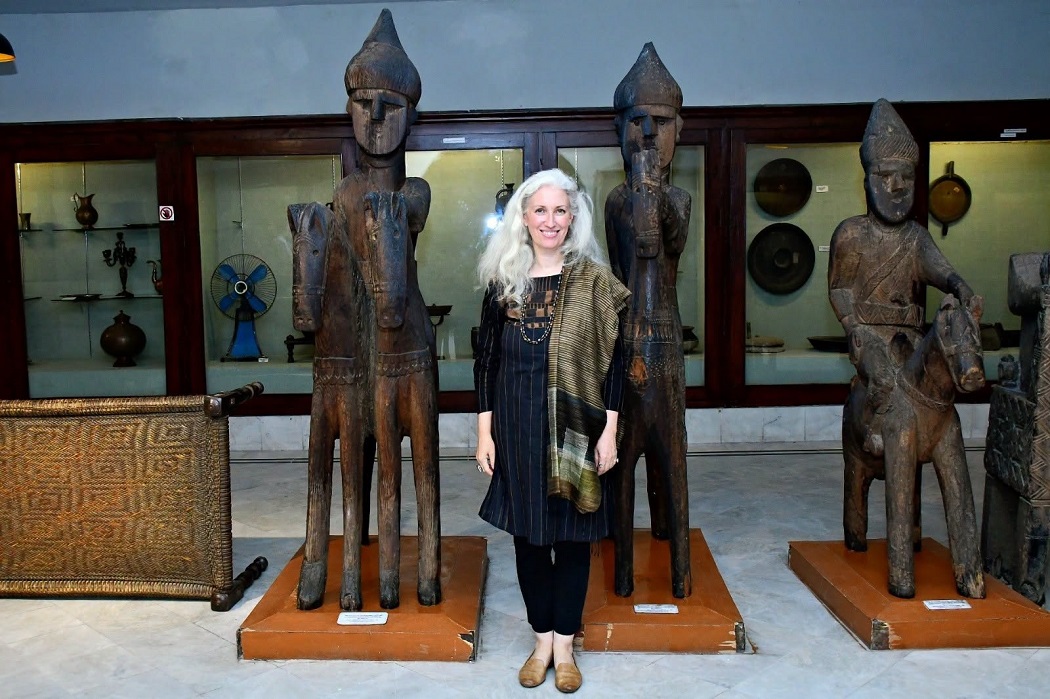
Pernille Ironside, the United Nations Representative in Pakistan, recently visited the Peshawar Museum, one of South Asia’s most important repositories of Gandhara art and Buddhist-era artifacts. During her tour, she explored the museum’s extensive collection of sculptures, relics, and archaeological finds that trace the region’s role as a crossroads of civilizations.
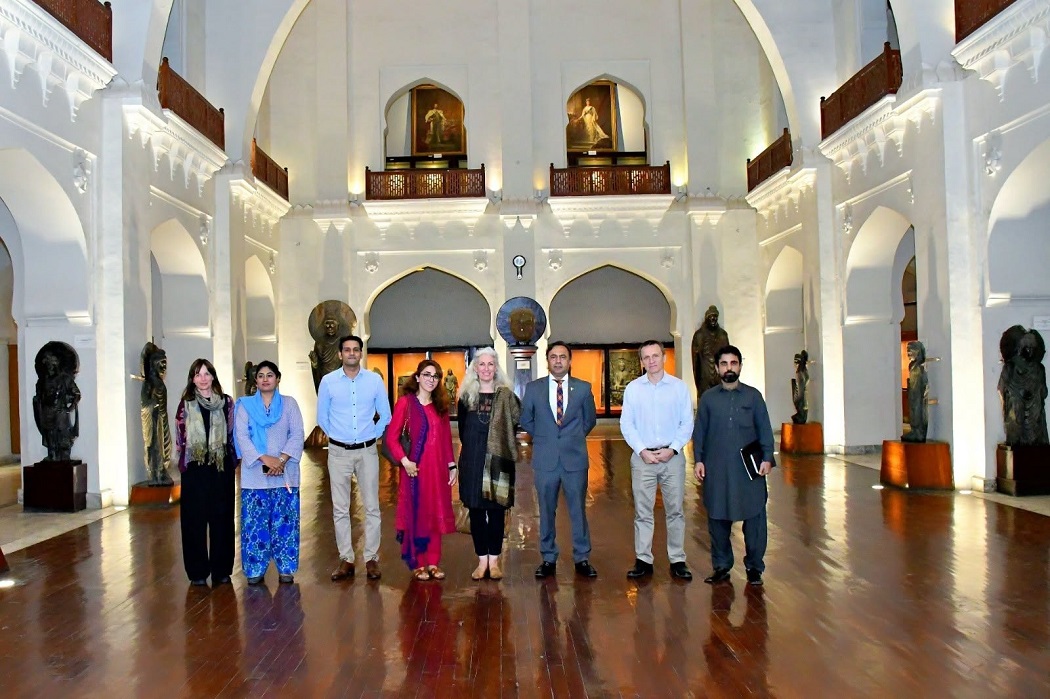
Ironside commended the Government of Khyber Pakhtunkhwa for its sustained commitment to preserving and promoting the province’s archaeological and cultural wealth. She specifically appreciated the efforts of the Directorate General of Archaeology & Museums, KP, for its continued work in protecting these historic treasures and making them accessible to scholars, tourists, and the public alike.
The Peshawar Museum, established during the colonial era and later expanded, houses one of the world’s finest collections of Gandhara sculpture — stone and stucco artworks that blend Greco-Roman artistic techniques with Buddhist religious themes. These pieces stand as physical evidence of the cultural fusion that flourished in the region roughly two thousand years ago.
Chinese Diplomats Tour Historic Sethi House
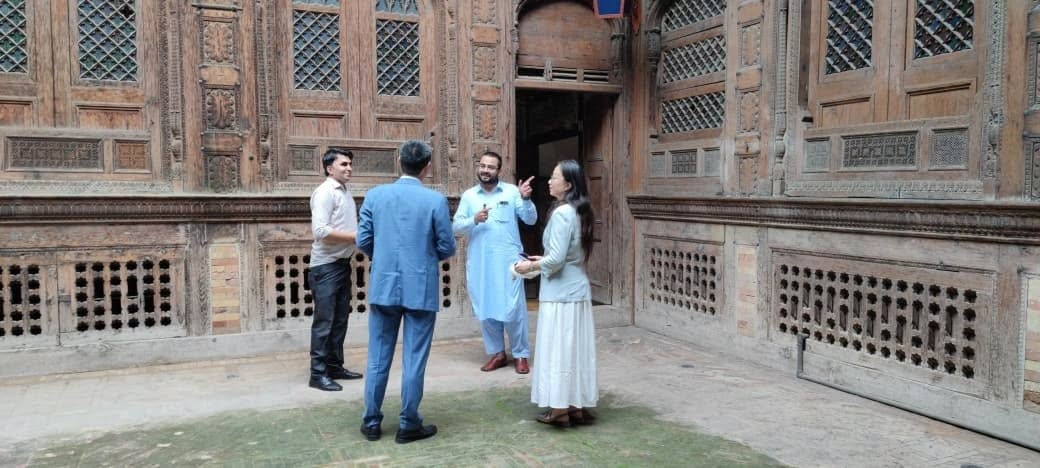
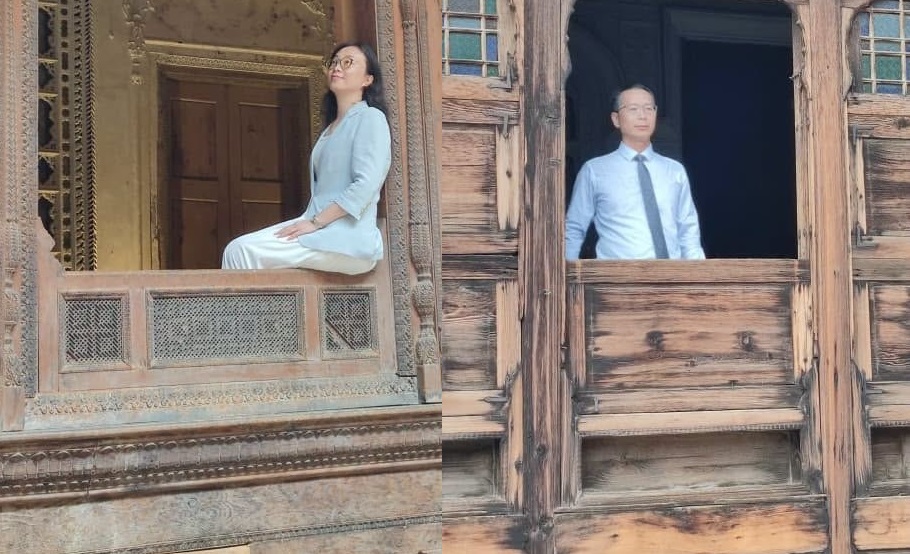
In a separate but equally significant visit, a delegation of Chinese diplomats toured the historic Sethi House in Peshawar, one of the city’s most architecturally distinctive heritage buildings. Built by wealthy merchants who traded along Silk Road routes stretching from Peshawar to Central Asia and China, Sethi House is renowned for its intricate woodwork, ornate interiors, and design elements reflecting influences from across the trade routes it once serviced.
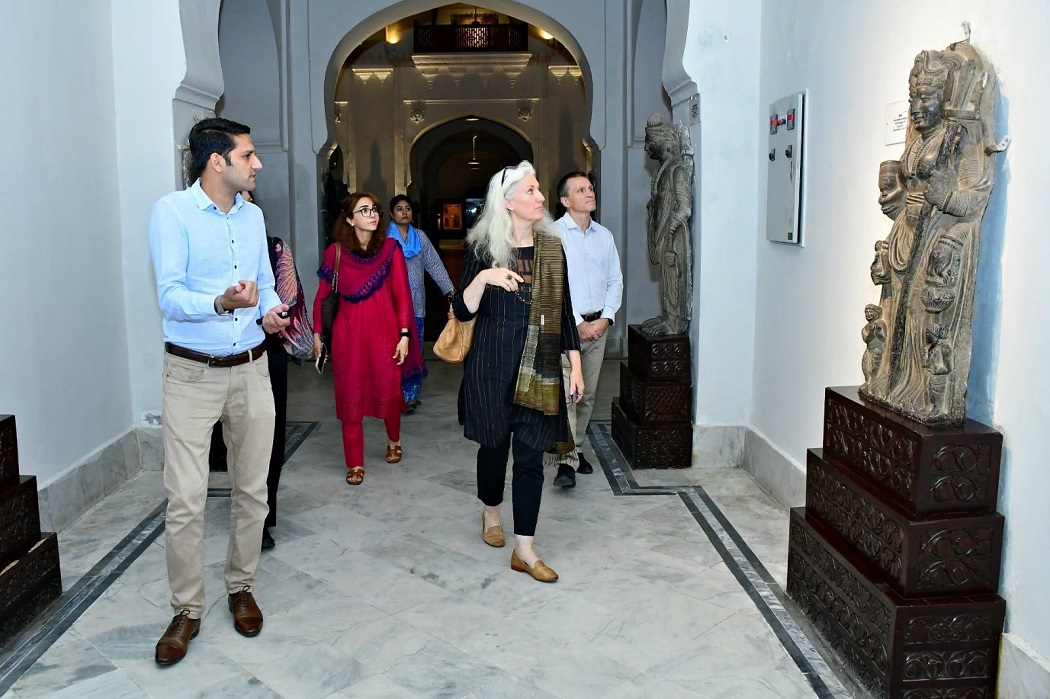
The Chinese delegation praised the Directorate General of Archaeology & Museums, KP, for its continued efforts to preserve and promote this rare architectural legacy. Their visit carries particular symbolic weight given the historic trade and cultural links between the merchants of Peshawar and China during the Silk Road era — links that Sethi House itself embodies in brick, timber, and craftsmanship.
The visit also comes at a moment of renewed recognition for the building: Sethi House has now been included in UNESCO’s World Heritage Tentative List, an achievement described by heritage officials as a proud recognition of its historical and architectural significance.
Background: The Gandhara Civilization and the Silk Road
To understand why these visits matter, it helps to look back at the deep history behind them. The Gandhara civilization flourished in what is now Khyber Pakhtunkhwa and parts of northern Pakistan and eastern Afghanistan, reaching its peak between the 1st and 5th centuries CE. Positioned at the crossroads of the Indian subcontinent, Central Asia, Persia, and China, Gandhara became one of antiquity’s great melting pots — a place where Buddhist philosophy, Greco-Roman artistic traditions (introduced following Alexander the Great’s campaigns), and local South Asian culture merged into a distinctive artistic and architectural style.
This region sat directly along branches of the Silk Road, the network of trade routes that connected East Asia to the Mediterranean world for centuries. Caravans carrying silk, spices, precious stones, and ideas passed through cities like Peshawar (ancient Purushapura) and Taxila, turning the region into a thriving center of commerce, scholarship, and religious exchange. Buddhist monks, traders, and pilgrims traveled these routes, and it was here that some of the earliest depictions of the Buddha in human form were created — a fusion of Hellenistic sculptural technique and Buddhist iconography that came to define Gandhara art.
Today, that legacy survives in stone stupas, monastic ruins, ancient city remains, and elegant merchant houses scattered across Khyber Pakhtunkhwa — physical memories of a time when this land was not a periphery but a hub of the ancient world.
A Proud Milestone: Four KP Sites Added to UNESCO’s Tentative List
The recent diplomatic visits align with a major recognition from UNESCO. The World Heritage Centre has added four significant archaeological and heritage sites from Khyber Pakhtunkhwa to its World Heritage Tentative List — the preparatory list of sites a country intends to nominate for full World Heritage status. The sites are:
- Bhamala, Haripur — home to a renowned Buddhist stupa and monastery complex, notable for its cruciform stupa design and rich collection of Gandhara-era relics.
- Sethi House, Peshawar — a 19th-century merchant mansion celebrated for its Silk Road-influenced architecture and craftsmanship.
- Barikot, Swat — an ancient urban settlement with layers of occupation dating back thousands of years, offering deep insight into the region’s continuous habitation and cultural evolution.
- Gor Khatri, Peshawar — a historic mound site in the heart of old Peshawar with a layered history spanning Buddhist, Mughal, and Sikh periods.
This inclusion marks a proud milestone for Khyber Pakhtunkhwa, positioning these sites on the path toward potential inscription as full UNESCO World Heritage Sites — a status that could bring greater international recognition, research collaboration, and cultural tourism to the province.
A Collaborative Effort to Safeguard Heritage
Officials have emphasized that this progress reflects sustained collaboration rather than isolated effort. The Government of Khyber Pakhtunkhwa, acting through the Directorate General of Archaeology & Museums, KP, has been working closely with Federal Archaeology authorities and UNESCO Pakistan to document, conserve, and promote the province’s archaeological wealth.
This partnership approach has become increasingly important as heritage sites across the region face pressures from urbanization, limited conservation funding, and the challenges of balancing preservation with public access. By pursuing UNESCO recognition, provincial authorities aim to secure not only prestige but also technical support, international attention, and long-term conservation frameworks for these irreplaceable sites.
The renewed diplomatic interest — from the United Nations to Chinese representatives — also signals growing international awareness of Khyber Pakhtunkhwa’s potential as a heritage and cultural tourism destination, one capable of drawing scholars, history enthusiasts, and travelers eager to walk in the footsteps of ancient traders and pilgrims.
Why This Matters for Heritage Tourism
For Khyber Pakhtunkhwa, heritage preservation is increasingly intertwined with economic opportunity. Well-preserved and internationally recognized sites can become anchors for cultural tourism, generating income for local communities, encouraging investment in conservation infrastructure, and creating educational opportunities tied to archaeology, history, and museum studies.
The Peshawar Museum and Sethi House already attract researchers and visitors interested in Gandhara art and Silk Road history. With UNESCO Tentative List status now attached to Bhamala, Sethi House, Barikot, and Gor Khatri, expectations are rising that these sites will see increased conservation funding, improved visitor facilities, and greater visibility on the global cultural map.
Conclusion: Preserving Gandhara Heritage and Silk Road Memories
The story of Khyber Pakhtunkhwa’s heritage is, in many ways, the story of the ancient Silk Road itself — a tale of civilizations meeting, trading, and shaping one another across centuries. From the Buddhist sculptures housed in Peshawar Museum to the ornate woodwork of Sethi House and the layered ruins of Barikot and Gor Khatri, these sites are living memories of a time when this region stood at the center of global exchange rather than its margins.
The recent visits by the UN Representative and Chinese diplomats, paired with UNESCO’s decision to add four KP sites to its World Heritage Tentative List, represent more than diplomatic goodwill — they mark a renewed international commitment to safeguarding Gandhara heritage for future generations. As the Government of Khyber Pakhtunkhwa continues its collaboration with federal authorities and UNESCO Pakistan, the province’s ancient Silk Road memories are being written back into the global story of shared human heritage, ensuring that the legacy of Gandhara endures not just in museums and monuments, but in the world’s collective memory.
]]>[ad_1]
-
RCCI President Usman Shaukat calls for expanding bilateral trade and building stronger business-to-business linkages between between Pakistan and China.
By: Muhammad Arif, Editor NSN.Asia
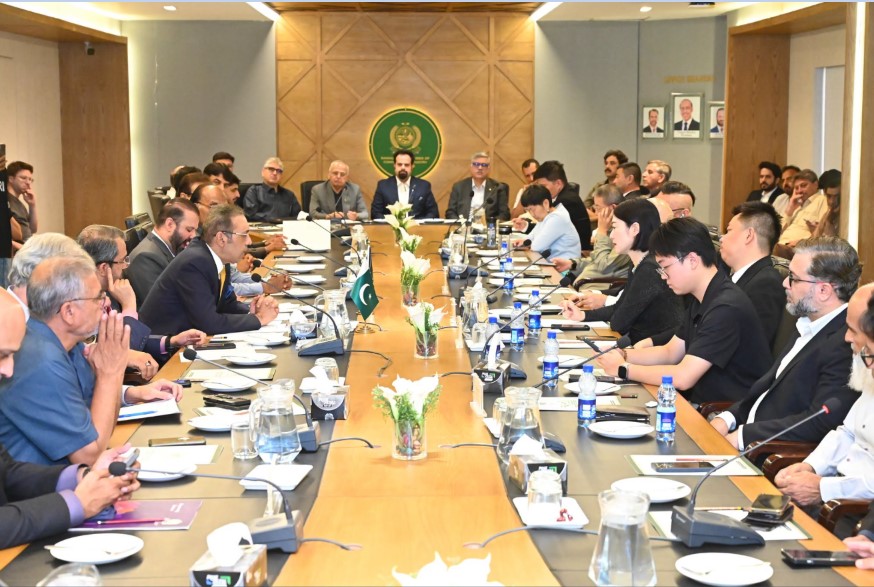
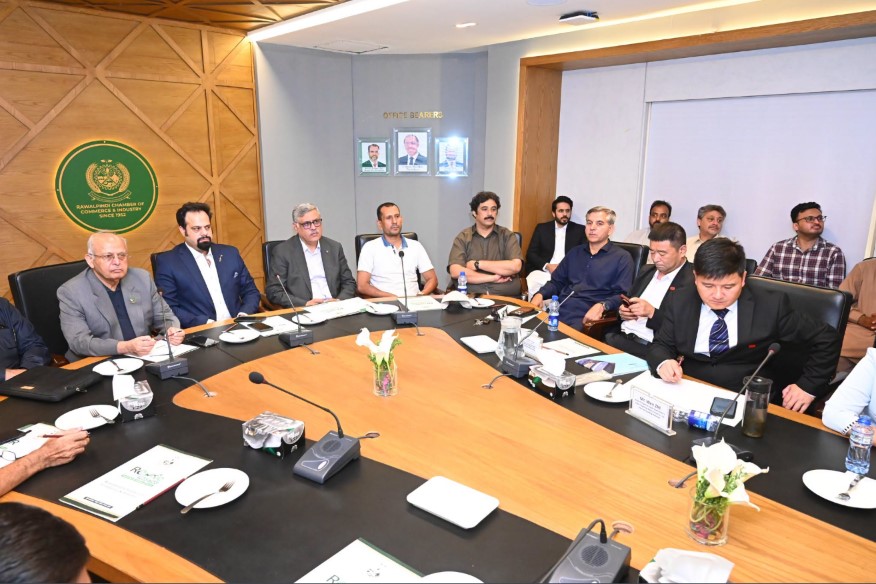
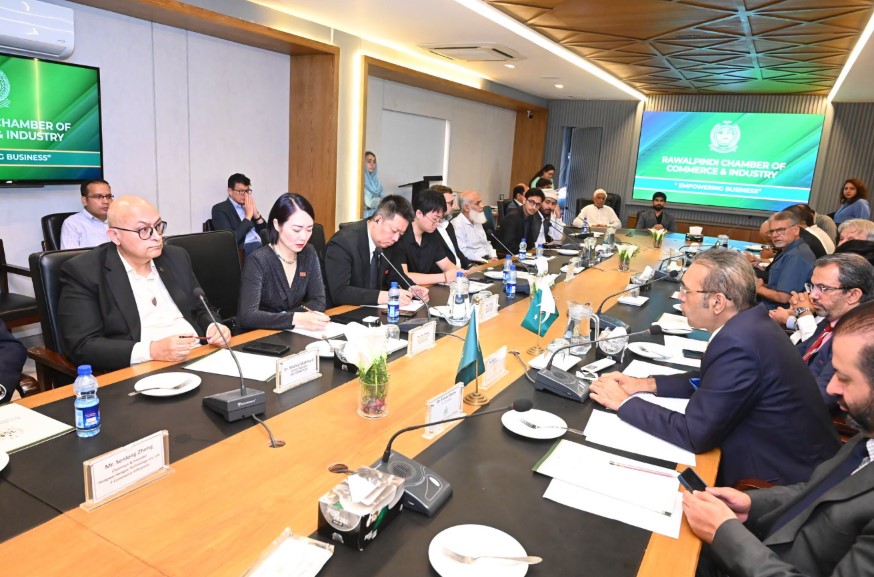
Rawalpindi — The Rawalpindi Chamber of Commerce & Industry (RCCI) hosted a high-level Chinese business delegation at Chamber House for a business-to-business (B2B) collaboration meeting aimed at deepening trade and investment ties between Pakistan and China.
The session was chaired by RCCI President Usman Shaukat, who welcomed the visiting delegation and stressed the importance of expanding bilateral trade and building stronger business-to-business linkages between the two countries.
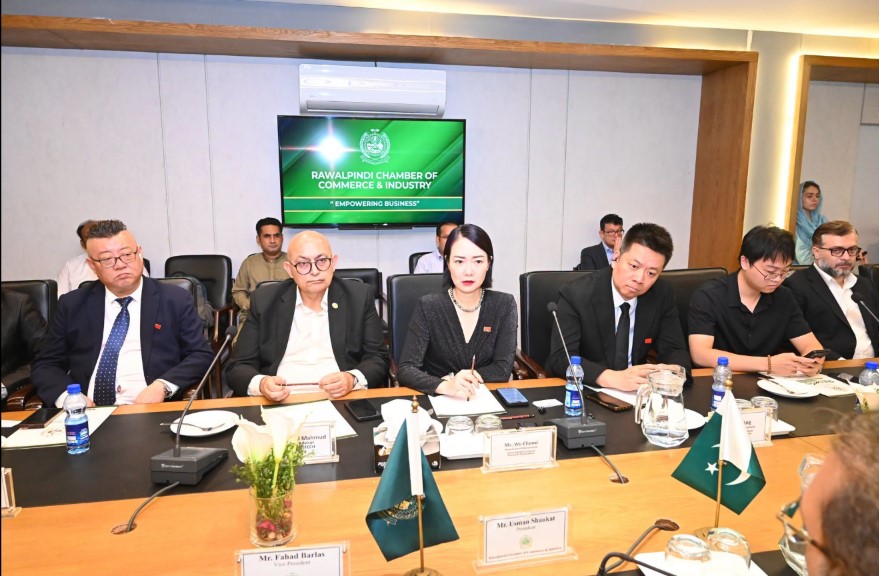
He was joined by RCCI Senior Vice President Khalid Farooq Qazi, Vice President Fahad Barlas, members of the Executive Committee, and representatives from a cross-section of local business sectors.
Chinese Delegation Spans Ten Industries
The visiting delegation was led by Li Ang, Deputy Secretary-General of the China Business Culture Research Association, and included business leaders and experts drawn from a wide range of industries: steel and building materials, renewable energy, electric vehicles, new energy solutions, aviation and the low-altitude economy, agriculture technology, financial services, investment advisory, cultural exchange, and industrial manufacturing.
That breadth of sectors reflects the direction China–Pakistan economic cooperation has been taking over the past year, moving beyond the large-scale infrastructure projects associated with the corridor’s first phase toward technology, industry and private-sector-led investment.
Trade, Investment and Technology on the Agenda
According to RCCI, the meeting served as a platform for exploring trade opportunities, investment partnerships and technology transfer, alongside broader discussion on strengthening economic cooperation between the two countries. Participants from both sides used the session to identify potential areas of collaboration across the sectors represented by the Chinese delegation, from renewable energy and EVs to agri-tech and financial services.
RCCI leadership framed the meeting as part of the chamber’s ongoing effort to connect Rawalpindi’s business community with international partners and attract investment into the region.
Backgrounder: What Is CPEC 2.0?
The meeting comes as Pakistan and China continue rolling out the second phase of the China-Pakistan Economic Corridor (CPEC), widely referred to as CPEC 2.0. CPEC is the roughly $62 billion flagship project of China’s Belt and Road Initiative, designed to connect Pakistan’s Gwadar and Karachi ports to China’s Xinjiang region.
CPEC’s first phase, launched in 2013, was concentrated on large-scale infrastructure: energy projects, roads and port construction aimed at addressing Pakistan’s core infrastructure gaps. That phase formally gave way to CPEC 2.0 at the 14th Joint Cooperation Committee meeting held in Beijing in September 2025, marking a shift toward people-centric development, technological collaboration and regional economic integration.
Officials on both sides describe the new phase as a move from infrastructure toward industrialization. Pakistani officials have said CPEC 2.0 is centered on high-quality development, with expanded cooperation in industrialization, agriculture, mining and minerals, information technology and human resource development, and that the effort is aligned with Pakistan’s broader “5E” development framework covering exports, digital government, climate, energy and equity.
The revamped corridor is also organized around a wider set of priorities. The updated framework is built around five broad corridors — growth, innovation, green development, livelihood and regional connectivity — with the push gaining political momentum around the 75th anniversary of Pakistan-China diplomatic relations. On the investment side, Pakistan has expanded its roster of approved special economic zones from seven to as many as 44, including 37 newly notified zones, through the Board of Investment.
Chinese officials have echoed the shift in emphasis. The Chinese Ambassador to Pakistan has said cooperation under the upgraded second phase of CPEC is expanding into new areas such as agriculture, mining and social development, alongside growing private-sector involvement in exports, value-added industry and human capital development.
Analysts note the transition is still a work in progress. Some commentary frames 2026 as a pivotal year for CPEC’s ability to move from corridor-building to genuine economy-building, describing early results as “optimistically hesitant.” Security and financing pressures remain part of the picture as well, with some infrastructure components, including sections of the ML-1 railway upgrade, reportedly being explored for alternative funding sources such as the Asian Development Bank.
Engagements like this week’s RCCI-hosted B2B meeting reflect how CPEC 2.0’s broader, multi-sector agenda — spanning renewable energy, EVs, agri-tech and manufacturing — is increasingly playing out at the level of chamber-to-chamber and company-to-company contacts, rather than only through government-to-government infrastructure deals.
Why It Matters
For Rawalpindi’s business community, direct engagement with Chinese delegations offers a channel to sectors — renewable energy, electric vehicles, agri-tech, financial services — that are central to where CPEC’s next phase is headed. RCCI’s leadership indicated the chamber intends to keep building on the connections made during the visit as part of its broader push to expand the city’s trade and investment links with China.
[ad_2]
-
Pakistan’s Forward Sports, China’s Zhongzi Huaxin Group signs technical and investment cooperation agreement
By: Muhammad Arif, Editor NSN.Asia
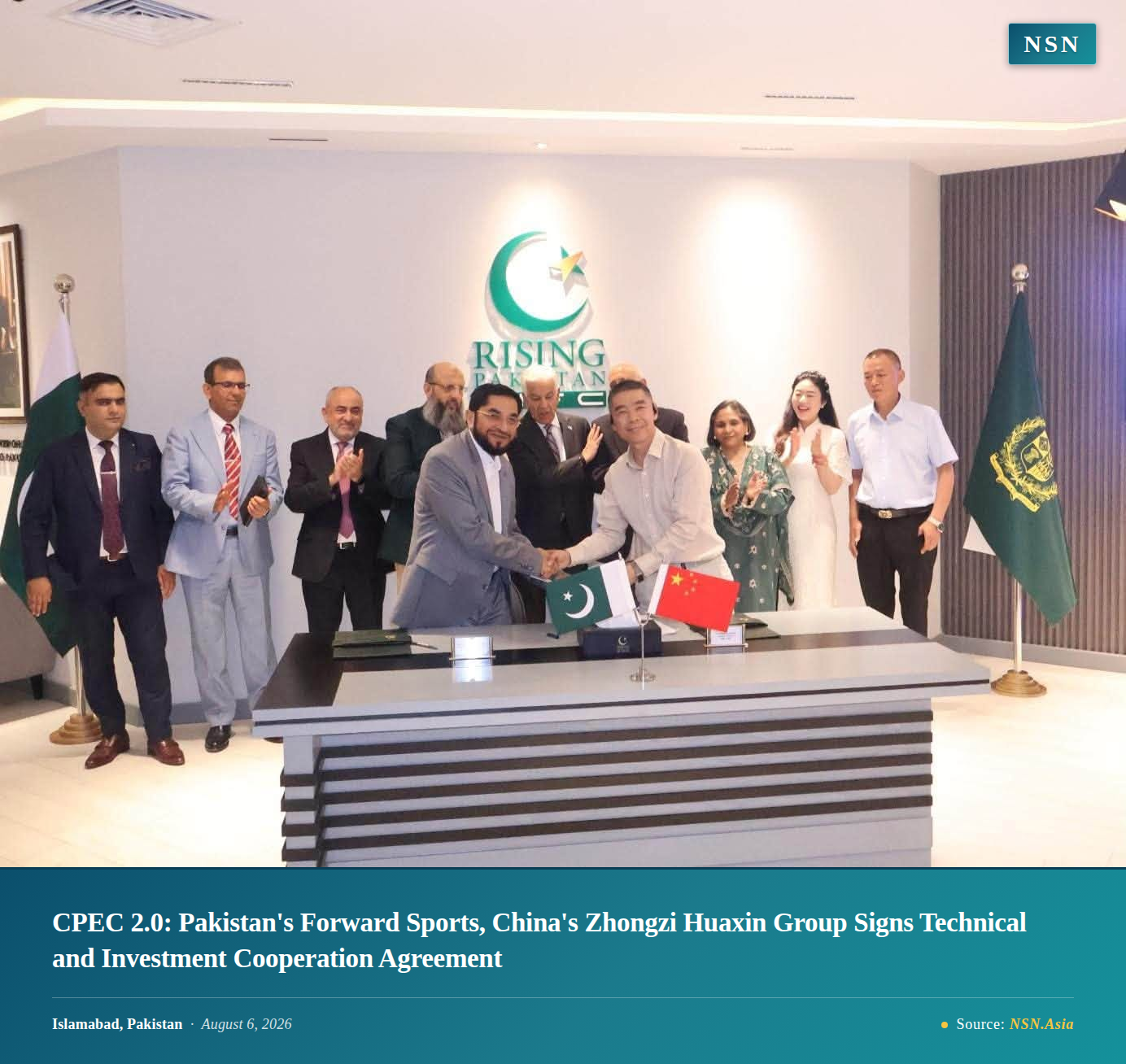
Islamabad — In a fresh sign of expanding Pakistan-China economic and technology cooperation under the second phase of the China-Pakistan Economic Corridor (CPEC 2.0), the Special Investment Facilitation Council (SIFC) on Thursday facilitated the signing of a technical and investment cooperation agreement between Pakistan’s Forward Sports and China’s Zhongzi Huaxin Group.
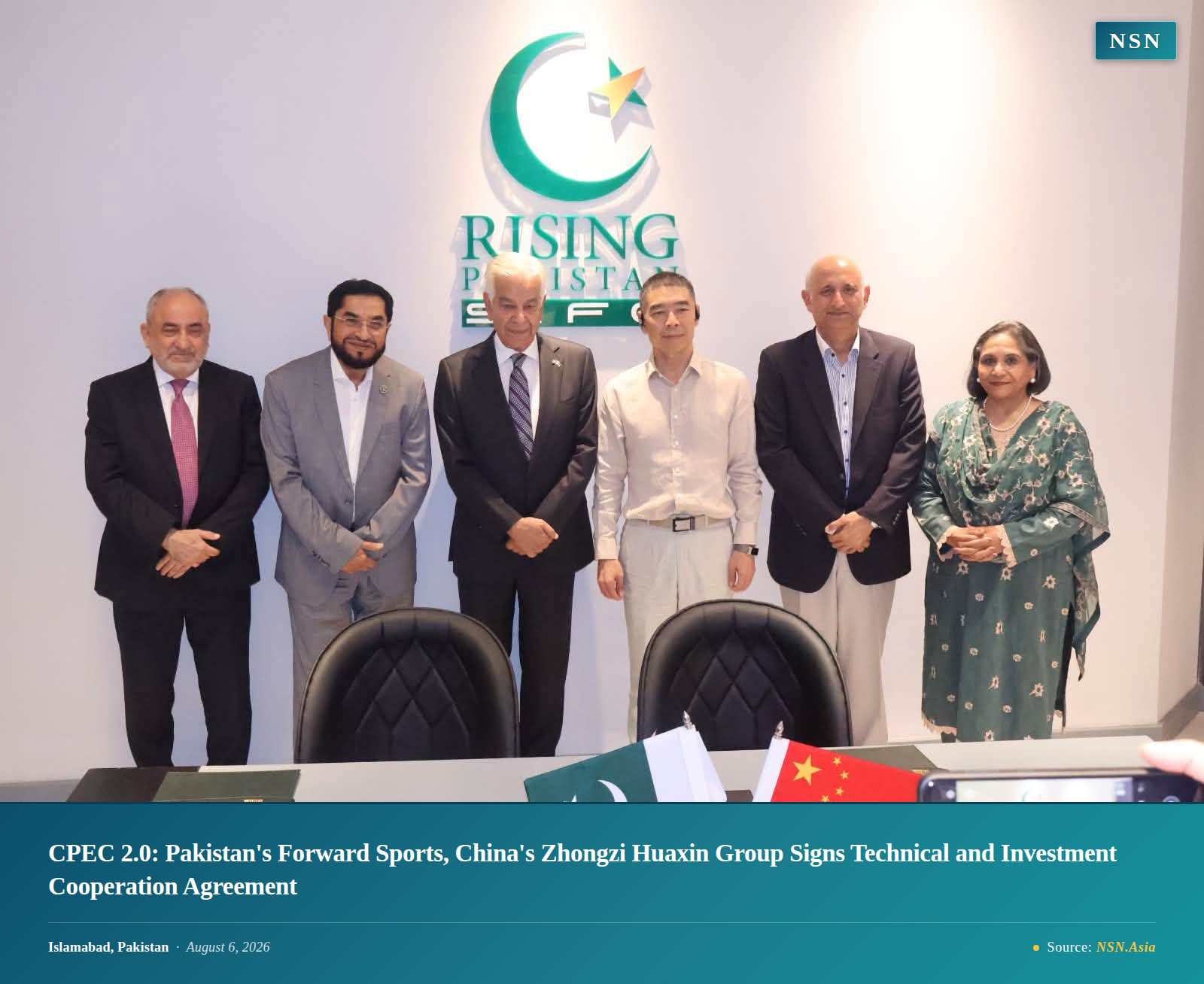
The agreement paves the way for the joint production of world-class sports footwear in Pakistan, combining Pakistani manufacturing capability with Chinese capital and industrial expertise — a partnership model increasingly central to CPEC 2.0’s shift from infrastructure to industrial cooperation, technology transfer, and export-led growth.
About the Partners
Forward Sports is widely recognised as Pakistan’s leading sports goods manufacturer. The company is best known for producing high-quality footballs used at FIFA World Cup tournaments, and it also manufactures sports bags, apparel, and lifestyle footwear for international markets.
Zhongzi Huaxin Group is a diversified Chinese investment and asset management group with established expertise in industrial development, footwear and apparel industrial parks, and regional economic cooperation projects across partner countries.
Signing Ceremony at SIFC
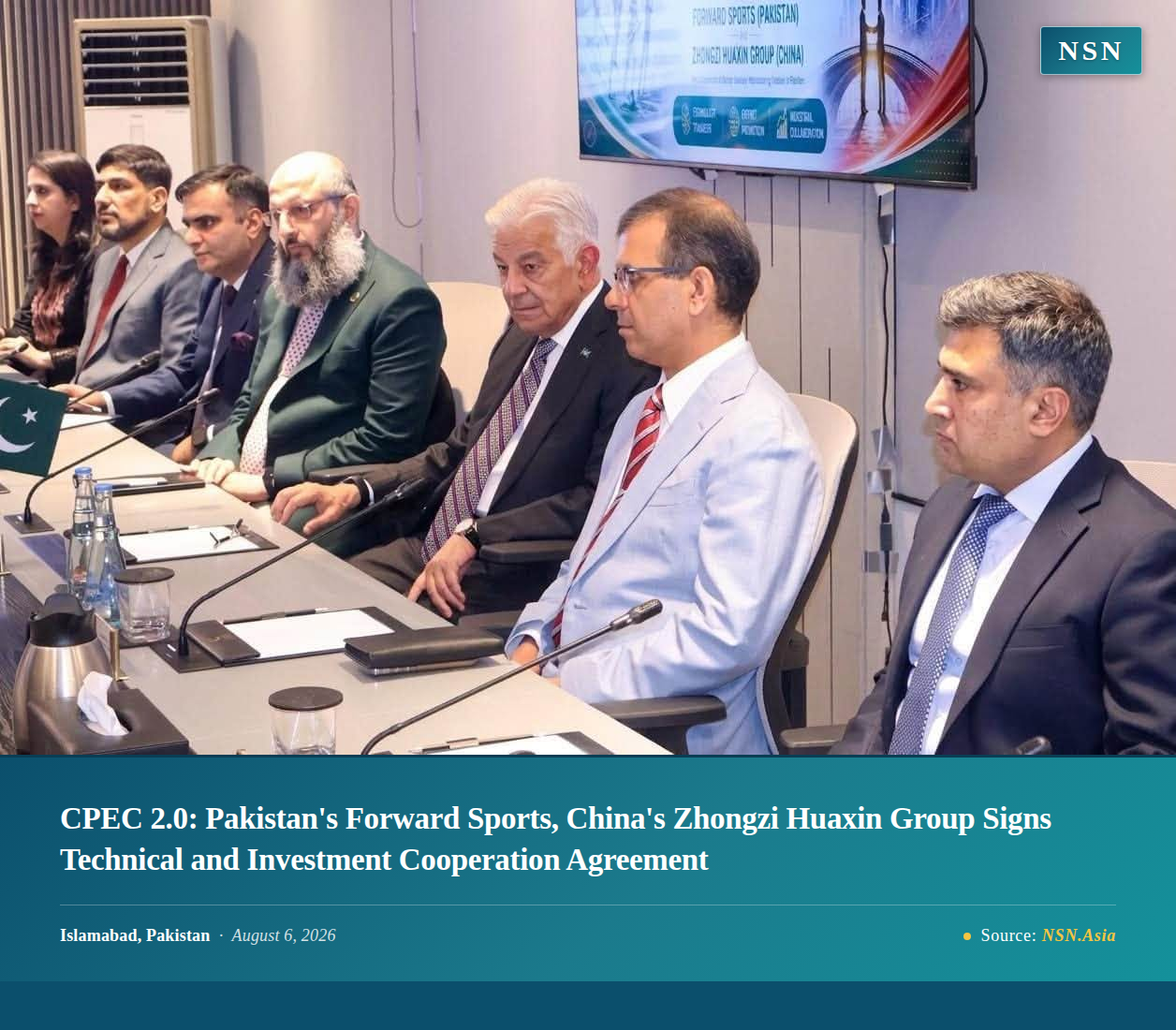
The signing ceremony, held at the SIFC, was attended by senior Pakistani and Chinese stakeholders, including:
- The Minister for Defence
- The Director General, SIFC
- The Chairman, Pakistan Regional Economic Forum
- The Chief Executive Officer, Zhongzi Huaxin Group
- The Chief Executive Officer, Forward Sports
Their presence underscores the strategic weight both governments are placing on private-sector-led industrial cooperation as a pillar of the evolving Pakistan-China economic relationship.
What This Means for CPEC 2.0 and Pakistan’s Economy
Officials say the agreement is expected to deliver benefits across several key areas:
- Technology transfer from Chinese industrial and manufacturing expertise to Pakistan’s footwear sector
- Industrial development, supporting the growth of footwear and apparel manufacturing capacity within Pakistan
- Employment generation, creating jobs across production, supply chain, and export-oriented roles
- Export diversification, helping Pakistan move beyond traditional exports into higher-value manufactured goods
- Greater market share for Pakistan in the growing global footwear industry
By pairing Forward Sports’ manufacturing track record with Zhongzi Huaxin Group’s investment and industrial park experience, the deal reflects the broader CPEC 2.0 strategy of attracting Chinese capital into Pakistan’s special economic zones and export-oriented industries, rather than large-scale infrastructure alone.
Why It Matters
The agreement adds to a growing list of SIFC-facilitated deals aimed at unlocking foreign direct investment in Pakistan’s manufacturing and export sectors. As Pakistan looks to stabilise its economy and boost foreign exchange earnings, partnerships that bring in technology, capital, and access to global supply chains — such as this footwear venture — are being positioned by officials as a template for future Pakistan-China industrial collaboration under CPEC’s next phase.
Backgrounder: What Is CPEC 2.0, and How Does It Fit Into the Belt and Road Initiative?
The China-Pakistan Economic Corridor was launched in 2013 as a flagship project of China’s global Belt and Road Initiative (BRI), envisioned as a network linking China’s Xinjiang region to Pakistan’s Gwadar and Karachi ports on the Arabian Sea. Its first phase concentrated on foundational infrastructure — power plants, highways, and transport links — work credited with easing Pakistan’s chronic energy shortages and improving connectivity between provinces and commercial hubs.
CPEC entered a new phase, widely referred to as CPEC 2.0, following high-level talks between Islamabad and Beijing. The upgraded framework was formally agreed during the seventh round of the Pakistan-China Foreign Ministers’ Strategic Dialogue in Beijing in early January 2026, and it builds on groundwork laid at the 14th Joint Cooperation Committee (JCC) meeting in late 2025. Rather than large-scale infrastructure, CPEC 2.0 shifts the corridor’s focus toward:
- Industrialisation and Special Economic Zones (SEZs) to attract manufacturing investment and boost exports
- Agriculture modernisation, including improved seed varieties, irrigation, and farming technology
- Mining and mineral development
- Information technology, science and technology, and cybersecurity cooperation
- Technical and vocational training
- Continued development of Gwadar Port as a regional trade hub, and the Main Line-1 (ML-1) railway upgrade
- For the first time, an openness to third-country participation in CPEC projects under terms agreed by both Islamabad and Beijing
Officials on both sides describe CPEC 2.0 as a move from “connectivity” to “value addition” — prioritising industrial and technology partnerships, of the kind reflected in the Forward Sports-Zhongzi Huaxin Group agreement, over new roads and power plants. Since CPEC’s inception, Chinese officials cite more than $25 billion in direct investment delivered through the corridor, alongside hundreds of thousands of jobs and thousands of megawatts of added power generation capacity — figures Beijing points to as evidence of the corridor’s role as a model for Belt and Road cooperation more broadly.
The recalibration also comes as 2026 marks the 75th anniversary of Pakistan-China diplomatic relations, with both governments describing themselves as “all-weather strategic cooperative partners” and announcing a year of commemorative engagements alongside the CPEC 2.0 rollout.
Conclusion: A Deepening Economic Partnership
The SIFC-facilitated agreement between Forward Sports and Zhongzi Huaxin Group is a small but telling example of where Pakistan-China relations are headed. As CPEC moves past its infrastructure-heavy first decade, the emphasis is increasingly on industrial partnerships, technology transfer, and export capacity — sectors where private Chinese and Pakistani firms, rather than state-to-state megaprojects alone, are expected to drive growth.
For Pakistan, deals of this kind offer a pathway to diversify exports, create jobs, and attract the kind of foreign investment needed to stabilise a economy still facing inflationary pressure and external debt challenges. For China, they extend the reach of the Belt and Road Initiative into higher-value manufacturing and reinforce Pakistan’s position as a key BRI partner in South Asia.
With CPEC 2.0 still in its early stages and more agreements expected to follow, the footwear venture is likely to be one of several similar announcements in the coming months — each adding to a broader narrative of a Pakistan-China partnership that is expanding beyond roads and power plants into industry, technology, and trade.
[ad_2]
]]>We welcome feedback, story tips, corrections, and press inquiries from our readers. Whether you’re a source with information on Eurasia–Global South connectivity, a reader with a correction, or a business interested in advertising or partnership opportunities, we’d like to hear from you.
Newsroom Address
Iqbal Tower, #17 Sector H-13 Islamabad, Pakistan
General inquiries: MediaSilkRoad@gmail.com Editorial / story tips: silkroadnews1@gmail.com Advertising & partnerships: MediaSilkRoad@gmail.com
Phone
[+92-3205608277]
What to Contact Us About
- Story tips — Have information on trade, infrastructure, or diplomatic developments across Eurasia and the Global South? Send us the details.
- Corrections — Spotted an error in one of our articles? Let us know the article title, link, and the correction needed, and we’ll review it promptly.
- Press & media inquiries — Journalists and researchers seeking comment or collaboration can reach out via our editorial email.
- Advertising & partnerships — Interested in advertising with us or exploring a content partnership? Contact our advertising team.
- General feedback — Questions, suggestions, or comments about the site are always welcome.
Response Time
We aim to respond to all inquiries within [add your typical response time, e.g., 2–3 business days]. Story tips and time-sensitive press inquiries are prioritized.
]]>Last updated: [25-06-2026]
Dear visitors, Welcome to SILK ROAD NEWS . These Terms and Conditions (“Terms”) govern your access to and use of our website, including any content, features, and services offered on it. By accessing or using this site, you agree to be bound by these Terms. If you do not agree, please do not use our website.
1. Use of Our Website
You agree to use this website only for lawful purposes and in a manner that does not infringe the rights of, restrict, or inhibit anyone else’s use of the site. Prohibited behavior includes, but is not limited to:
- Harassing, abusing, or harming other users or third parties
- Attempting to gain unauthorized access to our systems, servers, or data
- Uploading or transmitting viruses, malware, or other harmful code
- Scraping, data-mining, or using automated tools to extract content without permission
- Impersonating any person or entity, or misrepresenting your affiliation with any person or entity
- Using the site to distribute spam, unsolicited advertising, or fraudulent content
2. Intellectual Property
All content on this website — including articles, graphics, logos, images, and design — is the property of SILK ROAD NEWS or its content suppliers and is protected by copyright and other intellectual property laws, unless otherwise credited.
You may share links to our content and quote brief excerpts with proper attribution and a link back to the original article. Reproducing, republishing, or distributing our content in full without written permission is prohibited.
3. User-Submitted Content
If you submit comments, tips, story suggestions, or other content to us, you grant us a non-exclusive, royalty-free, worldwide license to use, edit, and publish that content in connection with our website and related services. You are solely responsible for the content you submit and confirm that it does not violate any third-party rights or applicable laws.
4. Editorial Independence and Accuracy
We strive to provide accurate, well-researched, and timely news coverage. However:
- News and geopolitical developments can change rapidly, and information may become outdated
- We make reasonable efforts to verify facts but do not guarantee complete accuracy, completeness, or timeliness of all content
- Opinion pieces, analysis, and commentary reflect the views of their authors and not necessarily those of SILK ROAD NEWS.
If you believe any content contains an error, please contact us so we can review and correct it where appropriate.
5. Third-Party Links and Advertising
Our website may contain links to third-party websites and may display advertisements served by third-party networks, including Google AdSense.
- We do not control and are not responsible for the content, privacy practices, or accuracy of third-party websites
- The presence of a link or advertisement does not imply endorsement by SILK ROAD NEWS.
- Interactions with advertisers or third-party sites are solely between you and that third party
6. Disclaimer of Warranties
This website and its content are provided “as is” and “as available” without warranties of any kind, either express or implied, including but not limited to warranties of merchantability, fitness for a particular purpose, or non-infringement. We do not warrant that the website will be uninterrupted, secure, or error-free.
7. Limitation of Liability
To the fullest extent permitted by law, [Your Website Name], its editors, contributors, and affiliates shall not be liable for any direct, indirect, incidental, consequential, or punitive damages arising from your use of, or inability to use, this website or its content.
8. Indemnification
You agree to indemnify and hold harmless [Your Website Name] and its team from any claims, damages, losses, or expenses (including legal fees) arising from your violation of these Terms or misuse of the website.
9. Changes to These Terms
We may revise these Terms at any time. Updated Terms will be posted on this page with a revised “Last updated” date. Your continued use of the website after changes are posted constitutes acceptance of the revised Terms.
10. Governing Law
These Terms shall be governed by and interpreted in accordance with the laws of Pakistan, without regard to conflict-of-law principles. Any disputes arising from these Terms shall be subject to the exclusive jurisdiction of the courts located in Islamabad, Pakistan.
11. Contact Us
If you have any questions about these Terms and Conditions, please contact us:
Address: Iqbal Tower, #17 Sector H-13 Islamabad, Pakistan
Email: MEDIASILKROAD@gmail.com
]]>This Privacy Policy explains how Silk Road News collects, uses, and protects information when you visit our website. By using this site, you agree to the terms described below.
1. Information We Collect
Information you provide directly: Such as your name and email address when you contact us, submit a tip, or subscribe to a newsletter.
Information collected automatically: When you visit our site, certain information may be collected automatically, including your IP address, browser type, device type, pages visited, time spent on pages, and referring website.
Cookies and tracking technologies: We use cookies and similar tracking technologies to improve site functionality, analyze traffic, and serve relevant advertising.
2. Google AdSense and Advertising
This site uses Google AdSense, a third-party advertising service provided by Google.
- Google, as a third-party vendor, uses cookies (including the DoubleClick DART cookie) to serve ads based on your visits to this site and other sites on the internet.
- Google’s use of advertising cookies enables it and its partners to serve ads based on your visit to this site and/or other sites.
- You may opt out of personalized advertising by visiting Google Ads Settings.
- You can also opt out of some third-party vendor cookies through the Network Advertising Initiative opt-out page.
Third-party ad vendors, including Google, may use cookies to serve ads based on a user’s prior visits to this website or other websites. This allows us and third parties to serve ads based on your interests.
3. How We Use Information
We use collected information to:
- Operate, maintain, and improve our website
- Analyze site traffic and user behavior
- Serve relevant advertisements
- Respond to inquiries, tips, or feedback
- Monitor and prevent misuse of our services
4. Third-Party Links
Our site may contain links to external websites not operated by us. We are not responsible for the privacy practices or content of these third-party sites. We encourage you to review the privacy policies of any site you visit.
5. Analytics
We may use third-party analytics services (such as Google Analytics) to help understand how visitors use our site. These services may collect information such as your device type, browser, and browsing behavior. This data is used in aggregate and does not personally identify you.
6. Data Retention and Security
We retain data only as long as necessary for the purposes described in this policy. We take reasonable technical and organizational measures to protect your information, but no method of transmission or storage is 100% secure.
7. Your Rights
Depending on your location, you may have rights under applicable data protection laws (such as the GDPR or CCPA), including the right to:
- Access the personal data we hold about you
- Request correction or deletion of your data
- Object to or restrict certain processing
- Withdraw consent where processing is based on consent
- Opt out of the sale or sharing of personal information (where applicable)
To exercise these rights, please contact us using the details below.
8. Children’s Privacy
Our website is not directed at children under 13, and we do not knowingly collect personal information from children under 13. If we become aware that we have inadvertently collected such information, we will take steps to delete it.
9. Changes to This Policy
We may update this Privacy Policy from time to time. Changes will be posted on this page with an updated “Last updated” date. Continued use of the site after changes constitutes acceptance of the revised policy.
10. Contact Us
If you have questions about this Privacy Policy, please contact us:
Address: Iqbal Tower, #17 Sector H-13 Islamabad, Pakistan
Email: MEDIASILKROADNEWS@gmail.com
]]>
-
Xinjiang — The Historic and Modern Gateway of Silk Road Connectivity
-
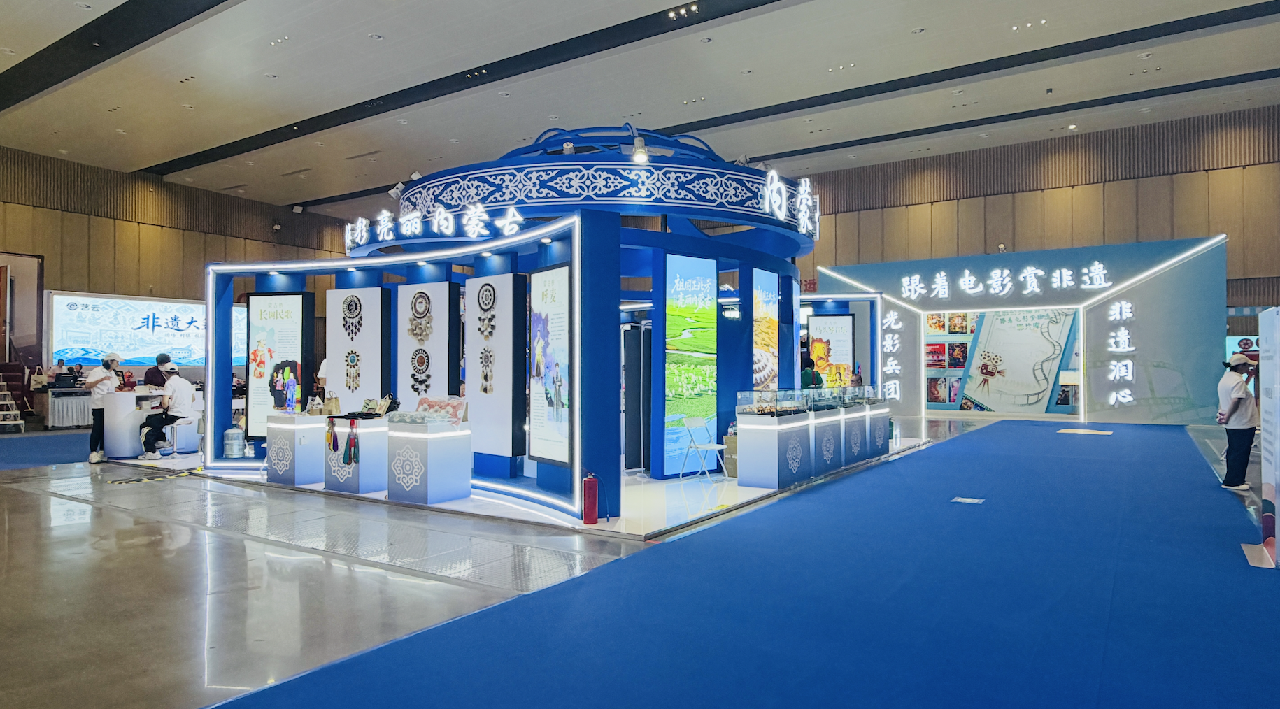
Xinjiang Hosts Cultural heritage artisans and classic folk artworks from across China at an exhibition in Shihezi county of Xinjiang.
By: Muhammad Arif, Editor NSN.Asia
Urumqi: An intangible cultural heritage exhibition has opened in Shihezi, Xinjiang, bringing together intangible cultural heritage artisans and classic folk artworks from across China.
From paper-cutting and clay sculpture to diverse ethnic costumes, and from traditional delicacies to folk song and dance performances, the event serves as a key cultural platform, enabling locals to experience the diversity of Chinese traditional cultures and promoting knowledge of China’s national intangible cultural heritage across the region.
Beyond on-site exhibitions, intangible cultural heritage inheritors from across China engaged in in-depth dialogues, co-created integrated cultural works, and built long-term partnerships to advance the innovation and inheritance of traditional folk culture.
-
Xinjiang — The Historic and Modern Gateway of Silk Road Connectivity
For more than two millennia, Xinjiang has served as one of Eurasia’s most important crossroads, linking China with Central Asia, South Asia, the Middle East, and Europe. From the caravans of the ancient Silk Road to today’s high-speed rail corridors and logistics hubs, the region has remained central to transcontinental connectivity.
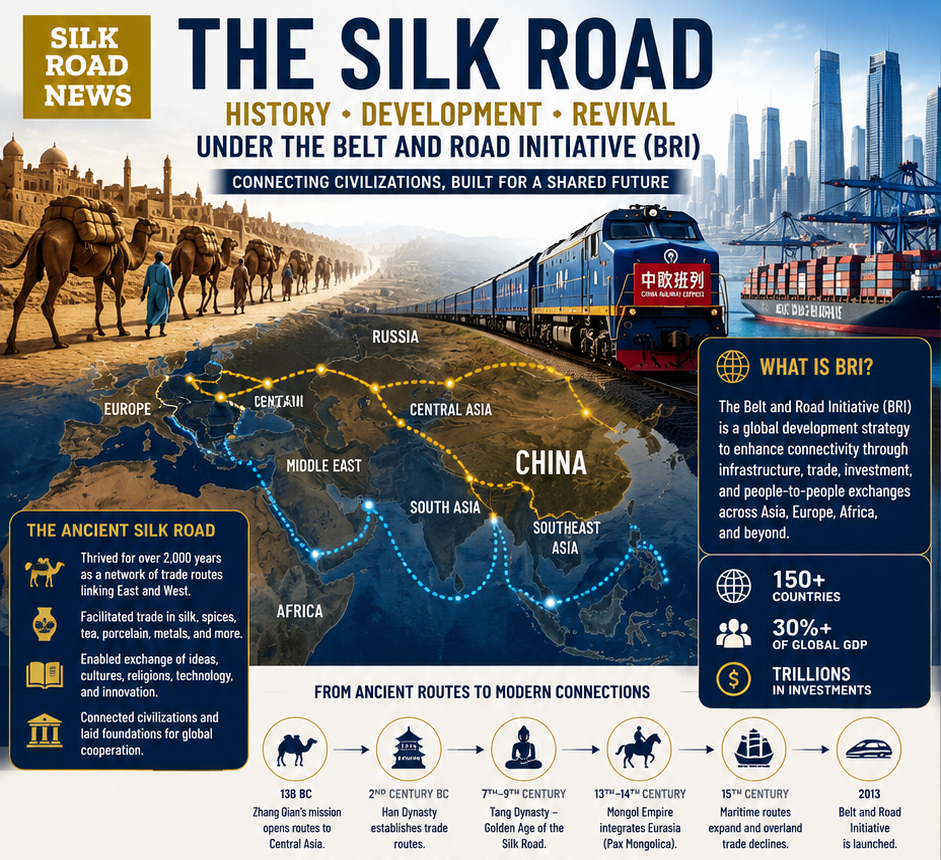
Beginning during the Han Dynasty, merchants, scholars, diplomats, and pilgrims traversed the Tarim Basin through oasis cities such as Kashgar, Hotan, Yarkand, and Turpan. These settlements became vibrant centers of commerce where silk, jade, spices, horses, paper, and porcelain were exchanged alongside religions, languages, scientific knowledge, and cultural traditions. Xinjiang connected East Asia with Persia, the Arab world, and ultimately Europe, making it one of history’s greatest corridors of civilization.
-
Present-Day Strategic Role
In the 21st century, this region has re-emerged as a pivotal gateway under China’s Belt and Road Initiative (BRI). Owing to its strategic location bordering eight countries, the region provides China’s principal overland access to Central Asia and onward to Europe through highways, railways, pipelines, and logistics networks. Cities such as Urumqi and Kashgar have developed into major transport and commercial hubs supporting international trade and regional connectivity.
-
Rail and Logistics Connectivity
The Urumqi International Land Port has become a major node for China–Europe freight services, linking manufacturing centers in eastern China with destinations across Central Asia, Russia, and Europe. Modern multimodal infrastructure—including rail terminals, expressways, dry ports, and customs facilities—has significantly reduced transport times compared with traditional maritime shipping for many categories of goods.
This automous region of China also anchors the northern end of the China–Pakistan Economic Corridor (CPEC), connecting Kashgar with Pakistan’s Gwadar Port through the Khunjerab Pass and the Karakoram Highway. This corridor is designed to strengthen trade, energy cooperation, industrial development, and regional economic integration between western China, Pakistan, and the Arabian Sea, while complementing broader Belt and Road connectivity across Eurasia.
-
Looking Ahead
As global supply chains continue to diversify, this city’s geographic position places it at the intersection of emerging trade corridors linking East Asia, Central Asia, South Asia, the Middle East, and Europe. Supporters view the region as a cornerstone of Eurasian connectivity and economic integration, while international observers also note that discussions surroundingthe this region encompass broader geopolitical and human rights issues beyond transport and trade
[ad_2]
]]>