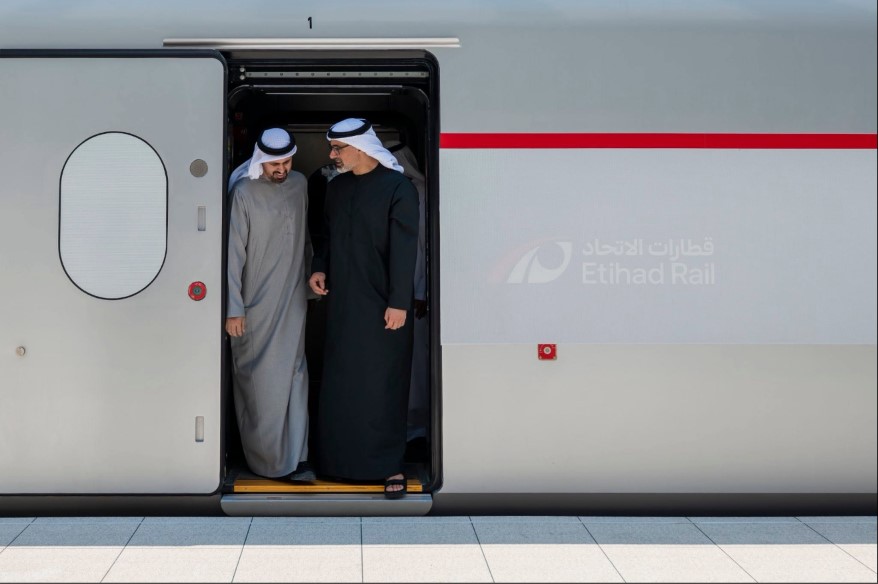
Etihad Rail is positioning the UAE at the heart of a new Eurasian trade order, linking the Gulf to the Middle Corridor and reshaping West Asia’s connectivity map.
**Abu Dhabi —** Long before the first freight wagon rolled across the desert floor of Al Dhafra, Etihad Rail was conceived as something bigger than a domestic transit project. It was designed as a statement of intent: that the United Arab Emirates would not merely sit at the crossroads of global trade, but actively build the tracks that define them. Nearly a decade and a half after its 2009 founding, that ambition is materializing into steel, concrete, and diplomacy — a nearly 900-kilometre national railway now feeding into a much larger vision of Eurasian connectivity, one that planners and diplomats increasingly describe as a 21st-century Silk Road running through the Gulf.
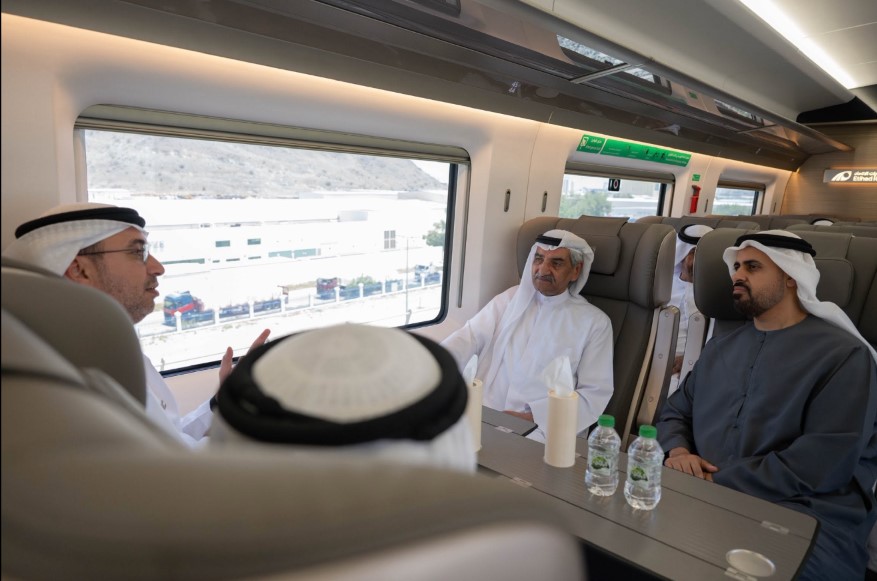
With freight operations fully live across all seven emirates and passenger services beginning their phased rollout in 2026, Etihad Rail has moved from blueprint to backbone. But its significance extends well past the UAE’s borders. As geopolitical shocks — from Red Sea shipping disruptions to conflict-driven detours around the Suez Canal — expose the fragility of existing global trade arteries, Gulf rail infrastructure is emerging as a serious contender in the search for resilient, diversified overland routes between Asia and Europe. Etihad Rail sits squarely at the center of that recalibration.
## From National Network to Regional Backbone
Etihad Rail’s core mission was always dual-purpose: unify the UAE’s seven emirates under a single rail spine, and serve as the UAE’s segment of the long-discussed Gulf Cooperation Council (GCC) Railway. The GCC railway network connects the UAE with Saudi Arabia, Qatar, Kuwait, Bahrain, and Oman, offering a sustainable and efficient alternative for the transportation of freight and capable of handling around 50 million tonnes of freight.
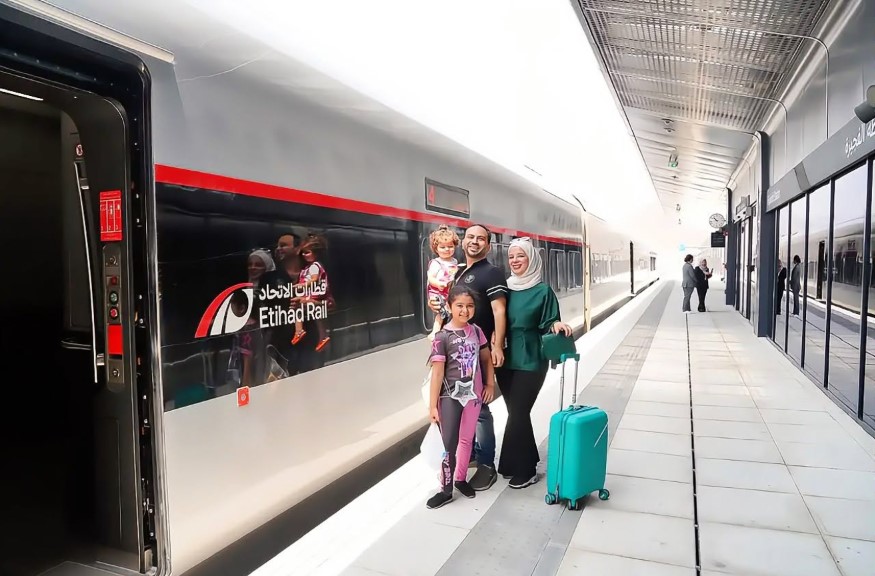
Domestically, the transformation is now visible on the ground. Etihad Rail’s passenger service officially began on 30 June 2026, connecting Abu Dhabi and Fujairah in one hour and 45 minutes, as the first stage of a national network that will eventually link 11 cities across the UAE. The wider passenger network is set to officially launch on 30 September 2026, with additional stations in Al Dhafra opening by December 2026. Freight, meanwhile, has been operating across the full network for several years, moving bulk cargo, containers, and industrial materials between ports, industrial zones, and logistics hubs.
The strategic logic, however, was never confined to domestic mobility. Etihad Rail was designed to connect the UAE to Saudi Arabia via Ghuwaifat in the west and to Oman via Al Ain in the east, opening new trade corridors for enterprises and travel opportunities that extend well beyond the country’s own geography. That cross-border ambition is now advancing on two fronts simultaneously — westward toward Saudi Arabia and the broader Arabian Peninsula, and eastward toward Oman and the Indian Ocean.
## Hafeet Rail and the First Cross-Border Link
The most tangible evidence of this expansion is Hafeet Rail, a joint venture linking the UAE to Oman. Hafeet Rail, a partnership between Etihad Rail, Oman Rail, and Mubadala, is constructing a 238-kilometre cross-border line from Sohar Port in Oman to Abu Dhabi, reported to be around 40 percent complete as of mid-2026. Once operational, the line is expected to dramatically compress travel times. Passenger trains are projected to cut travel time from Sohar to Abu Dhabi to just one hour and 40 minutes, and from Sohar to Al Ain to only 47 minutes, running at speeds of up to 200 km/h for passengers and 120 km/h for freight.
The significance of Hafeet Rail goes beyond convenience. Oman and the UAE signed a landmark agreement in 2023 to launch the Oman–Etihad Rail Company, tasked with linking Sohar and Abu Dhabi and giving the UAE its first fully integrated cross-border railway with another GCC state. Sohar Port opens directly onto the Gulf of Oman and the Arabian Sea — bypassing the Strait of Hormuz entirely. In an era where chokepoint security has become a first-order concern for shippers and governments alike, a rail-linked port outside Hormuz’s shadow gives the UAE, and by extension its trading partners, a hedge against exactly the kind of disruption that has repeatedly rattled regional shipping lanes.
## Toward Saudi Arabia and the Wider Gulf Railway
To the west, Etihad Rail’s link to Saudi Arabia represents the linchpin of the broader Gulf Railway project. Etihad Rail’s Stage Two infrastructure already reaches the Saudi border at Ghuweifat, and a passenger trial ran on the Saudi–UAE section during 2026 to test the physical connection, though scheduled cross-border freight interchange with the Saudi network is still being brought fully online.
That connection matters because Saudi Arabia is itself the fulcrum of a land bridge between the Gulf and the Red Sea. Once scheduled freight interchange with the Saudi rail network goes live, containers could move by rail from a UAE port toward the Saudi land bridge connecting the Gulf coast to the Red Sea — an overland alternative to sailing around the Arabian Peninsula altogether. For a region whose maritime chokepoints — Hormuz, Bab el-Mandeb, and the approaches to the Suez Canal — have all seen disruption in recent years, that overland alternative is not a convenience. It is increasingly viewed as strategic infrastructure.
Progress across the wider six-nation Gulf Railway has been uneven. The UAE and Saudi Arabia have advanced furthest, while Kuwait, Bahrain, and Oman have faced more significant delays; Qatar has built a modern rail network to GCC standards but remains unconnected to the broader system, and Bahrain has yet to build a national railway at all. Even so, momentum is building. The rail link between Saudi Arabia and Kuwait, announced in 2024, is scheduled to break ground in 2026, with the 650-kilometre corridor connecting Kuwait’s Al Shadadiya to Riyadh expected to be completed by 2028. Gulf states have also been signing fresh agreements to accelerate cross-border rail projects, with the Gulf Railway Authority setting December 2030 as its completion target for the unified six-country network.
Cost estimates for the full Gulf Railway run high. The project aims to connect Bahrain, Qatar, Kuwait, Oman, Saudi Arabia, and the UAE across more than 2,100 kilometres of track, with costs estimated between $100 billion and $125 billion. The payoff, proponents argue, is a genuinely integrated Gulf economy — one where goods, and eventually people, move across borders on rail rather than congested highways, at a fraction of the carbon cost. Etihad Rail estimates that Gulf rail transport could reduce road emissions by 21 percent annually by 2050, removing up to 300 trucks from the road for every train journey and cutting 8.2 million tonnes of CO2 emissions per year.
## Where Etihad Rail Meets the Middle Corridor
The phrase “New Silk Road” gets used loosely, but in the context of Etihad Rail it points to something specific: the growing overlap between Gulf rail infrastructure and the Trans-Caspian International Transport Route, better known as the Middle Corridor. The Middle Corridor connects China to Europe via Kazakhstan, across the Caspian Sea to Azerbaijan, then through Georgia and finally Türkiye. It was conceived as an alternative to Russia-transiting routes and China’s northern Belt and Road corridors — a way to move goods between Asia and Europe without passing through either Russian or Iranian territory.
The Gulf’s rail ambitions and the Middle Corridor are not competitors so much as complementary halves of a wider connectivity map. Where the Middle Corridor handles the Central Asian and Caucasus leg of Eurasian trade, Gulf rail — anchored by Etihad Rail — is positioned to handle the southern, maritime-adjacent leg, linking Indian Ocean shipping lanes to overland routes that bypass the Strait of Hormuz and reduce reliance on the Suez Canal. Both corridors respond to the same structural anxiety: that single-chokepoint dependency, whether at Hormuz, Bab el-Mandeb, or the Bosphorus, is no longer an acceptable risk for global supply chains.
This is also where Etihad Rail intersects with the India-Middle East-Europe Economic Corridor (IMEC), a parallel initiative unveiled in 2023. IMEC envisions a connectivity network running by sea from India’s western coast to the UAE, then by rail across Saudi Arabia and Jordan, before a maritime route carries goods into Europe. The corridor rests heavily on the UAE and Saudi Arabia’s seaports, roads, and logistics hubs, reinforcing both Gulf states’ roles as critical nodes in the emerging architecture of global trade.
IMEC’s path has not been smooth. The October 2023 Hamas attack on Israel and the subsequent regional turmoil divided key partners in the initiative, which depends on Saudi-Israeli normalization, progress toward Palestinian statehood, improved Saudi-UAE coordination, and unimpeded maritime traffic through the Strait of Hormuz — all factors that have slowed the project’s momentum considerably. Instability affecting Haifa port as IMEC’s Mediterranean entry point, along with the continued absence of Saudi-Israeli normalization needed for land transit across the Arabian Peninsula, has left the corridor’s western leg effectively stalled.
That uncertainty has, paradoxically, strengthened the case for Etihad Rail’s role. As IMEC’s Israel-dependent leg remains frozen, the Gulf’s own internal rail network — the UAE-Saudi-Oman-Kuwait grid taking shape independently of IMEC’s most contested segment — offers a connectivity pathway that does not hinge on the same geopolitical preconditions. Analysts note that IMEC can still contribute meaningfully to European supply-chain diversification even as the Middle Corridor draws the EU’s more immediate attention, particularly given security threats affecting the Bab el-Mandeb chokepoint and Red Sea transit routes. In that sense, Etihad Rail functions as connective tissue: a working, largely depoliticized rail asset that keeps Gulf integration moving forward regardless of which broader corridor concept — IMEC, the Middle Corridor, or some future hybrid — ultimately dominates the region’s trade geography.
## Geoeconomics of the Middle Corridor: Why It Matters Now
The urgency behind Middle Corridor development is not abstract. As conflict has disrupted established routes and dimmed the near-term prospects of IMEC’s western leg, the Middle Corridor has quietly continued its development roughly 3,500 kilometres to the north, positioning itself as an increasingly vital passageway for Eurasian trade. For the Gulf states, this dynamic creates both a challenge and an opportunity. The challenge is that a well-functioning northern corridor could, in theory, divert Asia-Europe freight away from Gulf ports and rail lines. The opportunity is that Gulf infrastructure — including Etihad Rail — can position itself as a southern feeder and redundancy layer, rather than a rival, to Central Asian and Caucasus routes.
This is precisely the geoeconomic logic that regional planners have begun to articulate: connectivity infrastructure is no longer just about efficiency, but about resilience through redundancy. A shipment that can move via the UAE-Saudi rail corridor to the Red Sea, via Omani ports outside Hormuz, or via a northern Middle Corridor route through the Caucasus, is a shipment far less vulnerable to any single point of disruption. Etihad Rail’s expanding cross-border links give the UAE a credible claim to being one of several southern anchors in that redundancy architecture — a role that, notably, does not require the resolution of the region’s most intractable political disputes to deliver value.
## Regional Cooperation as the Real Infrastructure
If there is a lesson embedded in the uneven progress of the Gulf Railway and the stop-start trajectory of IMEC, it is that steel and concrete are the easy part. The GCC railway’s implementation has been effectively stalled for more than 14 years, with delays driven less by engineering constraints than by financing gaps and uneven political will among member states. The technical capability to build these networks has never been seriously in doubt; the UAE’s own domestic rollout, completed and now operational, proves that. What has lagged is the harder work of aligning regulatory standards, customs procedures, financing structures, and diplomatic timetables across multiple sovereign states.
Etihad Rail’s own approach offers something of a template for how that cooperation can be built incrementally rather than all at once. Rather than waiting for a single grand multilateral agreement, the UAE has pursued a series of bilateral joint ventures — Hafeet Rail with Oman, technical interoperability trials with Saudi Arabia, and a steady stream of logistics partnerships with global freight operators. Etihad Rail has signed memoranda of understanding with a range of international and regional logistics firms, including Hellmann Logistics, HOYER Global Transport, Sharaf Logistics, Global Shipping and Logistics, Aramex, and DP World, each aimed at expanding the network’s cross-border and intermodal reach. Each individual agreement is modest. Collectively, they are stitching together the operational, commercial, and legal fabric that a purely government-to-government infrastructure treaty might take decades to negotiate.
This bilateral, building-block model may prove more durable than the more ambitious multilateral connectivity visions competing for attention in the region. IMEC promises transformational scale but depends on political preconditions — Saudi-Israeli normalization chief among them — that remain unresolved. The Middle Corridor requires sustained multinational coordination across Kazakhstan, Azerbaijan, Georgia, and Türkiye, each with its own domestic priorities. Etihad Rail’s expanding web of bilateral rail links, by contrast, advances regardless of the region’s broader diplomatic weather, because each link is negotiated and justified on its own commercial and logistical merits.
## What Comes Next
Three developments will determine how central Etihad Rail becomes to the emerging Eurasian trade map. First, the pace of Saudi-UAE freight interoperability: moving from trial runs to scheduled, commercial freight interchange would unlock the land bridge to the Red Sea that shippers have been anticipating for years. Second, the completion timeline for Hafeet Rail, which will give the UAE its first fully operational link to a non-Hormuz-dependent port. Third, the broader trajectory of the Gulf Railway Authority’s 2030 target — a deadline that, given the project’s history of delay, will test whether the recent burst of bilateral agreements can translate into genuine multilateral integration.
What is already clear is that Etihad Rail has outgrown its original brief as a domestic transport project. It has become the UAE’s principal instrument for embedding itself into the connective tissue of Eurasian trade — a role that does not require any single grand corridor to succeed, only that the Gulf keep laying track, signing agreements, and building the redundancy that a more volatile world now demands. In a region where the biggest connectivity projects have repeatedly stalled on politics, Etihad Rail’s incremental, bilateral approach may turn out to be exactly the kind of infrastructure diplomacy the New Silk Road actually needs.

By NSN News Desk
The China-Europe Railway Express (CRE) has emerged as one of the most significant logistics achievements of the 21st century, reshaping the economic geography of Eurasia by connecting manufacturing hubs in China with consumer and industrial markets across Europe through Central Asia, Russia, the Caucasus, and beyond.
Once viewed as an ambitious component of China’s Belt and Road Initiative (BRI), the railway network has evolved into a mature international freight corridor carrying millions of tons of cargo annually. It has shortened transportation times, diversified supply chains, strengthened regional integration, and revived the historical spirit of the ancient Silk Road through modern rail infrastructure.
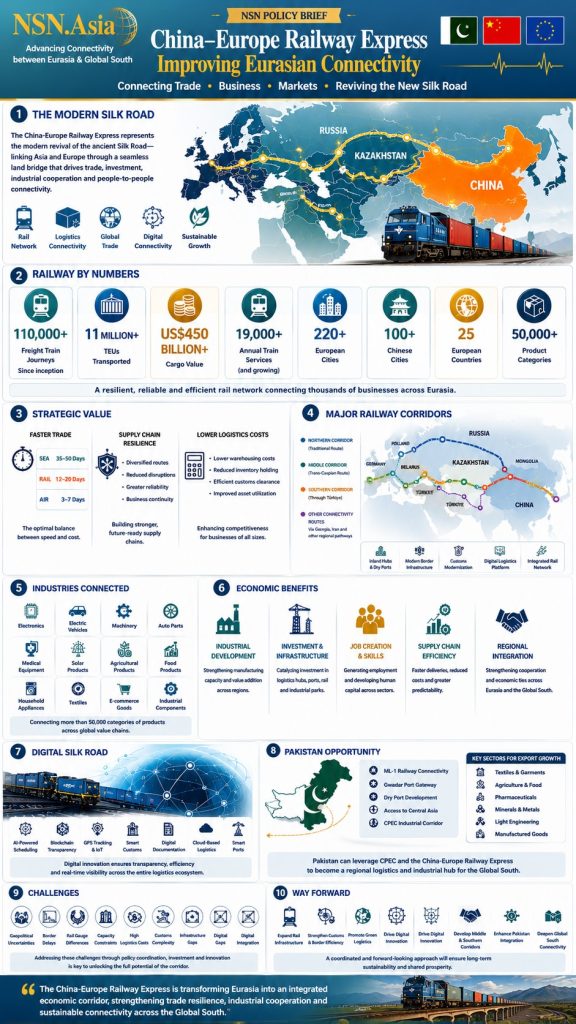
Today, the China-Europe Railway Express is more than a transport network—it is a strategic economic corridor linking industries, businesses, logistics providers, ports, customs authorities, and financial institutions across dozens of countries.
As global supply chains continue to diversify following the COVID-19 pandemic and ongoing geopolitical uncertainties, the China-Europe Railway Express has become increasingly important for ensuring resilient, efficient, and sustainable trade between Asia and Europe.
A Modern Revival of the Ancient Silk Road
More than two thousand years ago, the Silk Road connected China with Central Asia, Persia, the Middle East, and Europe, facilitating not only trade but also cultural exchanges, scientific discoveries, and diplomatic relations.
The China-Europe Railway Express represents the modern version of that historic route.
Instead of camel caravans carrying silk, spices, and porcelain, today’s freight trains transport:
- Electronics
- Electric vehicles
- Machinery
- Auto parts
- Medical equipment
- Solar products
- Household appliances
- Textile products
- Industrial components
- E-commerce goods
- Agricultural products
- Food products
Running through multiple international corridors, these trains have become the backbone of the Silk Road Economic Belt, the land component of the Belt and Road Initiative.
Rapid Growth Since Launch
The first China-Europe Railway Express departed from Chongqing in 2011.
Few observers expected that within little more than a decade the network would become one of the world’s busiest international freight rail systems.
Today, the network serves:
- More than 220 cities in Europe
- Over 100 Chinese cities
- Around 25 European countries
- Transit through Central Asia and neighboring regions
- Thousands of logistics enterprises
The railway has expanded from a handful of pilot services into a sophisticated network operating daily trains in both directions.
Its rapid development reflects growing confidence among manufacturers, exporters, importers, and logistics companies.
Record Cargo Volumes
The China-Europe Railway Express has experienced remarkable growth over the past decade.
Recent operational statistics indicate:
- More than 110,000 cumulative freight train journeys since operations began.
- Over 11 million TEUs (Twenty-foot Equivalent Units) transported.
- Cargo valued at well above US$450 billion.
- Annual train departures now exceed 19,000 services, with continued year-on-year growth.
- Rail services connect over 50,000 categories of products, ranging from industrial machinery to cross-border e-commerce goods.
The network has maintained steady expansion despite global disruptions such as the COVID-19 pandemic, shipping bottlenecks, and geopolitical tensions, demonstrating the resilience of rail freight as a strategic transport option.
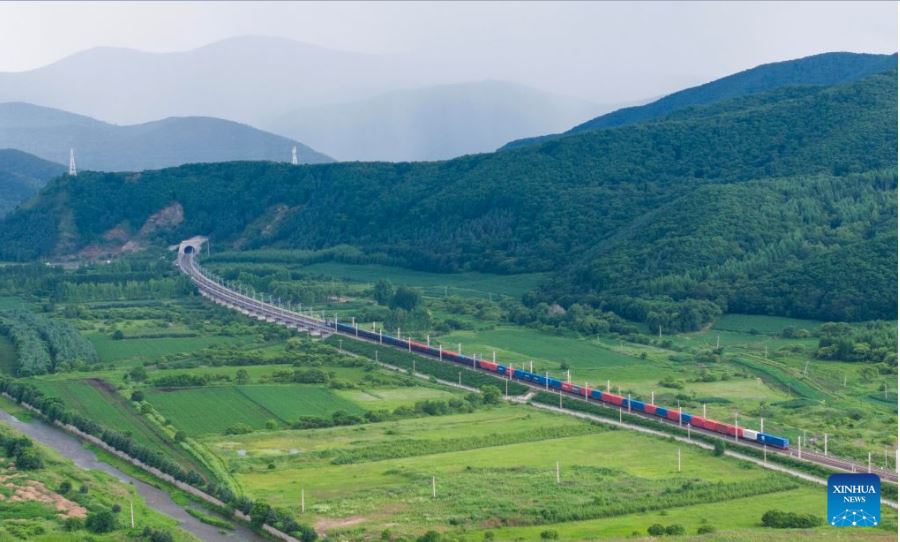
Connecting Eurasian Markets
The railway has fundamentally changed how businesses trade across Eurasia.
Previously, companies relied primarily on:
- Ocean shipping
- Air freight
- Limited overland trucking
Each option presented challenges.
Sea transport is economical but slow.
Air freight is fast but expensive.
Rail now offers a balanced alternative.
Average delivery times:
| Mode | Transit Time |
|---|---|
| Sea | 35–50 days |
| Rail | 12–20 days |
| Air | 3–7 days |
This middle-ground solution has attracted manufacturers seeking reliable delivery while controlling logistics costs.
Strengthening Regional Connectivity
The China-Europe Railway Express crosses numerous countries, including:
- China
- Kazakhstan
- Mongolia
- Russia
- Belarus
- Poland
- Germany
- Hungary
- Serbia
- Türkiye
- Uzbekistan
- Azerbaijan (via multimodal routes)
- Georgia
These corridors have encouraged investment in:
- Inland logistics hubs
- Dry ports
- Container terminals
- Border infrastructure
- Customs modernization
- Digital logistics platforms
Cities once considered remote inland locations have become major logistics centers.
Examples include:
- Xi’an
- Chongqing
- Chengdu
- Zhengzhou
- Wuhan
- Duisburg
- Lodz
- Budapest
Boosting International Trade
The railway supports trade by enabling:
- Faster inventory turnover
- Lower warehousing costs
- Improved supply chain predictability
- Better market access for SMEs
- Just-in-time manufacturing
For exporters, reduced delivery times improve competitiveness.
For importers, predictable schedules reduce inventory risks.
This has encouraged greater cross-border commercial activity across Eurasia.
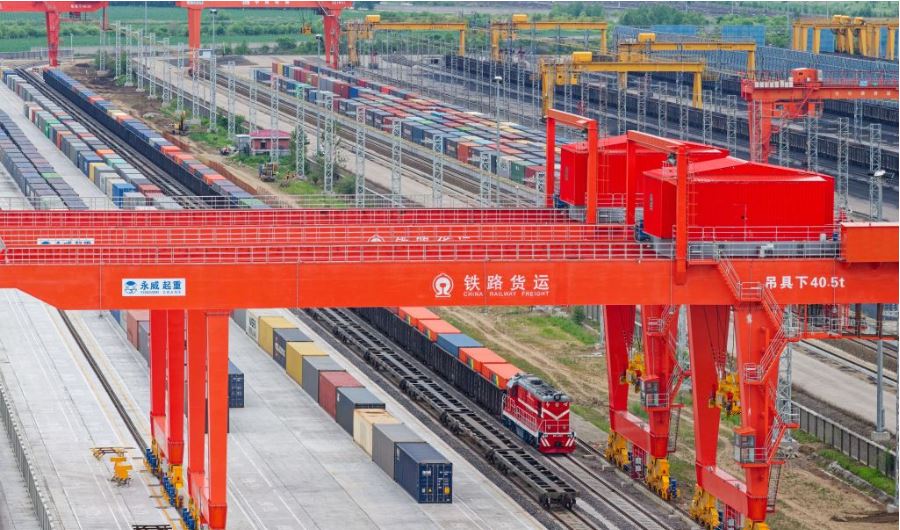
Driving Cross-Border E-Commerce
One of the fastest-growing users of the China-Europe Railway Express is the e-commerce industry.
Major online retailers increasingly depend on rail to transport:
- Consumer electronics
- Fashion
- Home appliances
- Sports equipment
- Furniture
- Toys
Rail offers:
- Faster delivery than sea
- Lower costs than air freight
- Reduced carbon emissions
As cross-border online shopping expands, rail logistics continues to gain market share.
Supporting Green Logistics
Compared with air transport, rail freight significantly reduces carbon emissions.
According to logistics industry estimates:
- Rail emits roughly 80–90% less CO₂ than air freight for equivalent cargo volumes.
- Energy-efficient rail systems contribute to national decarbonization goals.
- Electrified railway corridors support cleaner transport compared with diesel-dependent alternatives.
As governments pursue net-zero commitments, the China-Europe Railway Express aligns with global efforts to promote sustainable logistics.
Economic Benefits Across Eurasia
The railway generates wide-ranging economic benefits.
These include:
Job Creation
Expansion of logistics parks creates employment in:
- Warehousing
- Customs
- Freight forwarding
- Manufacturing
- Container handling
Industrial Development
Manufacturers increasingly locate production facilities near rail hubs.
Industrial clusters have developed around:
- Xi’an
- Chengdu
- Chongqing
- Zhengzhou
Similar developments are emerging in Central Asia and Eastern Europe.
SME Opportunities
Small and medium-sized enterprises now enjoy greater access to overseas markets without relying solely on maritime transport.
This supports export diversification.
Investment Attraction
Improved transport infrastructure encourages foreign direct investment.
Logistics reliability remains a key factor influencing investment decisions.
Importance for Central Asia
Central Asia has become a major beneficiary.
Kazakhstan, in particular, has transformed into one of Eurasia’s most important logistics gateways.
Major dry ports, including Khorgos, have become central transfer points between China’s standard-gauge railway and the broader Eurasian rail network.
Countries such as Uzbekistan and Kyrgyzstan are also improving transport links to integrate more closely into regional supply chains.
Opportunities for Pakistan
Although Pakistan is not yet directly connected to the China-Europe Railway Express network, significant opportunities exist through the China-Pakistan Economic Corridor (CPEC).
Future possibilities include:
- Integration of Gwadar Port with Eurasian logistics.
- Rail modernization under ML-1.
- Dry ports linked to Central Asia.
- Transit trade with Western China.
- Export corridors for textiles, agriculture, pharmaceuticals, and minerals.
Enhanced regional railway connectivity could eventually position Pakistan as a complementary gateway connecting maritime and overland trade routes.
Digital Transformation
Modern railway operations increasingly depend upon digital technologies.
These include:
- Electronic customs clearance
- AI-powered scheduling
- GPS cargo tracking
- Digital freight documentation
- Blockchain-enabled supply chain verification
- Smart logistics platforms
Digitalization reduces border delays while improving cargo visibility.
Challenges Ahead
Despite remarkable success, challenges remain.
These include:
Geopolitical uncertainty
International political tensions continue affecting certain transit routes.
Infrastructure bottlenecks
Border crossings occasionally experience congestion due to differing railway gauges and customs procedures.
Operational costs
Rail remains more expensive than sea freight for certain cargo categories.
Capacity constraints
Growing demand requires continued investment in:
- Rolling stock
- Container terminals
- Digital systems
- Customs modernization
Route diversification
Expansion of:
- Middle Corridor
- Caspian routes
- Southern corridors
will strengthen resilience.
Future Outlook
The future of the China-Europe Railway Express appears promising.
Emerging trends include:
- Greater integration with Central Asian railways.
- Increased multimodal transport combining rail, ports, and highways.
- Expansion of digital Silk Road technologies.
- Growth of green logistics initiatives.
- Increased use for electric vehicle exports.
- Better customs coordination.
- Wider participation by developing economies.
As Eurasian economies continue integrating, rail freight is expected to play an even greater role.
The Strategic Importance of the New Silk Road
The China-Europe Railway Express is not merely a transport service.
It represents:
- Economic integration
- Regional cooperation
- Supply chain resilience
- Infrastructure connectivity
- Shared development
The railway supports broader objectives including:
- Trade facilitation
- Industrial cooperation
- Investment promotion
- Regional development
- Sustainable transport
Its success illustrates how infrastructure can become a catalyst for economic transformation.
Way Forward
To maximize the benefits of the China-Europe Railway Express, governments and stakeholders should focus on:
- Expand Rail Infrastructure: Invest in additional tracks, intermodal terminals, and dry ports to increase capacity and reduce congestion.
- Enhance Customs Cooperation: Accelerate harmonization of customs procedures through digital platforms and mutual recognition agreements.
- Strengthen Multimodal Connectivity: Integrate rail with seaports, highways, inland waterways, and air cargo hubs to create seamless logistics networks.
- Promote Green Transport: Increase electrification, adopt renewable energy for logistics hubs, and incentivize low-carbon freight solutions.
- Support SMEs: Provide affordable logistics services, digital trade platforms, and export financing so that small and medium-sized enterprises can fully benefit from Eurasian rail connectivity.
- Diversify Routes: Expand the Middle Corridor and Southern Corridor to enhance resilience against geopolitical or operational disruptions.
- Integrate Emerging Economies: Countries such as Pakistan, through CPEC, can position themselves as complementary gateways by modernizing rail infrastructure and linking ports with inland logistics networks.
- Leverage Digital Innovation: Deploy artificial intelligence, blockchain, and smart customs systems to improve cargo tracking, security, and efficiency.
Conclusion
The China-Europe Railway Express has evolved from a visionary infrastructure project into one of the world’s most important transcontinental logistics networks. By significantly reducing transit times, connecting hundreds of cities across Asia and Europe, and carrying goods worth hundreds of billions of dollars, it has become a cornerstone of modern Eurasian trade.
Beyond freight transport, the railway symbolizes the revival of the New Silk Road—promoting connectivity, investment, industrial cooperation, and people-to-people exchanges across a vast region. As businesses seek resilient supply chains and governments prioritize sustainable infrastructure, the China-Europe Railway Express is well positioned to play an even greater role in shaping the future of global commerce.
For countries across the Global South, including Pakistan, the expanding Eurasian rail network presents new opportunities to integrate into regional value chains, diversify exports, and attract investment. Through strategic infrastructure development, digital innovation, and enhanced regional cooperation, the China-Europe Railway Express can continue to strengthen economic connectivity and foster shared prosperity across Eurasia for decades to come.
]]>As global trade dynamics shift due to geopolitical tensions and economic realignments, the Middle Corridor is emerging as a vital alternative to traditional northern and maritime routes.
Historical Evolution: From Silk Road to Strategic Corridor
The Middle Corridor traces its origins back to the ancient Silk Road, where caravans carried goods across Eurasia for centuries. In the modern era, the concept gained momentum in the early 2010s, aligned with China’s Belt and Road Initiative (BRI).
A major milestone in its development was the launch of the Baku–Tbilisi–Kars Railway in 2017, linking the South Caucasus directly with Türkiye’s rail network.
Route and Regional Connectivity
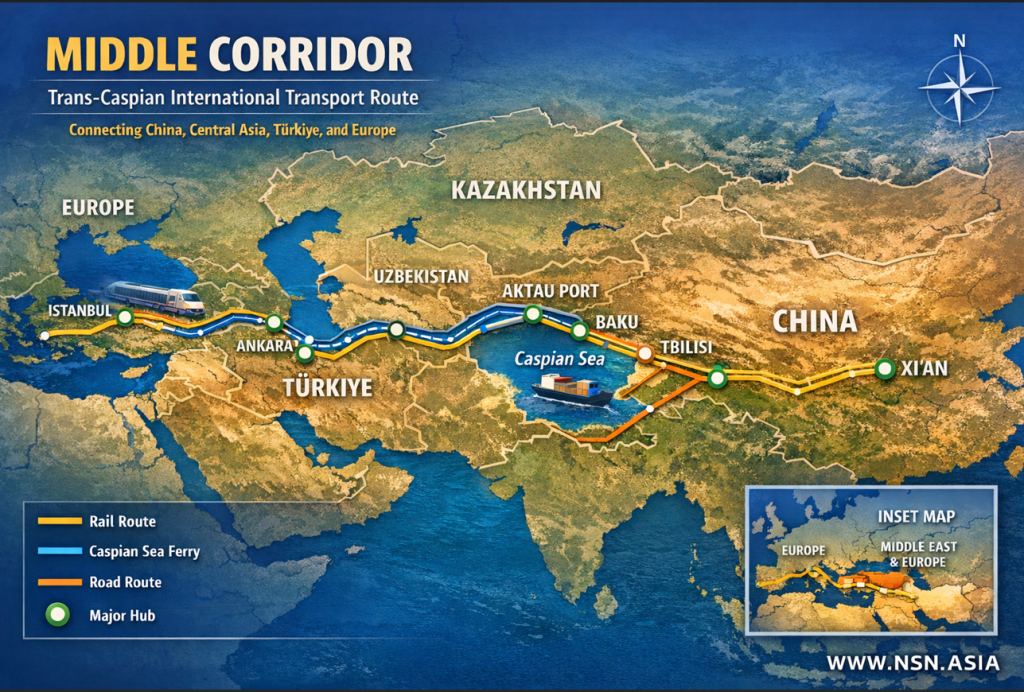
The Middle Corridor follows a multimodal route:
- China → Kazakhstan → Caspian Sea → Azerbaijan → Georgia → Türkiye → Europe
It connects key regions including:
- Central Asia
- South Caucasus
- Middle East
- European markets
The corridor relies heavily on maritime crossings via the Caspian Sea, making it a unique blend of rail and sea logistics.
Strategic Importance in a Changing Geopolitical Landscape
The corridor gained global relevance after the Russia-Ukraine Conflict, which disrupted traditional northern trade routes.
This shift has:
- Increased demand for alternative routes
- Boosted the importance of Türkiye as a transit hub
- Strengthened economic independence of Central Asian states
Today, the Middle Corridor is not just a transport route—it is a geopolitical instrument shaping Eurasian trade.
Infrastructure Development and Investments
Significant investments have been made to enhance the corridor’s efficiency:
- Expansion of rail networks in Kazakhstan
- Modernization of ports in Azerbaijan (Baku)
- Development of logistics hubs in Türkiye
- Upgrades to the Baku–Tbilisi–Kars railway
Türkiye, in particular, is positioning itself as a global logistics hub, connecting Asia with Europe and the Middle East.
Regional Cooperation and Integration
The success of the Middle Corridor depends on strong regional cooperation among:
- Kazakhstan, Uzbekistan, Turkmenistan
- Azerbaijan and Georgia
- Türkiye
- European Union partners
Organizations such as the Organization of Turkic States are playing an increasing role in coordination and policy alignment.
The corridor also aligns with European connectivity strategies aimed at reducing dependency on single trade routes.
Economic and Connectivity Impact
The Middle Corridor enhances:
Trade Efficiency
- Reduced transit time between Asia and Europe
- Diversified supply chains
Regional Integration
- Stronger economic ties across Eurasia
- Increased trade opportunities for landlocked countries
Energy and Digital Connectivity
- Supports pipelines and energy transport
- Facilitates digital infrastructure expansion under the Digital Silk Road
Progress and Current Status
The corridor has witnessed significant growth:
- Freight volumes have increased sharply since 2022
- Trade flows have diversified
- New rail services linking China and Europe via this route have been launched
However, challenges remain:
- Infrastructure bottlenecks
- Limited Caspian shipping capacity
- Complex customs procedures
Analytical Perspective (SWOT Analysis)
Strengths
- Strategic geographic positioning
- Strong political backing
- Multimodal flexibility
Weaknesses
- Operational inefficiencies
- Higher costs compared to established routes
Opportunities
- Rising global demand for alternative routes
- Increased EU and Asian investments
- Expansion into Middle Eastern markets
Threats
- Regional instability
- Competition from other global corridors
- Institutional fragmentation
Future Prospects
The future of the Middle Corridor appears highly promising:
- Expected to handle over 10 million tons of cargo annually by 2030
- Increased integration with Middle Eastern and South Asian routes
- Growth in green and digital transport systems
Türkiye is likely to emerge as a central logistics powerhouse, while Central Asia will gain greater economic independence and global relevance.
Conclusion
The Middle Corridor is redefining the landscape of global trade by offering a fast, flexible, and geopolitically viable route between Asia, Europe, and the Middle East.
With continued investment, institutional reforms, and regional cooperation, it has the potential to become a cornerstone of 21st-century Eurasian connectivity, reviving the Silk Road in a modern, strategic form.
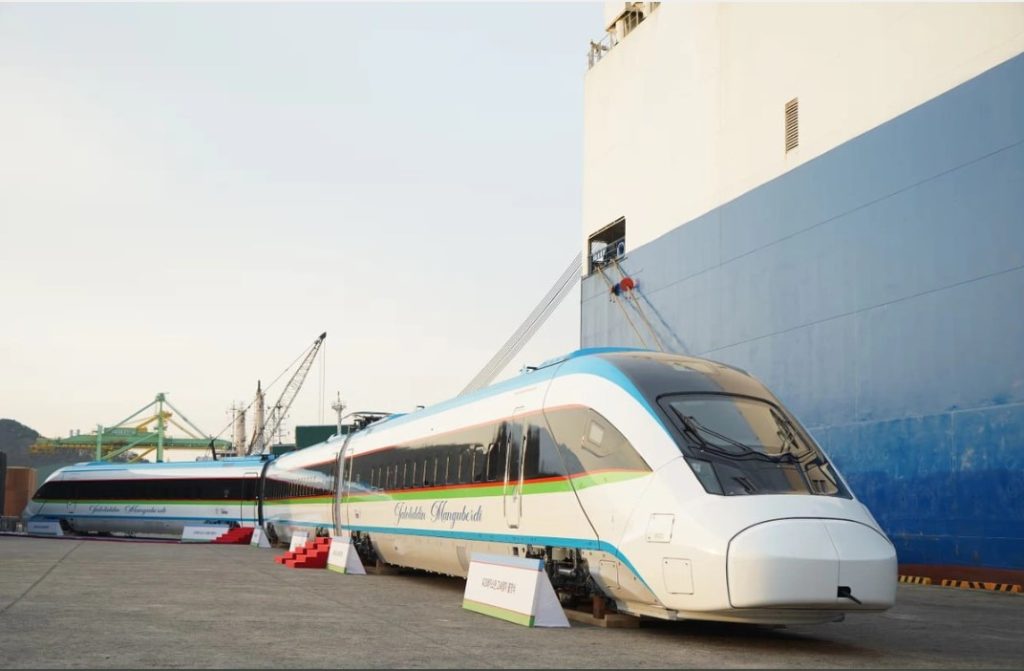
Uzbekistan is rapidly redefining the legacy of the ancient Silk Road, replacing centuries-old caravan routes with modern high-speed rail networks that promise to reshape trade, tourism, and regional connectivity across Eurasia. With new railway investments, advanced rolling stock, and ambitious infrastructure projects, the Central Asian nation is positioning itself as a critical transit hub linking East and West.
At the heart of this transformation lies Uzbekistan’s expanding high-speed rail system, highlighted by the introduction of cutting-edge trains manufactured by South Korea’s Hyundai Rotem. The initiative marks a significant leap forward in the country’s efforts to modernize transport infrastructure and strengthen its role in Eurasian logistics.
A New Era of High-Speed Connectivity
In December 2025, Hyundai Rotem dispatched the first batch of high-speed trains to Uzbekistan, marking the beginning of a new chapter in the country’s rail development. These trains, part of a broader agreement signed in 2024, represent the first export of South Korean high-speed rail technology to the region.
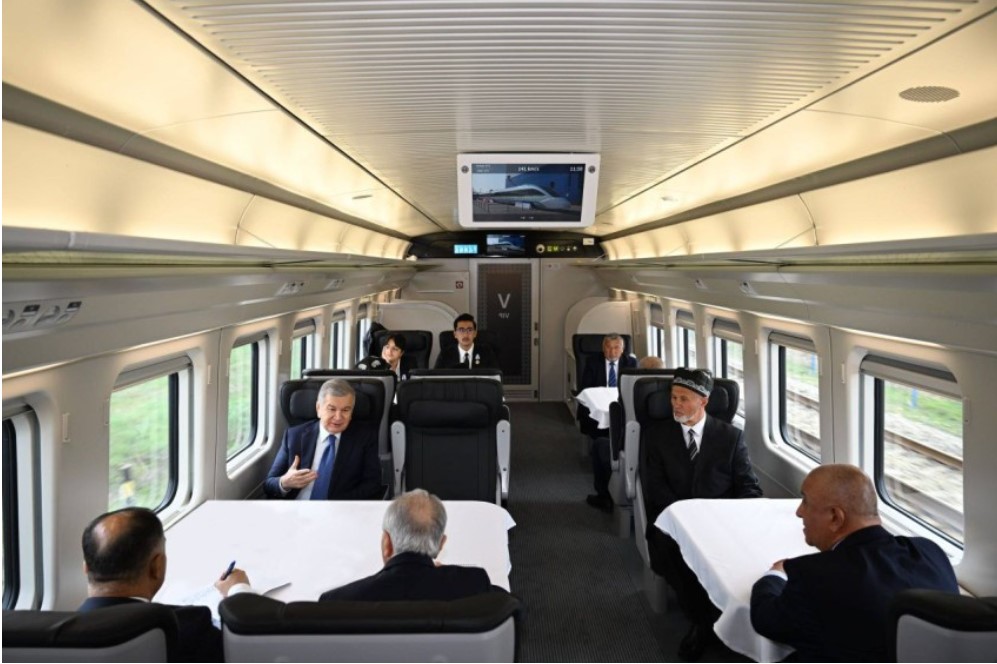
The newly delivered trains, branded “Jaloliddin Manguberdi,” are designed specifically for Uzbekistan’s climate and infrastructure. Capable of reaching speeds of up to 250 km/h, they offer both high performance and resilience in extreme weather conditions, including desert heat and dust.
Each train consists of seven cars with a capacity of nearly 400 passengers, combining economy and business-class services. The fleet is expected to expand to six full trainsets by 2027, significantly enhancing the country’s rail capabilities.
Tashkent–Khiva Line: A Strategic Corridor
One of the most ambitious projects underway is the high-speed rail link between Tashkent and Khiva, a route spanning approximately 1,286 kilometers. The service is expected to launch after March 2026 following testing phases.
This corridor is particularly significant because it connects Uzbekistan’s capital with Khiva, one of Central Asia’s most iconic historical cities. Travel time along the route is set to be reduced dramatically—from around 14 hours to just 7.5 hours—effectively cutting the journey in half.
The impact of this time reduction is profound. Faster travel will not only improve domestic mobility but also unlock tourism potential by making remote heritage sites more accessible. Analysts expect a surge in both domestic and international visitors as a result.
Strengthening the Modern Silk Road
Uzbekistan’s rail expansion is closely tied to its broader ambition of reviving the Silk Road in a modern context. Historically, the Silk Road connected Asia with Europe through trade caravans, facilitating the exchange of goods, culture, and ideas. Today, railways are replacing camels and caravans as the backbone of this transcontinental network.
According to recent reports, Uzbekistan is actively developing new rail links to enhance its role as a Eurasian transit hub. These projects aim to integrate the country more deeply into regional logistics corridors, supporting both passenger and freight movement across Central Asia.
High-speed passenger services are already experiencing rapid growth, with volumes expected to triple by 2026. This expansion reflects rising demand for efficient, reliable transportation and underscores the strategic importance of rail in regional development.
Economic and Strategic Implications
The modernization of Uzbekistan’s railway system carries significant economic benefits. Improved connectivity reduces transportation costs, shortens delivery times, and enhances trade efficiency. For a landlocked country like Uzbekistan, these improvements are particularly critical.
By linking major cities such as Tashkent, Samarkand, Bukhara, and Khiva, the rail network supports both domestic economic integration and international trade routes. Existing high-speed lines, such as the Tashkent–Bukhara corridor, have already demonstrated the potential of rail to drive economic activity and regional development.
Moreover, the introduction of advanced rail technology facilitates knowledge transfer and workforce development. Uzbek specialists are receiving training in high-speed rail operations and maintenance, contributing to long-term capacity building within the country.
Tourism Boom Along Historic Routes
Tourism is expected to be one of the biggest beneficiaries of Uzbekistan’s rail revolution. Cities like Samarkand, Bukhara, and Khiva—renowned for their Silk Road heritage—are becoming more accessible to both domestic and international travelers.
Railway authorities emphasize that high-speed trains play a crucial role in connecting visitors with these cultural centers, enhancing the overall travel experience. Modern trains offer comfort, safety, and speed, making them an attractive alternative to road or air travel for regional journeys.
As accessibility improves, Uzbekistan is likely to see increased investment in tourism infrastructure, including hotels, services, and cultural preservation initiatives.
Regional Connectivity and Eurasian Integration
Beyond national development, Uzbekistan’s railway expansion has broader geopolitical implications. By strengthening its transport infrastructure, the country is positioning itself as a key node in Eurasian connectivity networks.
New rail links are expected to facilitate trade flows between China, Central Asia, and Europe, aligning with wider regional initiatives aimed at enhancing cross-border connectivity. This positions Uzbekistan as a vital bridge in emerging transcontinental supply chains.
The integration of high-speed rail into these networks also supports sustainability goals, offering a more energy-efficient alternative to road and air transport.
Looking Ahead
Uzbekistan’s vision for a modern Silk Road is steadily taking shape. With the rollout of high-speed trains, the development of new rail corridors, and increasing passenger demand, the country is entering a new phase of economic and infrastructural transformation.
The Tashkent–Khiva line, set to become operational in 2026, symbolizes this shift—connecting history with modernity, and tradition with innovation. As railways continue to expand, Uzbekistan is not only reviving the Silk Road but redefining it for the 21st century.
Ambassador Faisal Niaz Tirmizi received Pakistan’s Kyokushinkan team—comprising athletes Irfan Khan, Raza Abid, and Ali Rehman, led by coach Aslam Noor—following their success at the NATIONS CUP 2026, where they secured 2nd and 3rd place prizes.


The NATIONS CUP 2026 International Kyokushinkan Competitions were held in Moscow from February 28 to March 1, 2026, organized with the support of the Ministry of Sports of the Russian Federation.
Congratulations to the Pakistani athletes on this remarkable achievement

 to
 , warmly welcomed a group of 22 Pakistani students (including 15 female students) to Tongwon University, a leading institution for skill development.
Under the Embassy led initiative to secure scholarship opportunities for Pakistani students, these students will undertake a two-year skill development program along with a one-year Korean language course at Tongwon University, further strengthening educational cooperation between Pakistan and the Republic of Korea.