BRICS Summit in India: Xi Jinping Set to Attend as Bloc Doubles Down on Global South Vision
New Delhi: India has stepped into the spotlight as host of the latest BRICS Summit, a gathering that has drawn attention worldwide not least because of the confirmed presence of Chinese President Xi Jinping — a visit being closely watched given the complex trajectory of India-China relations in recent years. As New Delhi assumes its chairship of the bloc, the summit arrives at a pivotal moment for an organization that has grown from its original four founding members into a sprawling coalition representing a significant share of the world’s population and economic output.

A Summit Under India’s Chairship
Hosting BRICS gives India a rare diplomatic showcase: a chance to position itself as a bridge between the developed and developing world, while advancing its own ambitions as a leading voice for the Global South. Indian officials have framed the summit’s agenda around inclusive growth, reformed multilateralism, and deeper economic integration among member states — themes that resonate strongly with the government’s broader foreign policy narrative of representing the interests of developing nations on the world stage.
For India, the optics of the summit matter as much as the substance. Welcoming Xi Jinping to Indian soil, alongside other heads of state, offers an opportunity to demonstrate that bilateral tensions — including unresolved border disputes and years of strained trade relations — can coexist with functional multilateral engagement. Analysts note that such high-level visits often serve as pressure valves, allowing two rival powers to manage friction through structured, multilateral settings rather than direct bilateral confrontation alone.

Who Else Is Attending
Beyond China and host nation India, the summit is expected to draw leaders and senior representatives from the other founding BRICS members — Brazil, Russia, and South Africa — along with delegations from the bloc’s expanded membership, which in recent years has grown to include countries such as Egypt, Ethiopia, Iran, and the United Arab Emirates, reflecting BRICS’ deliberate push to widen its footprint across Africa, the Middle East, and Latin America. Several other nations that have expressed interest in joining or partnering with the bloc are also anticipated to send observer delegations, underscoring the growing appeal of BRICS as an alternative platform to Western-led institutions.
Core Goals of the Summit
Officials have signaled that this year’s agenda centers on a handful of priorities:
- Reforming global governance institutions, particularly calls for a greater voice for developing nations within bodies like the United Nations Security Council, the IMF, and the World Bank.
- Expanding local-currency trade among member states to reduce dependency on the US dollar in cross-border transactions.
- Strengthening the New Development Bank (NDB), the bloc’s flagship financial institution, to fund infrastructure and development projects across emerging economies.
- Technology and digital cooperation, including discussions on artificial intelligence governance, digital public infrastructure, and cybersecurity frameworks tailored to developing-country needs.
- Climate finance and energy transition, with member states pushing for more equitable funding mechanisms that don’t place a disproportionate burden on lower-income nations.
The Vision for the Global South
At the heart of this summit is a broader narrative that BRICS leaders have increasingly leaned into: positioning the bloc as the institutional voice of the Global South. This framing goes beyond economics, touching on questions of sovereignty, historical grievances tied to colonialism, and a desire among member states to chart development paths free from conditions historically attached to Western aid and lending.
India, in particular, has used its chairship to amplify this vision, drawing on its own experience straddling both the developing and increasingly influential economic tiers. The message from New Delhi has been consistent: the Global South is no longer content to be a passive recipient of global rule-making crafted elsewhere, but wants a seat — and a vote — at the table.

Impact on South-South Cooperation
Perhaps the most consequential outcome of the summit, beyond any single agreement, is what it signals for South-South cooperation more broadly. BRICS has increasingly functioned as a laboratory for deeper ties between developing nations — trade corridors that bypass traditional Western intermediaries, technology-sharing partnerships, and joint infrastructure financing through vehicles like the New Development Bank.
If the summit produces concrete commitments on local-currency settlement or expanded NDB lending, it could accelerate a broader trend already underway: developing economies trading and investing more with one another, and less through traditional dollar-denominated, Western-centered channels. That shift carries real implications for global trade patterns, currency markets, and the balance of economic power over the coming decade.
At the same time, skeptics caution that BRICS remains a coalition of countries with sharply divergent interests — India and China chief among them — and that summit rhetoric on unity often outpaces the bloc’s ability to act cohesively on contentious issues. Whether this summit marks a genuine turning point for South-South cooperation, or simply another chapter in BRICS’ long-running effort to define its own identity, will likely become clearer only in the months following the leaders’ departure from New Delhi.
]]>OIC Delegation’s visit to Aims to Strengthen Dialogue and Cooperation in Cultural, Technology, Health and Development sectors
A high-level delegation representing 20 Organisation of Islamic Cooperation (OIC) Member States and the OIC General Secretariat is undertaking an official visit to the People’s Republic of China from September 3 to 8, 2026, at the invitation of China’s Ministry of Foreign Affairs. The visit forms part of what both sides describe as a constructive and ongoing dialogue between the OIC and China.
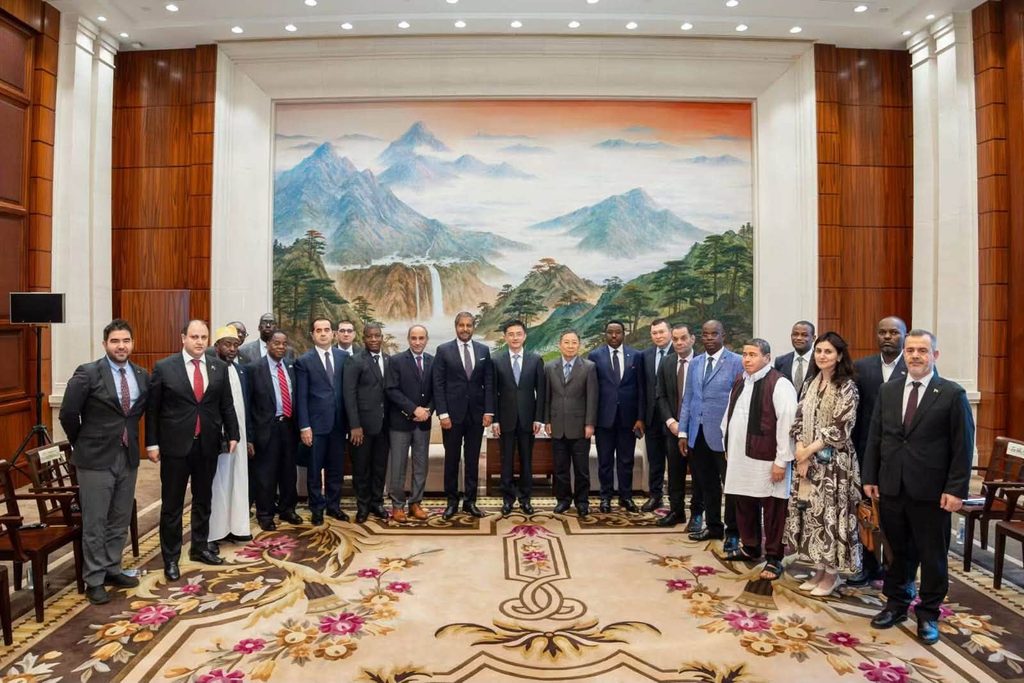
China Hosts A high-level OIC delegation representing 20 Member States to strengthen dialogue on political, economic, and cultural cooperation.
A Delegation Spanning Three Geographical Groups
The visiting delegation brings together ambassadors, delegates and representatives from across the OIC’s diverse membership, reflecting the organization’s three geographical groups. Among the senior figures leading the delegation is His Excellency Ambassador Dya-Eddine Said Bamakhrama, Ambassador of the Republic of Djibouti and Dean of the Diplomatic Corps in the Kingdom of Saudi Arabia, whose presence lends additional diplomatic weight to the mission. He is joined by a number of other delegates and representatives drawn from OIC Member States across the organization’s regional groupings.
The OIC General Secretariat itself is represented by His Excellency Mr. Yousef bin Mohammed Al-Dobeay, Assistant Secretary-General for Political Affairs, whose involvement signals the institutional importance the OIC has attached to the visit. His participation places the trip within the broader context of the OIC’s political engagement strategy, rather than treating it as a purely ceremonial or symbolic exercise.
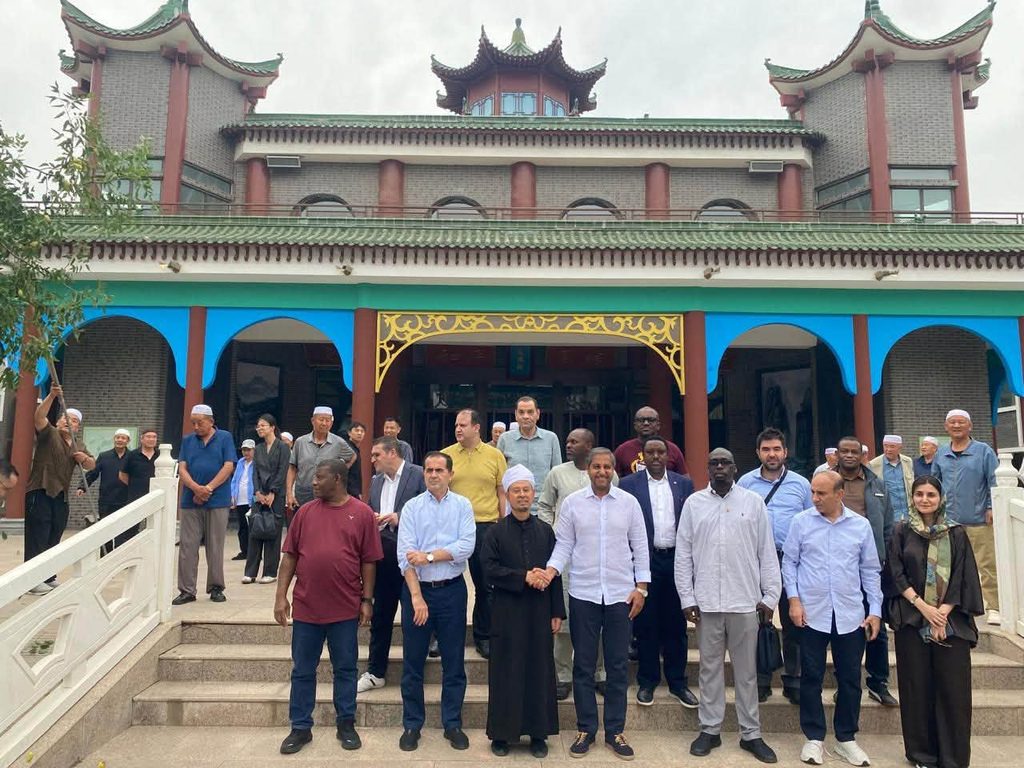
China Hosts A high-level OIC delegation representing 20 Member States to strengthen dialogue on political, economic, and cultural cooperation.
From Shanghai to Ningxia: A Multi-City Itinerary
The delegation’s visit began on Thursday, September 3, 2026, in Shanghai, one of China’s principal commercial and diplomatic hubs. There, delegates met with a number of high-ranking Chinese officials and visited several sites of particular significance to the visit’s themes, including the historic Shanghai Mosque — a landmark reflecting the long history of Muslim communities in China — as well as leading Chinese companies operating in the technology, health, and development sectors.
The itinerary is set to continue in the days following the Shanghai leg, taking the delegation to several cities in China’s Ningxia Hui Autonomous Region, an area home to a substantial Muslim population. According to details of the visit, this leg of the trip is intended to allow delegates to assess conditions faced by the Muslim community in Ningxia directly, alongside holding official meetings with representatives of China’s Ministry of Foreign Affairs and regional authorities. Officials have indicated that this stage of the visit is meant to help strengthen constructive dialogue and communication between the OIC and China across a range of fields.
Technology, Health and Development on the Agenda
The choice to include visits to Chinese companies in the technology, health, and development sectors during the Shanghai leg points to an agenda that extends beyond traditional diplomatic and religious-affairs discussions. By exposing delegates to Chinese firms operating in these fields, the visit appears designed to explore potential areas of practical cooperation between OIC Member States and China — areas that could feed into future economic, scientific, or development partnerships between Beijing and the Muslim-majority world.
This dimension of the visit reflects a broader pattern in China’s engagement with international partners in recent years, in which cultural and diplomatic exchanges are frequently paired with exposure to China’s commercial and technological sectors, positioning Chinese companies as potential partners for cooperation alongside government-to-government dialogue, and cultural connectivity for better understanding.
Assessing Conditions of Muslim Communities in China
A notable feature of the visit’s itinerary is the planned assessment of conditions faced by the Muslim population in Ningxia. This component of the trip suggests that the visit is intended, at least in part, to provide OIC representatives with a firsthand, on-the-ground perspective on the situation of Muslim communities in China — a subject that has drawn significant international attention and scrutiny in recent years, particularly concerning Muslim minority populations in other regions of the country. The inclusion of Ningxia, rather than other regions, focuses the delegation’s direct observations on a Hui Muslim community with a long-established presence in Chinese society.
Backgrounder: China and the Islamic World in a New Era
The OIC delegation’s visit comes against the backdrop of an increasingly active relationship between China and the broader Islamic world. Over the past decade, China has significantly deepened its engagement with Muslim-majority countries, driven in large part by the Belt and Road Initiative, which has drawn extensive Chinese investment into infrastructure, energy, and trade projects across the Middle East, Central Asia, South Asia, and parts of Africa — regions home to many OIC Member States.
Beyond economic ties, China has periodically sought to position itself as a partner for dialogue with the Islamic world on political and cultural matters, including through periodic high-level exchanges with the OIC itself, an organization that represents 57 member states and serves as the collective voice of the Muslim world on the international stage. Such engagements have typically sought to balance discussion of economic cooperation with attention to cultural and religious dimensions of the relationship, including the standing of China’s own Muslim population, which includes both the Hui community — concentrated in regions such as Ningxia — and other Muslim ethnic groups elsewhere in the country.
This visit, bringing together representatives from 20 OIC Member States alongside senior OIC leadership, represents one of the more substantial recent efforts to formalize and expand this dialogue, combining diplomatic meetings, exposure to China’s commercial and technological sectors, and direct engagement with Muslim communities within China itself.
Conclusion
The week-long visit by the OIC high-level delegation — spanning meetings in Shanghai and an extended itinerary in Ningxia — reflects a deliberate effort by both the OIC and China to broaden their dialogue beyond purely diplomatic exchanges into economic, technological, and community-level engagement. With senior representation from both the OIC General Secretariat and a wide cross-section of Member States, the visit signals continued momentum in China’s outreach to the Islamic world, even as questions about the treatment of Muslim communities in China remain part of the broader international conversation. The outcomes of the delegation’s meetings with Chinese officials in the coming days are likely to shape the next phase of OIC-China dialogue on political, economic, and cultural cooperation.
This article is based on the official details of the delegation’s visit as provided. The backgrounder section draws on general, publicly known context regarding China’s relations with OIC Member States and the Belt and Road Initiative; I was not able to independently verify additional specifics through web search, as browsing is not currently enabled in this conversation.
]]>
Pakistan hosts foreign ministers of Saudi Arabia, Egypt and Turkey for meeting in Islamabad to investigate halt escalation in Middle East
The ongoing conflict triggered by United States and Israeli military actions against Iran has pushed the Middle East into one of its most dangerous phases in decades. What began as a strategic offensive in late February 2026 has evolved into a multi-layered regional crisis involving missile strikes, maritime insecurity, and the risk of a wider war. Amid this volatile environment, Pakistan has emerged as a key diplomatic actor, positioning itself as a mediator and facilitator of peace. The hosting of foreign ministers from Saudi Arabia, Egypt, and Turkey in Islamabad marks a significant step in this direction, reflecting Pakistan’s growing relevance in crisis diplomacy.
Escalation and Regional Fallout
The conflict has already inflicted heavy damage, with thousands reported dead and critical infrastructure in Iran targeted through sustained airstrikes. The situation has further escalated with the involvement of regional actors such as Yemen’s Houthi forces, who have launched missile and drone attacks against Israeli targets, widening the conflict’s geographic scope.
Equally concerning is the disruption of global energy and trade routes. The Strait of Hormuz—one of the world’s most vital oil chokepoints—has been severely affected, raising fears of a global economic shock. The United States has reportedly deployed additional military assets to the region, with speculation of a possible ground offensive further intensifying tensions.
Against this backdrop, the urgency for diplomatic intervention has become critical, opening space for regional actors like Pakistan to play a constructive role.
Islamabad as a Diplomatic Hub
Pakistan’s decision to host high-level talks involving Saudi Arabia, Turkey, and Egypt signals its intent to transform Islamabad into a center for peace negotiations. The two-day meeting brings together influential Muslim-majority countries with stakes in regional stability, aiming to craft a coordinated response to the crisis.
The presence of key diplomats—including Saudi Foreign Minister Prince Faisal bin Farhan, Turkish Foreign Minister Hakan Fidan, and Egyptian Foreign Minister Badr Abdelatty—highlights the seriousness of the initiative. These discussions are focused on de-escalation, ceasefire prospects, and creating pathways for direct dialogue between the United States and Iran.
Pakistan’s Foreign Minister, Ishaq Dar, has engaged in extensive bilateral consultations, emphasizing restraint and the need for diplomacy over military confrontation. The Islamabad meeting is widely seen as part of a broader multinational effort to prevent further escalation and stabilize the region.
Pakistan as a Mediator Between Adversaries
One of Pakistan’s most significant contributions lies in its unique diplomatic positioning. Unlike many countries, Pakistan maintains working relations with both Iran and key US allies such as Saudi Arabia. This allows Islamabad to function as a bridge between opposing camps.
Pakistan has already been involved in “shuttle diplomacy,” conveying messages between Washington and Tehran. Reports indicate that Islamabad has even been considered as a potential venue for direct US–Iran negotiations, underscoring international confidence in its neutrality.
Moreover, Pakistan has reportedly played a role in preventing further escalation by urging restraint from all sides. In one instance, mediation efforts contributed to the temporary removal of Iranian officials from potential targeting lists, preserving diplomatic channels.
Strategic Motivations Behind Pakistan’s Role
Pakistan’s peace efforts are not purely altruistic; they are deeply rooted in its national interests. The country faces significant economic and security risks from prolonged instability in the Middle East.
First, Pakistan is heavily dependent on energy imports routed through the Strait of Hormuz. Any disruption directly affects its economy, leading to fuel shortages and inflationary pressures.
Second, Pakistan shares a long border with Iran, making it vulnerable to spillover effects such as refugee flows, cross-border militancy, and sectarian tensions. Internal protests and unrest linked to the conflict have already been reported, reflecting the domestic impact of the crisis.
Third, Pakistan must carefully balance its relations with Saudi Arabia—its long-standing ally—and Iran, its neighbor. The 2025 Pakistan–Saudi Strategic Mutual Defence Agreement adds complexity, as Islamabad must avoid being drawn into a broader military confrontation while maintaining its commitments.
Thus, Pakistan’s diplomatic activism is driven by a combination of strategic necessity and geopolitical opportunity.
A Coordinated Muslim World Response
The Islamabad meeting also reflects a broader trend: the emergence of a coordinated diplomatic effort among Muslim-majority countries. Saudi Arabia, Turkey, and Egypt—each with significant regional influence—are working alongside Pakistan to create a unified platform for de-escalation.
This collective approach is important for several reasons. It enhances the legitimacy of peace efforts, reduces fragmentation in the Muslim world’s response, and increases pressure on conflicting parties to engage in dialogue. Turkish officials, for instance, have emphasized the urgency of actionable strategies to end the war and protect critical trade routes.
By hosting these talks, Pakistan is not only facilitating diplomacy but also strengthening multilateral cooperation among key regional actors.
Challenges and Limitations
Despite its proactive role, Pakistan faces significant challenges in achieving tangible outcomes. One major limitation is the absence of direct representation from the primary belligerents—the United States, Israel, and Iran—in the Islamabad talks. Without their direct participation, the effectiveness of any proposals remains uncertain.
Additionally, deep mistrust between Washington and Tehran complicates mediation efforts. Iran has expressed skepticism toward US intentions, particularly amid reports of potential ground operations.
There is also the broader geopolitical context to consider. External powers, including Russia and China, as well as regional actors like the Gulf states, have their own strategic interests, which may not always align with Pakistan’s mediation efforts.
Opportunities for Pakistan’s Global Standing
Despite these challenges, Pakistan’s diplomatic initiative offers significant opportunities. Successfully facilitating dialogue—even indirectly—could enhance its international reputation as a responsible and constructive actor in global affairs.
Historically, Pakistan has played mediation roles in various conflicts, but the scale and stakes of the current crisis provide a unique opportunity to elevate its diplomatic profile. Hosting high-level talks and engaging multiple stakeholders positions Islamabad as a credible venue for conflict resolution.
Furthermore, this role aligns with Pakistan’s broader foreign policy objective of promoting regional stability while avoiding direct military involvement. Analysts have described this approach as “limited alignment without military entanglement,” allowing Pakistan to maintain strategic flexibility.

Conclusion
In the face of escalating tensions following US–Israel actions against Iran, Pakistan has stepped forward as a key diplomatic intermediary. By hosting foreign ministers from Saudi Arabia, Egypt, and Turkey, Islamabad has created a platform for coordinated regional efforts aimed at de-escalation and dialogue.
While the road to peace remains uncertain, Pakistan’s role underscores the importance of middle-power diplomacy in managing global crises. Its ability to balance relationships, facilitate communication, and mobilize regional actors places it at the center of ongoing peace efforts.
Ultimately, whether these initiatives succeed will depend on the willingness of the primary parties to engage in meaningful negotiations. However, Pakistan’s proactive stance demonstrates that even in the midst of conflict, diplomacy remains a vital tool—and Islamabad is determined to use it.
By: Dr.Muhammad Arif, is Editor of NSN.Asia, and Professor of Journalism in Islamabad.
