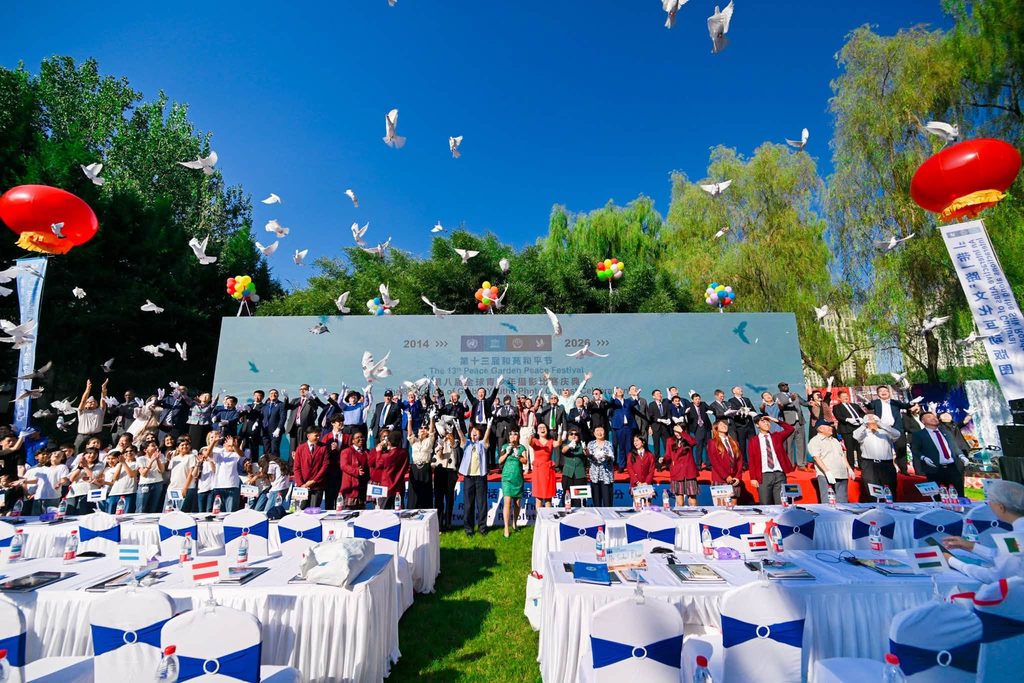
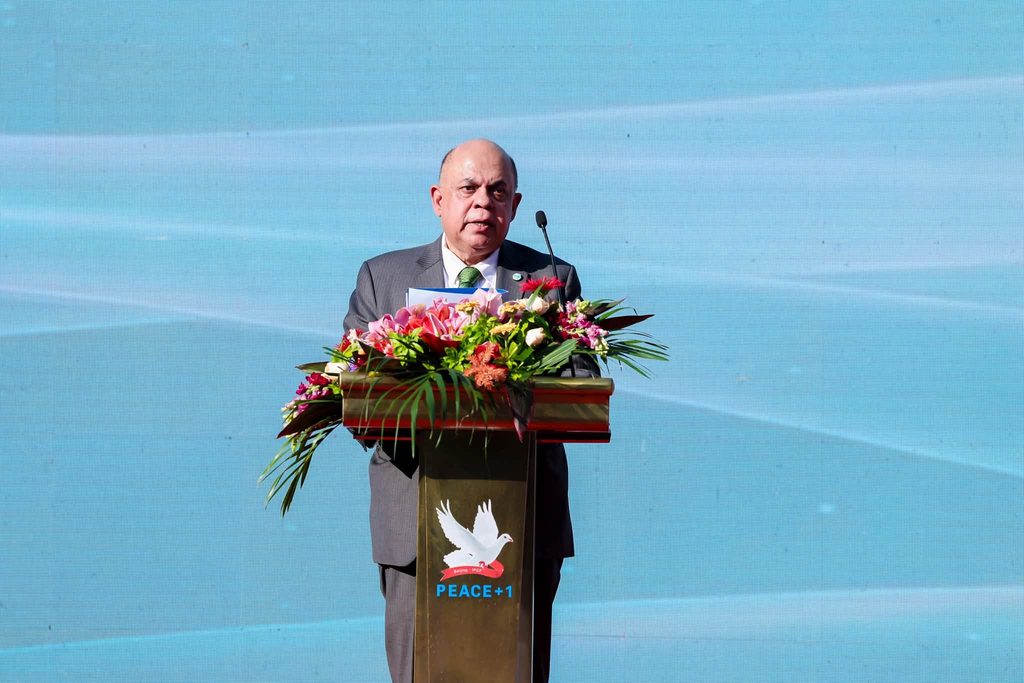
The 13th Peace Garden Peace Festival opened in Beijing on 21 September 2026, bringing the United Nations’ International Day of Peace into direct conversation with a narrative China and its regional partners have spent over a decade cultivating: the Silk Road Spirit. Held under the theme “New Silk Road, New Thinking Route: International Network Dialogue, Resolutions of Divergences and Conflicts,” the festival drew a formal greeting from Shanghai Cooperation Organisation Secretary-General Nurlan Yermekbayev, delivered on his behalf by Deputy Secretary-General Sohail Khan — a message that offers a compact case study in how two very different peacebuilding traditions, one rooted in universal UN mandate and the other in cultural and civilisational narrative, are increasingly being woven together.
A Theme Built for the Moment
The timing was no coincidence: organisers deliberately scheduled this year’s festival to coincide with the International Day of Peace. The theme itself is worth sitting with, too. It does not simply invoke the Silk Road as a historical metaphor for connection, but explicitly frames it as a “thinking route” — a pathway not for goods or capital, but for dialogue capable of resolving divergence and conflict. That framing positions cultural and intellectual exchange as a peacebuilding tool in its own right, on equal footing with the diplomatic and security mechanisms more conventionally associated with conflict resolution.
The SCO’s Message: Diversity as Resource, Not Risk
SCO Secretary-General Nurlan Yermekbayev’s greeting to festival participants, delivered on his behalf by Deputy Secretary-General Sohail Khan, articulated a specific philosophical position on the relationship between cultural diversity and international stability. “The SCO proceeds from the premise that the diversity of civilizations and cultures is an important resource for international cooperation,” Yermekbayev stated. “At the same time, culture remains a universal language of communication that helps maintain dialogue and form a solid foundation for peace, good-neighbourliness and sustainable development.”
This is a notable framing choice. In much international discourse, civilisational and cultural diversity is treated primarily as a source of friction to be managed — a variable requiring careful diplomatic handling to prevent misunderstanding or conflict. Yermekbayev’s message inverts that framing, presenting diversity instead as a resource that strengthens cooperation, provided it is channelled through sustained dialogue. He added that this understanding is precisely why SCO member states have been steadily expanding interaction along the cultural and humanitarian track — an indication that, within the organisation’s broader architecture spanning security, economic, and political cooperation, cultural exchange is increasingly treated as a deliberate, formalised pillar rather than a peripheral gesture.
The choice to have Deputy Secretary-General Sohail Khan personally deliver the message, rather than issuing a written statement alone, also signals the weight the organisation placed on ensuring direct representation at the event.
Backgrounder: How the World Arrived at a Fixed Peace Day
The International Day of Peace did not begin as the fixed, globally synchronised observance it is today. The United Nations General Assembly first proclaimed the day in 1981 through resolution 36/67, initially anchoring its observance to the third Tuesday of September — a date that shifted each year depending on the calendar. Two decades later, in 2001, the General Assembly unanimously adopted resolution 55/282, fixing the date permanently at 21 September starting in 2002, and crucially designating it as a day of global ceasefire and non-violence.
That shift, from a floating calendar date to a fixed one carrying an explicit ceasefire mandate, mattered. It transformed the day from a loosely symbolic gesture into something with a concrete, if largely aspirational, ask directed at every UN member state and, implicitly, at parties to conflict everywhere: lay down arms, even briefly, on this one date. In the years since, that ask has been kept visible less through enforcement — the UN has no mechanism to compel a ceasefire — than through the accumulation of public observances, humanitarian appeals, and cultural events held annually around the world, of which Beijing’s Peace Garden Peace Festival is one recurring example.
Two Traditions, One Convening Point
What makes this year’s festival notable is not the SCO’s presence alone, but the specific alignment between two peacebuilding vocabularies that don’t automatically overlap. The UN’s Peace Day rests on universal, treaty-based legitimacy — a single date observed, at least nominally, by every member state regardless of political system or regional alignment, built around a concrete, if unenforceable, demand. The Silk Road Spirit is a more particular narrative, rooted in a specific historical memory of trade and exchange along ancient routes connecting China with Central Asia, the Middle East, and beyond, and has become a recurring rhetorical anchor for China’s Belt and Road Initiative and, increasingly, for institutions closely aligned with it, including the SCO.
These two traditions are not naturally identical, but they share a structural premise: that sustained contact and dialogue between different peoples and systems reduces, rather than increases, the likelihood of conflict. Beijing’s festival, by explicitly theming itself around a “New Silk Road” of dialogue on the same date the UN has set aside for global ceasefire, functions as a deliberate point of convergence between the two — one that allows an organisation like the SCO to situate its own cultural diplomacy squarely within a universally recognised international observance, lending it a legitimacy that a purely China-specific framing might not carry on its own.
Conclusion: What the Convergence Is Worth
Whether this convergence between UN Peace Day and Silk Road Spirit amounts to more than complementary rhetoric is the harder question, and one that a single festival greeting cannot answer. Cultural dialogue is, by most measures, a necessary but insufficient condition for peace — valuable for building the kind of sustained familiarity that makes cooperation easier, but not, on its own, capable of halting an active conflict or resolving a territorial dispute. The UN’s own experience with the International Day of Peace over more than four decades illustrates the point: the observance has grown in visibility and symbolic weight without acquiring any binding force, and armed conflicts have continued, in many years, on 21 September itself.
What events like the Peace Garden Peace Festival offer is narrower but not therefore negligible: a recurring, low-cost opportunity for institutions and individuals across different political and cultural traditions to use a shared vocabulary — dialogue, diversity as resource, civilisational exchange — even when their underlying interests and systems diverge sharply elsewhere. The real test of the Silk Road Spirit’s convergence with the UN’s peace ideal will not be found in any single greeting or festival theme, but in whether the habits of engagement they promote outlast the ceremony — whether the “New Thinking Route” this year’s festival invoked proves capable of carrying difficult conversations, not just celebratory ones, once the Peace Garden’s lanterns are packed away and the next 21 September approaches with its own unresolved conflicts still waiting for the ceasefire the day was designed to call for.
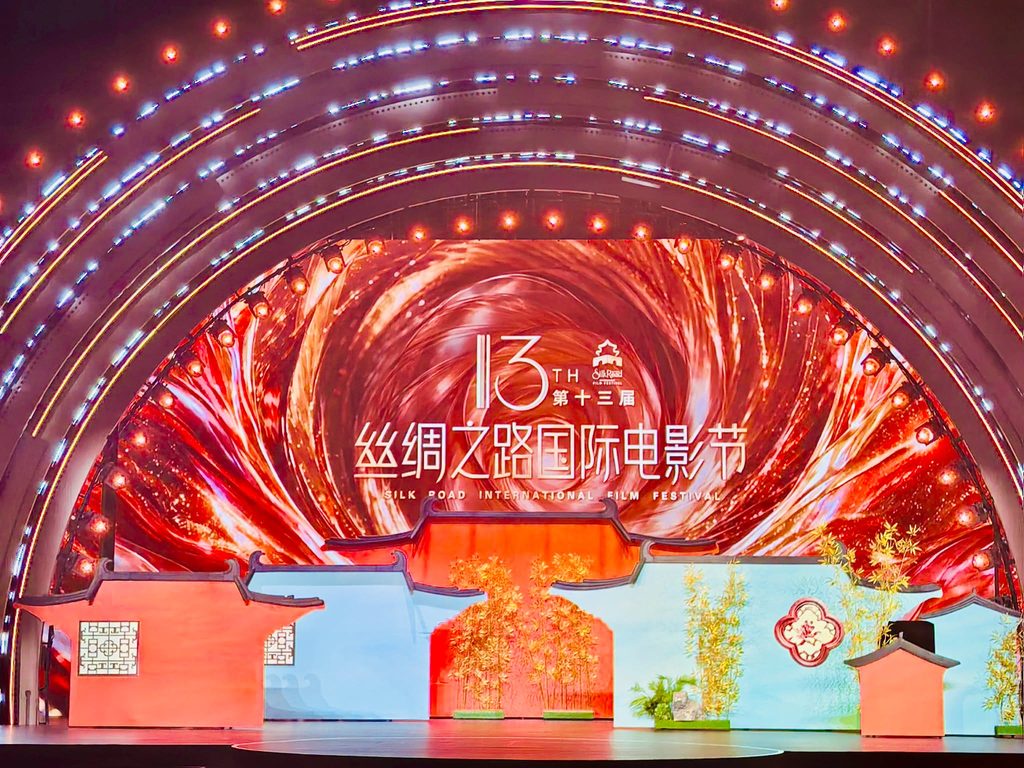
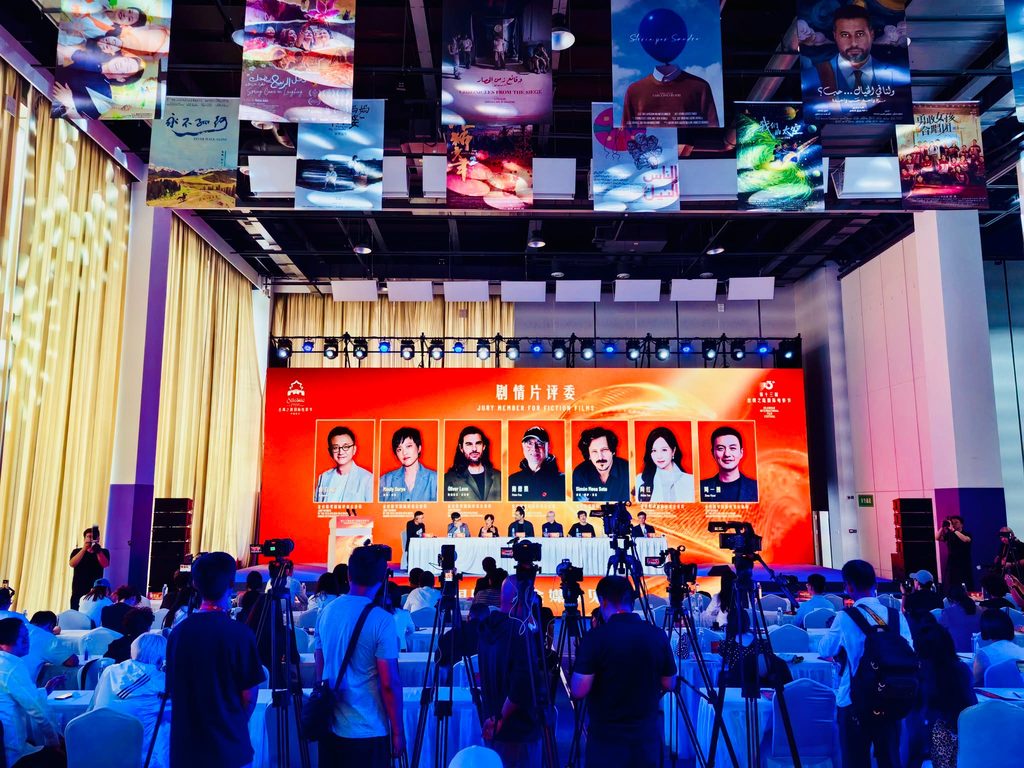
]]>The 13th Silk Road International Film Festival opened in Xi’an City, Shaanxi Province, running from September 19 to 23, 2026, bringing together filmmakers, industry professionals, and audiences from across the Silk Road region and beyond. Now well into its second decade, the festival has become one of China’s most prominent platforms for positioning cinema as a vehicle for cross-border cultural exchange under the framework of the Belt and Road Initiative.
A Festival Rooted in the Belt and Road Framework
Officially established in 2014, the Silk Road International Film Festival is hosted alternately by Shaanxi and Fujian provinces — two regions chosen for their historical resonance with the ancient Silk Road’s overland and maritime routes respectively. This year’s edition was organized by the People’s Government of Shaanxi Province, the People’s Government of Fujian Province, and China Media Group, with the Ministry of Culture and Tourism formally approving and filing the hosting of the event in August 2026.
The festival’s structure reflects its founding purpose: rather than functioning purely as a domestic showcase, it is explicitly designed as an international platform connecting film industries across the dozens of countries linked, historically and symbolically, by Silk Road trade routes.
From Global Call for Entries to Cairo Screen Dialogue
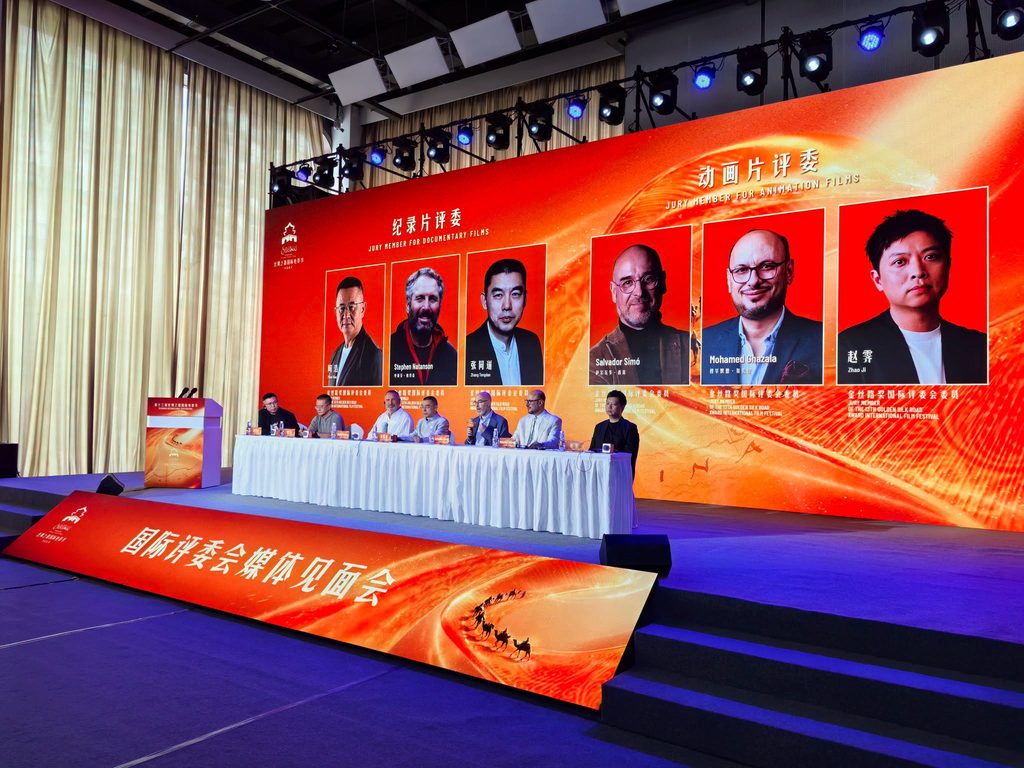
The road to this year’s festival began months earlier. In May 2026, the Competition Section of the 13th edition officially opened its call for entries to filmmakers worldwide, with submissions closing at midnight on July 10, 2026.
In between, organizers took the festival’s outreach on the road quite literally. In early July 2026, the Silk Road International Film Festival’s Executive Committee, together with the Western Film Group and other partner organizations, held the opening ceremony of the “Chang’an–Cairo Screen Dialogue – 2026 China-Egypt Western Film Week” in Cairo, Egypt. The event was designed to deepen film-cultural exchange between China and Egypt, build anticipation for the Xi’an festival, and directly invite participation from the Egyptian film industry. The Cairo programme was structured around three core components: film screenings, institutional matchmaking between industry stakeholders, and broader cultural exchange activities — a format that underscores how the festival increasingly functions as a year-round diplomatic and industry engagement effort rather than a single week-long event.
Registration Standards Aimed at Global Competitiveness
The festival’s registration specifications reflect an effort to maintain international competition standards. Feature films and animated films submitted for competition were required to run no less than 70 minutes, while documentaries needed a minimum runtime of 60 minutes. All eligible films had to have been completed after January 1, 2025, ensuring the competition showcased recent work. Films with dialogue in languages other than Mandarin Chinese were required to carry English or Chinese subtitles, while any Chinese films submitted for evaluation needed to hold a valid Public Screening License. The required technical screening format was DCP (Digital Cinema Package), the industry standard for theatrical exhibition. Under equal conditions, organizers indicated that priority would be given to films receiving their World Premiere or International Premiere at the festival — a standard practice among major film festivals seeking to establish prestige and draw premiere-seeking filmmakers.
Backgrounder: The Silk Road Spirit and the Case for Cultural Connectivity
The ancient Silk Road, which for roughly two millennia linked China with Central Asia, the Middle East, Africa, and Europe through overland and maritime trade routes, has long been invoked in Chinese cultural diplomacy as a symbol of exchange predating modern geopolitics — a historical precedent for connection built on commerce, ideas, and mutual curiosity rather than confrontation. Since the launch of the Belt and Road Initiative in 2013, Chinese officials have frequently framed contemporary infrastructure and economic cooperation as an extension of what is often termed the “Silk Road Spirit”: peace and cooperation, openness and inclusiveness, mutual learning, and mutual benefit.
Cultural and cinematic connectivity forms a specific strand of this broader initiative, running parallel to the infrastructure and trade corridors more commonly associated with Belt and Road projects. Film festivals, in particular, offer a lower-cost, high-visibility mechanism for cultural diplomacy: they generate media coverage, facilitate direct industry relationships between producers and distributors across borders, and create opportunities for audiences in participating countries to encounter cinema — and by extension, cultural narratives — from nations they might otherwise have limited exposure to.
The Cairo Screen Dialogue exemplifies this approach in practice. Rather than simply issuing an open call for international submissions, organizers proactively built relationships with a specific national film industry months ahead of the main event, treating festival participation as something to be cultivated through direct institutional engagement rather than left to organic interest.
The Way Forward
As the Silk Road International Film Festival enters its second decade, its trajectory offers a useful lens on how China is refining its approach to cultural diplomacy: less reliant on symbolism alone, and increasingly structured around sustained institutional relationships, industry matchmaking, and international outreach efforts conducted well ahead of the festival itself. Whether this year’s edition succeeds in expanding genuine international participation — as opposed to primarily domestic and regional entries — will likely shape how much further organizers invest in initiatives like the Cairo dialogue for future editions, as the festival continues positioning cinema as connective tissue within the broader Belt and Road framework.
]]>OIC Delegation’s visit to Aims to Strengthen Dialogue and Cooperation in Cultural, Technology, Health and Development sectors
A high-level delegation representing 20 Organisation of Islamic Cooperation (OIC) Member States and the OIC General Secretariat is undertaking an official visit to the People’s Republic of China from September 3 to 8, 2026, at the invitation of China’s Ministry of Foreign Affairs. The visit forms part of what both sides describe as a constructive and ongoing dialogue between the OIC and China.
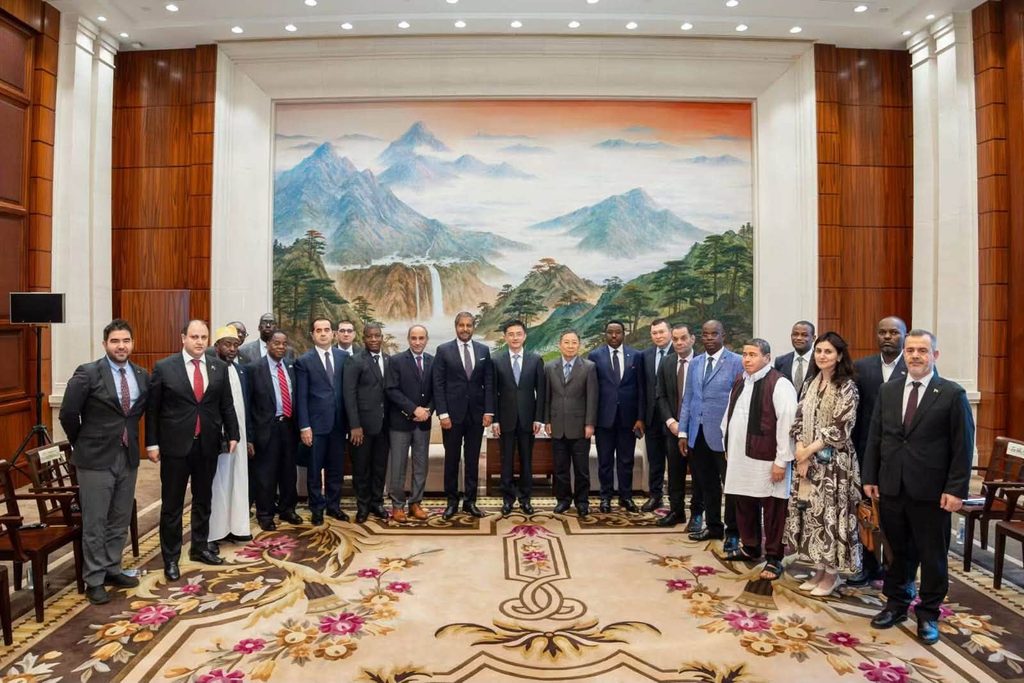
China Hosts A high-level OIC delegation representing 20 Member States to strengthen dialogue on political, economic, and cultural cooperation.
A Delegation Spanning Three Geographical Groups
The visiting delegation brings together ambassadors, delegates and representatives from across the OIC’s diverse membership, reflecting the organization’s three geographical groups. Among the senior figures leading the delegation is His Excellency Ambassador Dya-Eddine Said Bamakhrama, Ambassador of the Republic of Djibouti and Dean of the Diplomatic Corps in the Kingdom of Saudi Arabia, whose presence lends additional diplomatic weight to the mission. He is joined by a number of other delegates and representatives drawn from OIC Member States across the organization’s regional groupings.
The OIC General Secretariat itself is represented by His Excellency Mr. Yousef bin Mohammed Al-Dobeay, Assistant Secretary-General for Political Affairs, whose involvement signals the institutional importance the OIC has attached to the visit. His participation places the trip within the broader context of the OIC’s political engagement strategy, rather than treating it as a purely ceremonial or symbolic exercise.
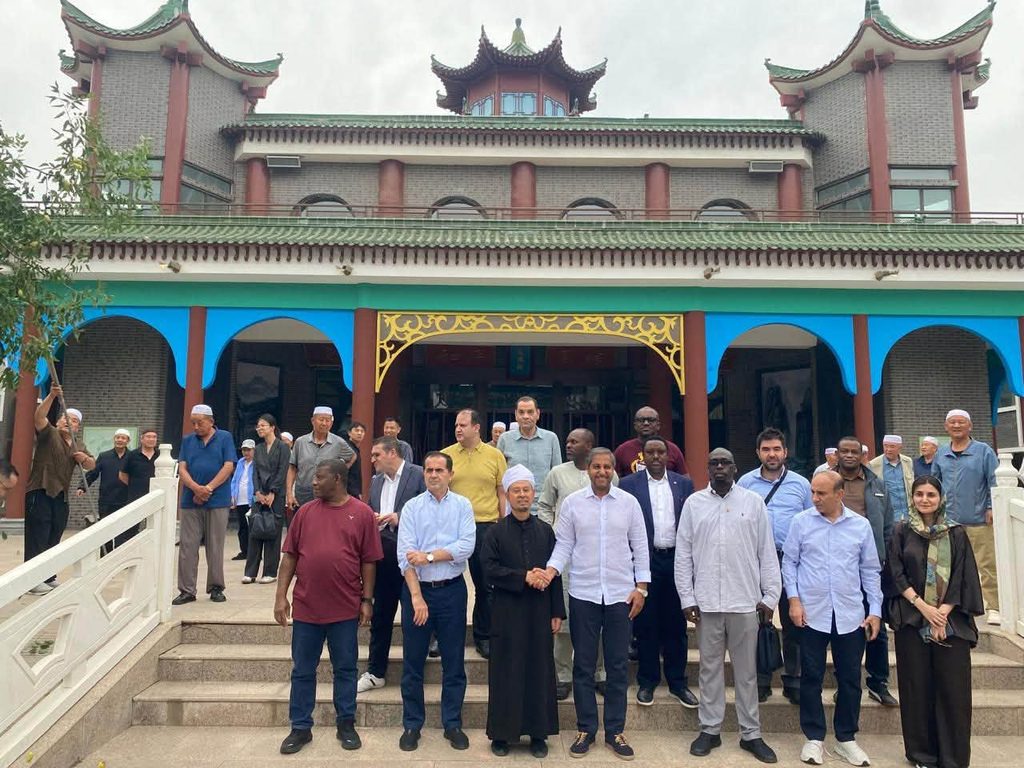
China Hosts A high-level OIC delegation representing 20 Member States to strengthen dialogue on political, economic, and cultural cooperation.
From Shanghai to Ningxia: A Multi-City Itinerary
The delegation’s visit began on Thursday, September 3, 2026, in Shanghai, one of China’s principal commercial and diplomatic hubs. There, delegates met with a number of high-ranking Chinese officials and visited several sites of particular significance to the visit’s themes, including the historic Shanghai Mosque — a landmark reflecting the long history of Muslim communities in China — as well as leading Chinese companies operating in the technology, health, and development sectors.
The itinerary is set to continue in the days following the Shanghai leg, taking the delegation to several cities in China’s Ningxia Hui Autonomous Region, an area home to a substantial Muslim population. According to details of the visit, this leg of the trip is intended to allow delegates to assess conditions faced by the Muslim community in Ningxia directly, alongside holding official meetings with representatives of China’s Ministry of Foreign Affairs and regional authorities. Officials have indicated that this stage of the visit is meant to help strengthen constructive dialogue and communication between the OIC and China across a range of fields.
Technology, Health and Development on the Agenda
The choice to include visits to Chinese companies in the technology, health, and development sectors during the Shanghai leg points to an agenda that extends beyond traditional diplomatic and religious-affairs discussions. By exposing delegates to Chinese firms operating in these fields, the visit appears designed to explore potential areas of practical cooperation between OIC Member States and China — areas that could feed into future economic, scientific, or development partnerships between Beijing and the Muslim-majority world.
This dimension of the visit reflects a broader pattern in China’s engagement with international partners in recent years, in which cultural and diplomatic exchanges are frequently paired with exposure to China’s commercial and technological sectors, positioning Chinese companies as potential partners for cooperation alongside government-to-government dialogue, and cultural connectivity for better understanding.
Assessing Conditions of Muslim Communities in China
A notable feature of the visit’s itinerary is the planned assessment of conditions faced by the Muslim population in Ningxia. This component of the trip suggests that the visit is intended, at least in part, to provide OIC representatives with a firsthand, on-the-ground perspective on the situation of Muslim communities in China — a subject that has drawn significant international attention and scrutiny in recent years, particularly concerning Muslim minority populations in other regions of the country. The inclusion of Ningxia, rather than other regions, focuses the delegation’s direct observations on a Hui Muslim community with a long-established presence in Chinese society.
Backgrounder: China and the Islamic World in a New Era
The OIC delegation’s visit comes against the backdrop of an increasingly active relationship between China and the broader Islamic world. Over the past decade, China has significantly deepened its engagement with Muslim-majority countries, driven in large part by the Belt and Road Initiative, which has drawn extensive Chinese investment into infrastructure, energy, and trade projects across the Middle East, Central Asia, South Asia, and parts of Africa — regions home to many OIC Member States.
Beyond economic ties, China has periodically sought to position itself as a partner for dialogue with the Islamic world on political and cultural matters, including through periodic high-level exchanges with the OIC itself, an organization that represents 57 member states and serves as the collective voice of the Muslim world on the international stage. Such engagements have typically sought to balance discussion of economic cooperation with attention to cultural and religious dimensions of the relationship, including the standing of China’s own Muslim population, which includes both the Hui community — concentrated in regions such as Ningxia — and other Muslim ethnic groups elsewhere in the country.
This visit, bringing together representatives from 20 OIC Member States alongside senior OIC leadership, represents one of the more substantial recent efforts to formalize and expand this dialogue, combining diplomatic meetings, exposure to China’s commercial and technological sectors, and direct engagement with Muslim communities within China itself.
Conclusion
The week-long visit by the OIC high-level delegation — spanning meetings in Shanghai and an extended itinerary in Ningxia — reflects a deliberate effort by both the OIC and China to broaden their dialogue beyond purely diplomatic exchanges into economic, technological, and community-level engagement. With senior representation from both the OIC General Secretariat and a wide cross-section of Member States, the visit signals continued momentum in China’s outreach to the Islamic world, even as questions about the treatment of Muslim communities in China remain part of the broader international conversation. The outcomes of the delegation’s meetings with Chinese officials in the coming days are likely to shape the next phase of OIC-China dialogue on political, economic, and cultural cooperation.
This article is based on the official details of the delegation’s visit as provided. The backgrounder section draws on general, publicly known context regarding China’s relations with OIC Member States and the Belt and Road Initiative; I was not able to independently verify additional specifics through web search, as browsing is not currently enabled in this conversation.
]]>Ambassador Highlights Historical Ties and Investment Opportunities
PTDC Highlights Growing Cooperation and Regional Connectivity
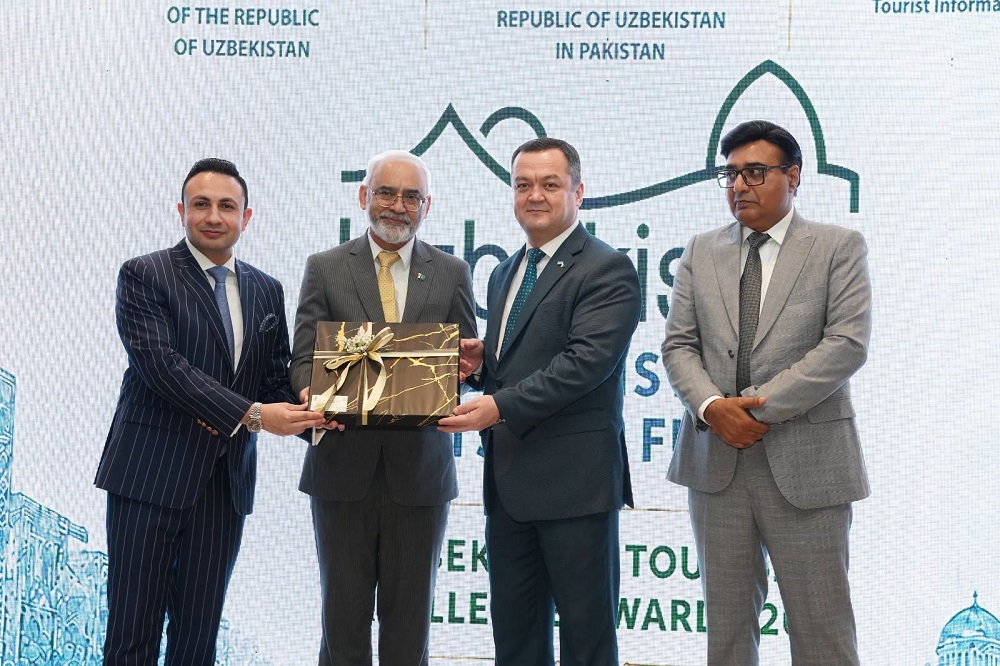
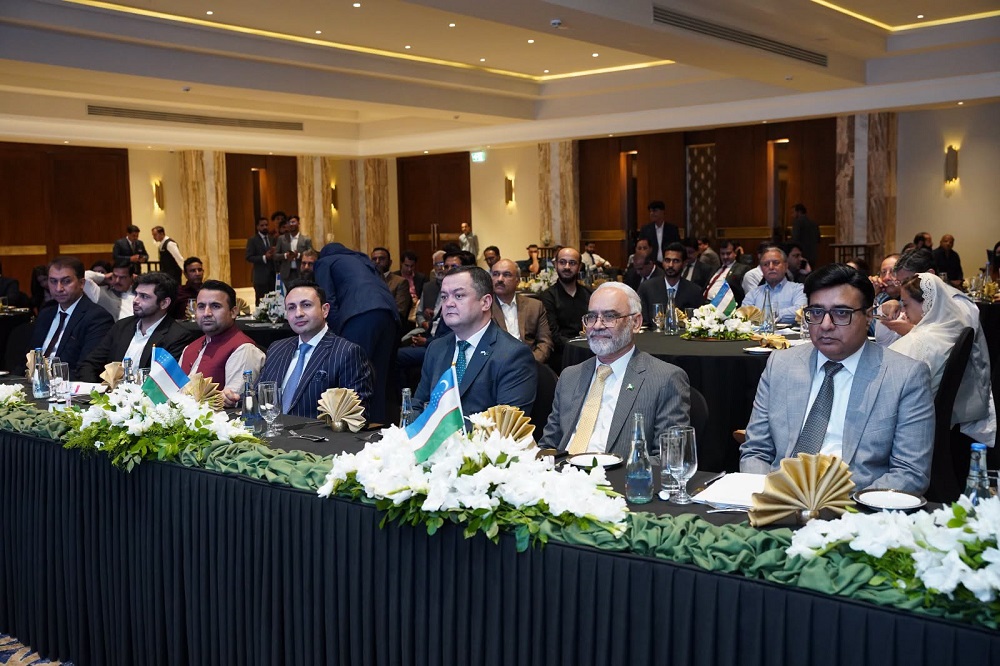
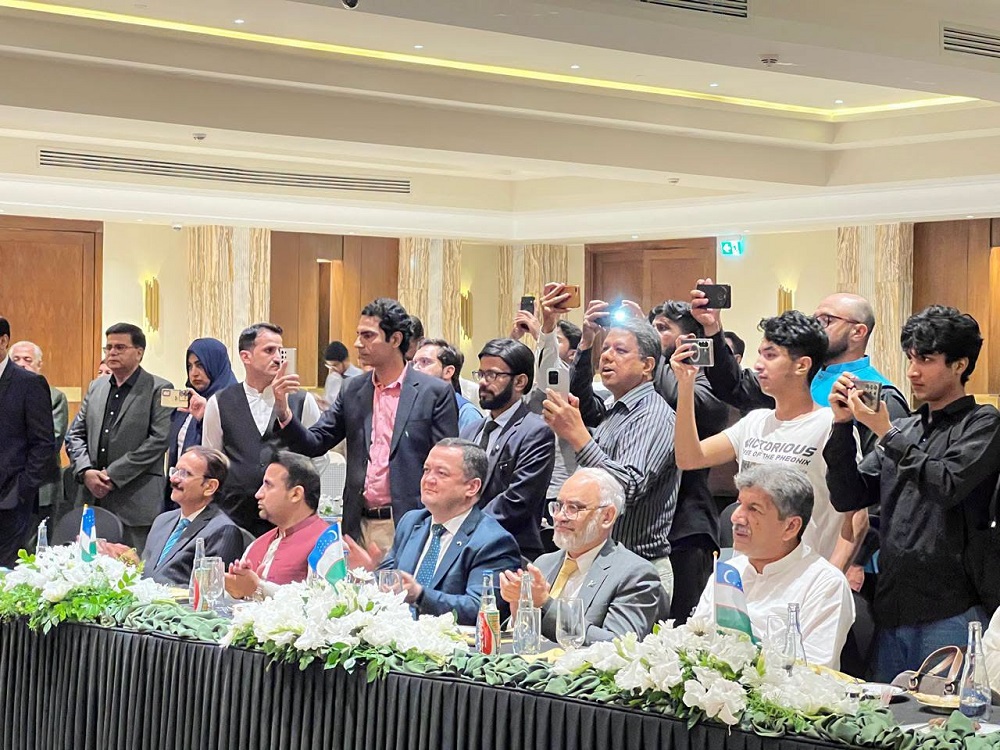
The Uzbekistan Tourism Road Show & Tourism Excellence Awards 2026, organized by the Embassy of Uzbekistan in Pakistan as part of Uzbekistan Tourism Days in Pakistan, brought together senior government officials, travel industry leaders, and key stakeholders to celebrate the steadily expanding partnership between the two countries.
The event served as a platform to recognize outstanding contributions to bilateral travel and leisure romotion while showcasing country’s tourism potential to Pakistani travellers, tour operators, and investors.
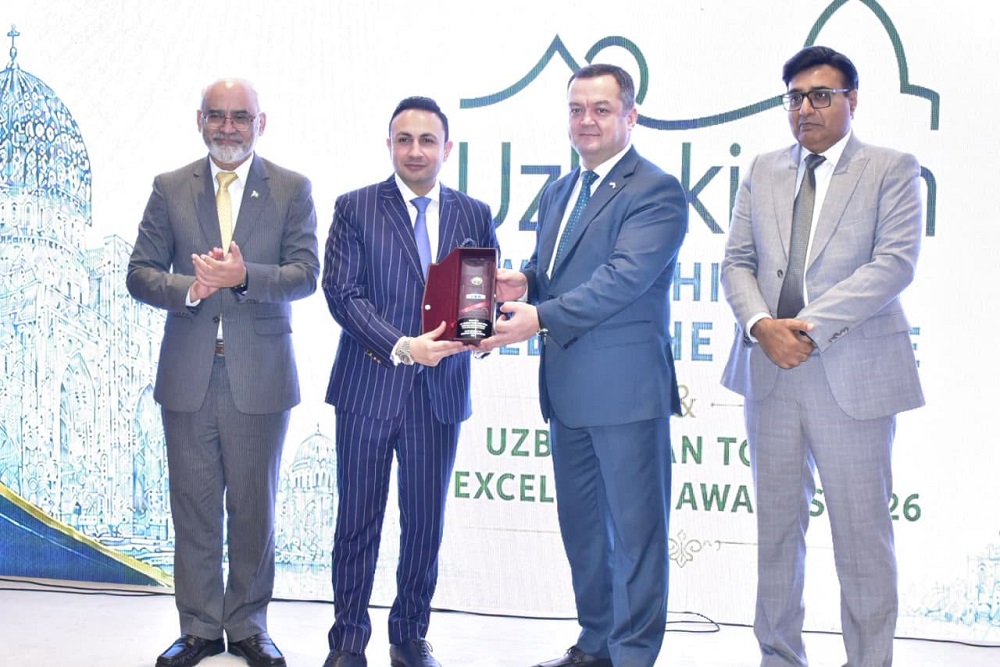
Tourism Excellence Awards Recognize Key Contributors
During the ceremony, His Excellency the Ambassador of Uzbekistan to Pakistan presented the Travel Excellence Awards to a number of individuals and institutions recognized for their role in strengthening travel and mobility ties between the two nations. Award recipients included:
- Sardar Yasir Ilyas Khan, National Coordinator to the Prime Minister on Tourism
- Mr. Aftab-ur-Rehman Rana, Managing Director, PTDC
- Other prominent mobility stakeholders who have contributed to promoting bilateral tourism between Pakistan and Uzbekistan
The awards underscored the growing institutional commitment on both sides to elevate traveling as a pillar of the broader bilateral relationship.
Ambassador Highlights Historical Ties and Investment Opportunities
Addressing the gathering, the Ambassador of Uzbekistan spoke about the deep historical and cultural connections shared by Pakistan and Uzbekistan — ties rooted in centuries of trade, culture, and people-to-people exchange along the historic Silk Road. He outlined emerging opportunities for travel investment in Uzbekistan and reaffirmed a shared vision for expanding cooperation in the years ahead, positioning mobility as a natural extension of the two countries’ longstanding friendship.
PTDC Highlights Growing Cooperation and Regional Connectivity
Speaking at the event, Mr. Aftab-ur-Rehman Rana, Managing Director PTDC, appreciated the Embassy’s efforts in organizing the Road Show and highlighted the steadily growing traveling cooperation partnership between Pakistan and Uzbekistan. He shared details of several ongoing initiatives designed to enhance travel exchanges between the two countries, including:
- Cooperation in travel education and training
- Building stronger linkages between tour operators on both sides
- Working toward improved air connectivity to facilitate easier travel
- Exploring opportunities for greater regional cooperation through upcoming ECO (Economic Cooperation Organization) and SCO (Shanghai Cooperation Organization) tourism engagements planned in Lahore
Mr. Rana’s remarks reflected PTDC’s broader strategy of using multilateral platforms to position Pakistan as a connected and accessible destination within the Central and South Asian travel corridor.
Government Reaffirms Commitment to Mobility Facilitation
Speaking as Chief Guest, Sardar Yasir Ilyas Khan, National Coordinator to the Prime Minister on Tourism, highlighted the immense travel and investment potential present in both Pakistan and Uzbekistan. He reaffirmed the Government of Pakistan’s commitment to facilitating travel between the two countries, encouraging greater travel exchanges, and strengthening people-to-people connections as a foundation for long-term bilateral cooperation.
Backgrounder: A Growing Pakistan–Uzbekistan Mobility Partnership
Pakistan and Uzbekistan have, in recent years, steadily expanded cooperation across trade, connectivity, culture, and traveling, building on historical and civilizational links dating back to the Silk Road era. The Uzbekistan Tourism Days in Pakistan initiative reflects a deliberate diplomatic and economic push by both governments to translate these historical ties into tangible tourism and economic outcomes.
Both countries have worked toward easing visa processes, expanding air links, and encouraging direct engagement between tour operators, hoteliers, and tourism boards. Uzbekistan, home to iconic Silk Road cities such as Samarkand, Bukhara, and Khiva, has been actively promoting itself as a premier heritage and cultural traveling destination for South Asian travellers, while Pakistan — with its diverse landscapes, from the northern mountains to rich cultural heritage sites — offers reciprocal appeal to Central Asian visitors.
The Tourism Excellence Awards 2026 mark a continuation of this momentum, formally recognizing individuals and institutions driving bilateral traveling forward, and signaling that traveling has become a strategic pillar — alongside trade and connectivity — in the broader Pakistan–Uzbekistan relationship.
Conclusion: Building Regional Bridges Through Mobility
The travel show 2026 highlighted not only the achievements of individuals and institutions driving bilateral tourism, but also the strategic importance of sustained promotion of Pakistan–Uzbekistan cooperation going forward. Strengthening this partnership will require continued focus on connectivity — particularly improved air links, streamlined travel facilitation, and closer coordination between tour operators and tourism boards on both sides.
Looking ahead, the planned ECO and SCO tourism engagements in Lahore present a significant opportunity to elevate this bilateral momentum into a broader regional tourism agenda, positioning both countries as key nodes in an increasingly connected Central and South Asian travel corridor. As both governments continue to prioritize traveling facilitation and people-to-people exchange, Pakistan looks forward to welcoming more travellers from Uzbekistan and across Central Asia, while building stronger, lasting traveling bridges across the wider region.
]]>
Tracking the interconnected world of the Silk Road
- Silk Road
Marco Polo’s Silk Road Journey: The 10,000-Kilometer Voyage from Venice to Beijing
How a 13th-century Venetian merchant’s overland trek reshaped Europe’s understanding of the Far East — and left behind a trail of bazaars, mountain passes, and desert caves still standing today.
Background
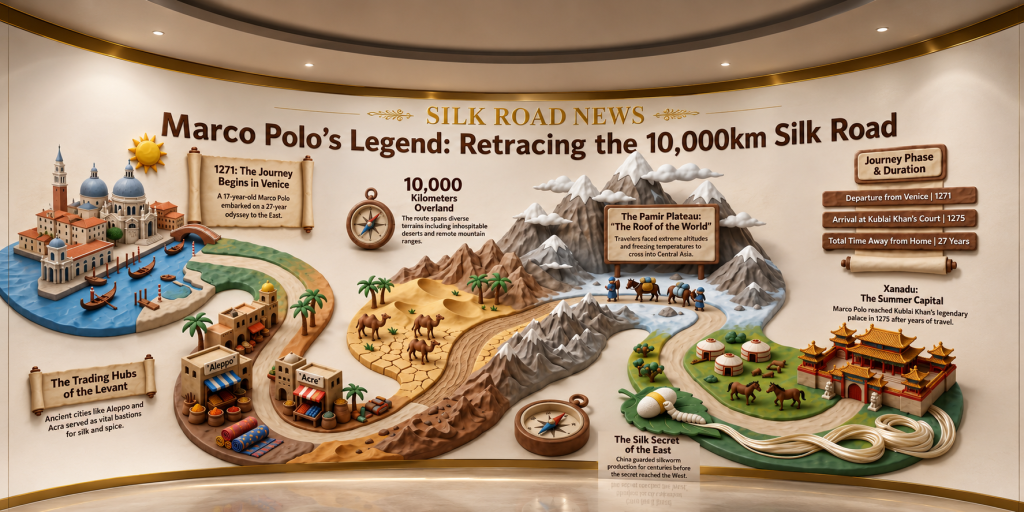
In 1271, a 17-year-old Venetian named Marco Polo left the canals of his home city with his father Niccolò and uncle Maffeo, bound for the court of the Mongol emperor Kublai Khan. What followed was a nearly four-year overland odyssey spanning roughly 10,000 kilometers — through the Levant, the Persian plateau, the high passes of Central Asia, and the deserts of western China — before reaching the glittering Yuan Dynasty capital of Khanbaliq, present-day Beijing.
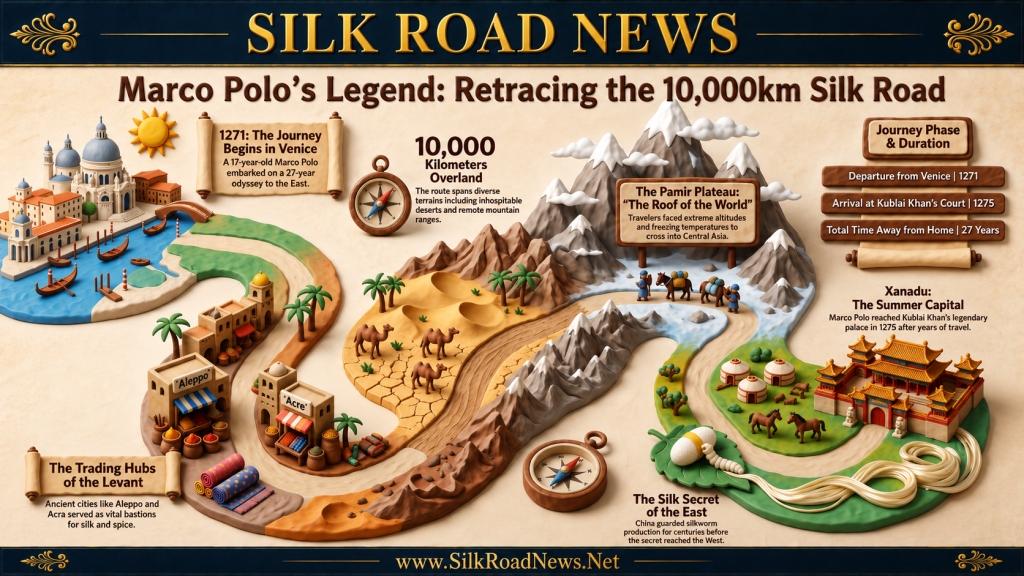
Marco Polo would spend nearly 17 years in the service of the Mongol court before returning home. His account of the journey, later dictated in a Genoese prison and published as The Travels of Marco Polo (also known as Il Milione), became one of the most influential travel narratives in European history. It introduced the West to paper currency, coal, and the scale and sophistication of Chinese cities — planting the seeds of the Age of Exploration that followed two centuries later.
Today, the route Polo traveled remains one of the world’s richest heritage corridors, recognized by UNESCO as part of the Silk Roads network of sites connecting Europe and East Asia.
Timeline of Marco Polo’s Journey Along the Silk Road
1271 — Departure from Venice
The Polo family departs Venice by ship, crossing the Mediterranean toward the Levantine coast, carrying a letter from Pope Gregory X to Kublai Khan.
Israel and the Levantine Coast
The travelers pass through the Holy Land region, then under Crusader and Mamluk influence, gathering holy oil from Jerusalem that Polo’s account notes was intended as a gift for the Khan.
Syria — The Bazaars of Aleppo
Moving inland, the party reaches Aleppo, then one of the great commercial hubs of the Islamic world. Its covered souks — among the oldest and largest covered markets on Earth — were already centuries old, trading in spices, textiles, and metalwork from across three continents. Sections of Aleppo’s historic souks, though damaged in recent conflict, remain a UNESCO World Heritage Site and a symbol of the city’s trading legacy.
Iran — Crossing the Persian Plateau
The route continues through Persia, via cities such as Tabriz, Kerman, and Hormuz, where Polo documented silk and textile production, desert caravanserais, and the region’s famed carpet weaving traditions — craft economies that had sustained Silk Road trade for a millennium.
Afghanistan — The Pamir Passes
Polo’s account describes crossing the rugged terrain of Badakhshan in present-day Afghanistan, noting local lapis lazuli and ruby mining. This is widely regarded as the gateway to the “Roof of the World.”
Tajikistan — The Pamir Mountains
The expedition traverses the Pamir Mountains, among the most physically demanding legs of the entire route. Polo’s descriptions of the high, cold plateau are considered among the earliest European accounts of this remote mountain range, later dubbed “Marco Polo sheep” territory after the wild argali sheep he documented there.
Western China — The Ancient Caves of Dunhuang
Descending into the Taklamakan Desert and the Hexi Corridor, the party reaches Dunhuang, a critical Silk Road oasis. The nearby Mogao Caves — a complex of Buddhist grottoes filled with murals and manuscripts dating back over a thousand years — stood as a spiritual and artistic crossroads where Chinese, Central Asian, and Indian traditions merged. The site is now a UNESCO World Heritage location.
Jade and Silk Along the Corridor
Traveling through Khotan and the Hexi Corridor, Polo recorded local jade mining traditions and silk-weaving workshops, industries that had defined the region’s identity and export economy since antiquity, and that historians still reference when verifying the accuracy of his accounts.
1275 — Arrival in Khanbaliq (Beijing)
After roughly three and a half years of travel, the Polos reach Kublai Khan’s summer capital and eventually Khanbaliq, the Yuan Dynasty capital that would become modern Beijing. Marco Polo is received into the Khan’s court, beginning a period of service that included travels throughout the empire, including to the southern city of Hangzhou.
Hangzhou — “The City of Heaven”
Polo’s writings describe Hangzhou, then possibly the largest and wealthiest city on Earth, with striking admiration — its canals, bridges, and markets leading him to call it the finest and most splendid city in the world. His account helped cement Hangzhou’s reputation in the European imagination long before any other Westerner had seen it.
1295 — Return to Venice
After nearly 17 years away, Marco Polo returns to Venice. His later account of the journey, dictated during captivity in Genoa, would go on to shape European geography, cartography, and ambition for centuries.
Historical and Architectural Significance
The route Polo traveled is not a single road but a network of trade corridors linking dozens of civilizations. Its surviving landmarks — Aleppo’s souks, the Mogao Caves of Dunhuang, the caravanserais of Persia, and the canal cities of southern China — represent one of the most architecturally diverse heritage systems in the world, blending Islamic, Buddhist, Persian, and Chinese design traditions shaped entirely by centuries of trade rather than conquest.
Many of these sites now hold UNESCO World Heritage status, and modern “Silk Road” tourism and heritage-preservation initiatives across Central Asia and the Middle East continue to draw on Polo’s account as a reference point for reconstructing the routes and rhythms of medieval trade.
Conclusion: Silk Road Memories
More than 750 years after Marco Polo set out from Venice, his journey remains a benchmark for understanding how trade, faith, and curiosity connected the medieval world. The bazaars of Aleppo, the passes of the Pamirs, the caves of Dunhuang, and the canals of Hangzhou endure — some restored, some fragile, all carrying the memory of a road that was never really about silk alone, but about the exchange of ideas between civilizations. Polo’s account, however embellished by later retellings, remains the clearest thread connecting Europe’s medieval imagination to the vast, interconnected world of the Silk Road — a legacy still walked, studied, and preserved today.
]]>Peshawar’s ancient treasures — from a 2,000-year-old museum to a Silk Road-era merchant house — draw international praise as four Khyber Pakhtunkhwa sites enter UNESCO’s World Heritage Tentative List.
Introduction
Khyber Pakhtunkhwa’s ancient Gandhara civilization is once again capturing global attention. In a series of high-profile visits, international diplomats have toured the region’s most treasured archaeological sites, praising the provincial government’s efforts to preserve a heritage that once linked South Asia, Central Asia, and China along the fabled Silk Road. The visits coincide with a landmark development: UNESCO’s World Heritage Centre has formally added four major heritage sites from Khyber Pakhtunkhwa to its prestigious World Heritage Tentative List, a significant step toward eventual world heritage status.
UN Representative Visits Peshawar Museum
Pernille Ironside, the United Nations Representative in Pakistan, recently visited the Peshawar Museum, one of South Asia’s most important repositories of Gandhara art and Buddhist-era artifacts. During her tour, she explored the museum’s extensive collection of sculptures, relics, and archaeological finds that trace the region’s role as a crossroads of civilizations.
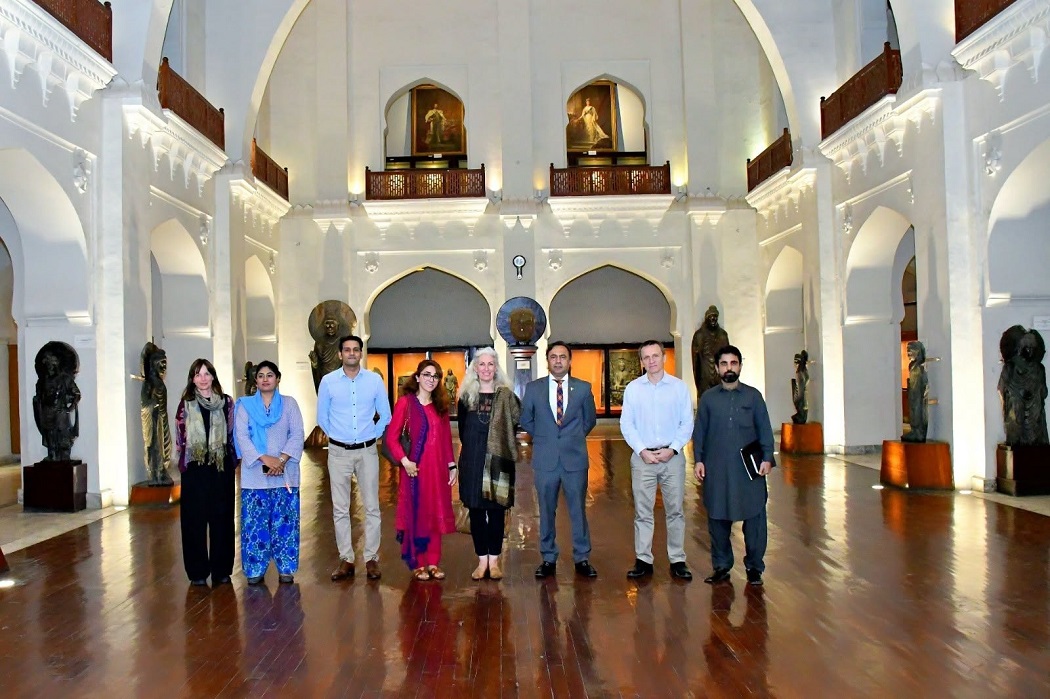
Ironside commended the Government of Khyber Pakhtunkhwa for its sustained commitment to preserving and promoting the province’s archaeological and cultural wealth. She specifically appreciated the efforts of the Directorate General of Archaeology & Museums, KP, for its continued work in protecting these historic treasures and making them accessible to scholars, tourists, and the public alike.
The Peshawar Museum, established during the colonial era and later expanded, houses one of the world’s finest collections of Gandhara sculpture — stone and stucco artworks that blend Greco-Roman artistic techniques with Buddhist religious themes. These pieces stand as physical evidence of the cultural fusion that flourished in the region roughly two thousand years ago.
Chinese Diplomats Tour Historic Sethi House
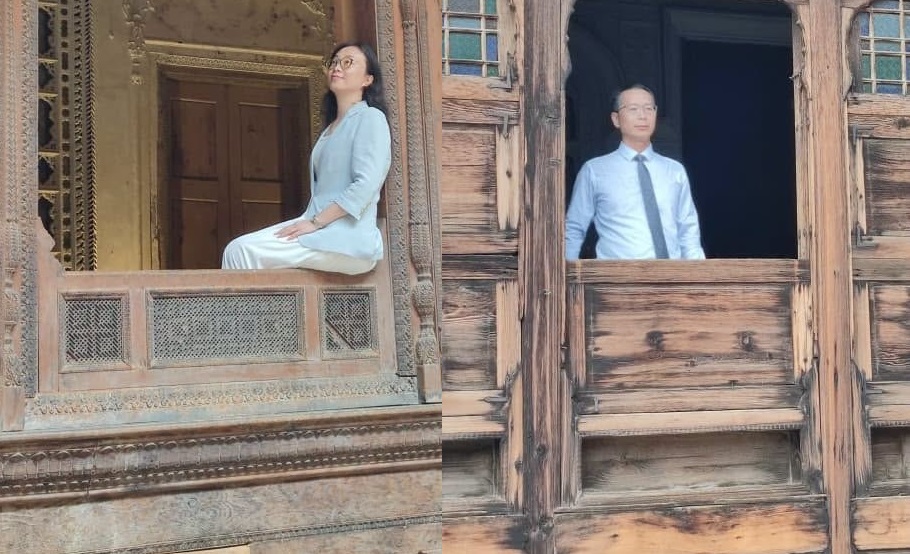
In a separate but equally significant visit, a delegation of Chinese diplomats toured the historic Sethi House in Peshawar, one of the city’s most architecturally distinctive heritage buildings. Built by wealthy merchants who traded along Silk Road routes stretching from Peshawar to Central Asia and China, Sethi House is renowned for its intricate woodwork, ornate interiors, and design elements reflecting influences from across the trade routes it once serviced.
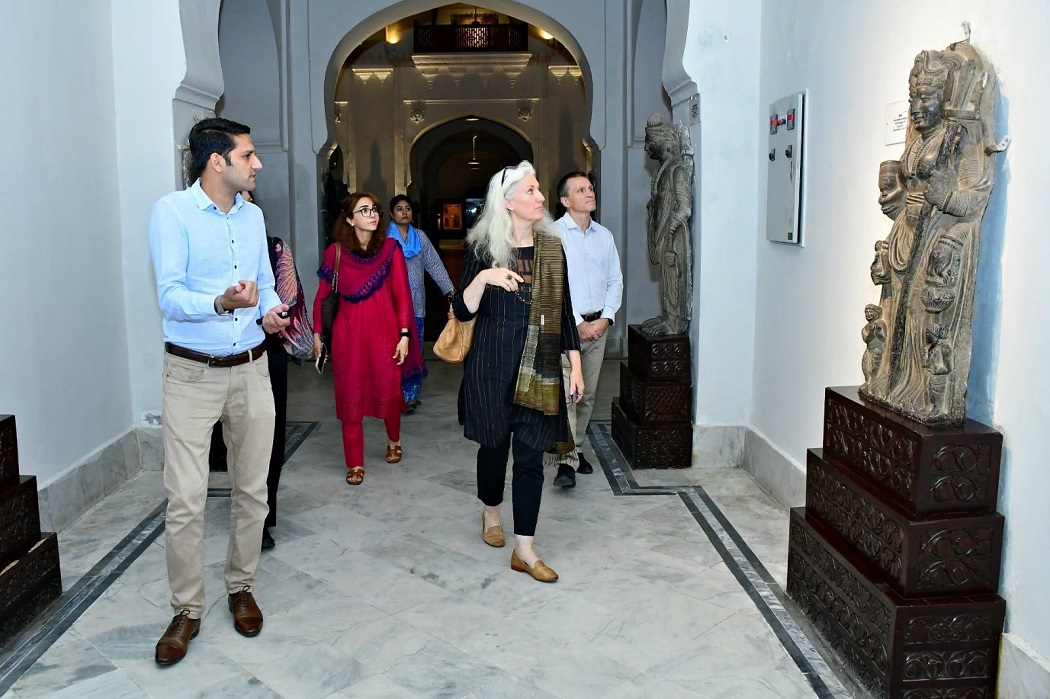
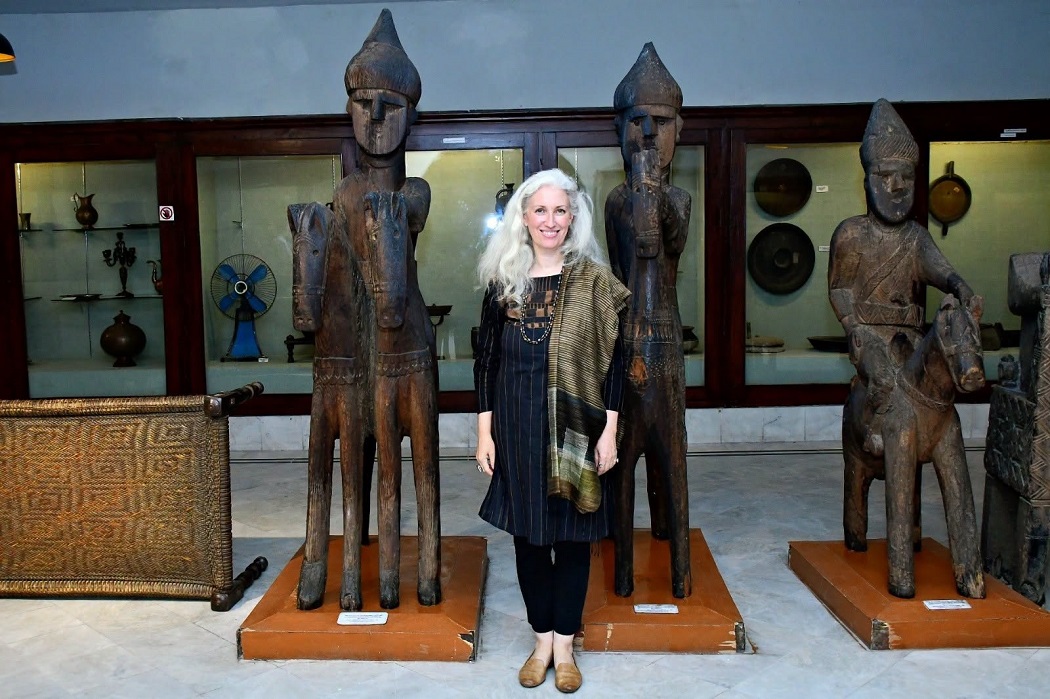
The Chinese delegation praised the Directorate General of Archaeology & Museums, KP, for its continued efforts to preserve and promote this rare architectural legacy. Their visit carries particular symbolic weight given the historic trade and cultural links between the merchants of Peshawar and China during the Silk Road era — links that Sethi House itself embodies in brick, timber, and craftsmanship.
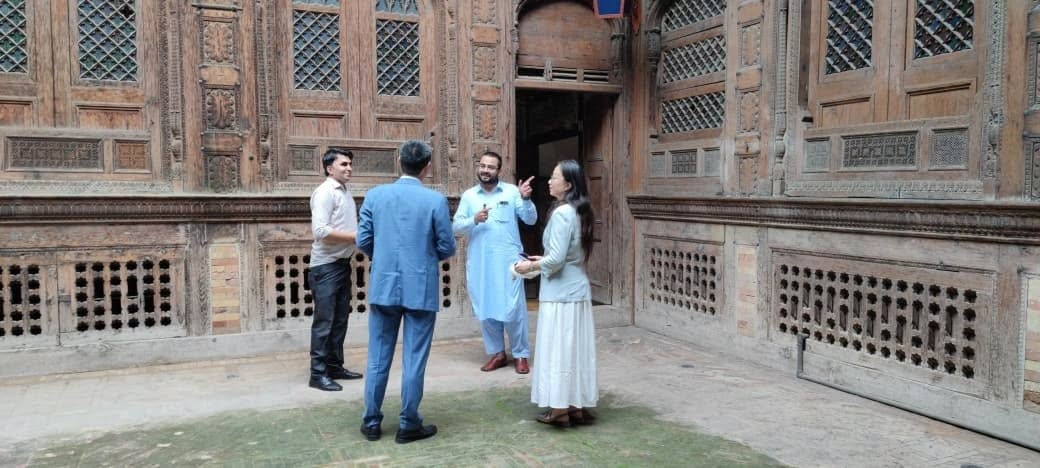
The visit also comes at a moment of renewed recognition for the building: Sethi House has now been included in UNESCO’s World Heritage Tentative List, an achievement described by heritage officials as a proud recognition of its historical and architectural significance.
Background: The Gandhara Civilization and the Silk Road
To understand why these visits matter, it helps to look back at the deep history behind them. The Gandhara civilization flourished in what is now Khyber Pakhtunkhwa and parts of northern Pakistan and eastern Afghanistan, reaching its peak between the 1st and 5th centuries CE. Positioned at the crossroads of the Indian subcontinent, Central Asia, Persia, and China, Gandhara became one of antiquity’s great melting pots — a place where Buddhist philosophy, Greco-Roman artistic traditions (introduced following Alexander the Great’s campaigns), and local South Asian culture merged into a distinctive artistic and architectural style.
This region sat directly along branches of the Silk Road, the network of trade routes that connected East Asia to the Mediterranean world for centuries. Caravans carrying silk, spices, precious stones, and ideas passed through cities like Peshawar (ancient Purushapura) and Taxila, turning the region into a thriving center of commerce, scholarship, and religious exchange. Buddhist monks, traders, and pilgrims traveled these routes, and it was here that some of the earliest depictions of the Buddha in human form were created — a fusion of Hellenistic sculptural technique and Buddhist iconography that came to define Gandhara art.
Today, that legacy survives in stone stupas, monastic ruins, ancient city remains, and elegant merchant houses scattered across Khyber Pakhtunkhwa — physical memories of a time when this land was not a periphery but a hub of the ancient world.
A Proud Milestone: Four KP Sites Added to UNESCO’s Tentative List
The recent diplomatic visits align with a major recognition from UNESCO. The World Heritage Centre has added four significant archaeological and heritage sites from Khyber Pakhtunkhwa to its World Heritage Tentative List — the preparatory list of sites a country intends to nominate for full World Heritage status. The sites are:
- Bhamala, Haripur — home to a renowned Buddhist stupa and monastery complex, notable for its cruciform stupa design and rich collection of Gandhara-era relics.
- Sethi House, Peshawar — a 19th-century merchant mansion celebrated for its Silk Road-influenced architecture and craftsmanship.
- Barikot, Swat — an ancient urban settlement with layers of occupation dating back thousands of years, offering deep insight into the region’s continuous habitation and cultural evolution.
- Gor Khatri, Peshawar — a historic mound site in the heart of old Peshawar with a layered history spanning Buddhist, Mughal, and Sikh periods.
This inclusion marks a proud milestone for Khyber Pakhtunkhwa, positioning these sites on the path toward potential inscription as full UNESCO World Heritage Sites — a status that could bring greater international recognition, research collaboration, and cultural tourism to the province.
A Collaborative Effort to Safeguard Heritage
Officials have emphasized that this progress reflects sustained collaboration rather than isolated effort. The Government of Khyber Pakhtunkhwa, acting through the Directorate General of Archaeology & Museums, KP, has been working closely with Federal Archaeology authorities and UNESCO Pakistan to document, conserve, and promote the province’s archaeological wealth.
This partnership approach has become increasingly important as heritage sites across the region face pressures from urbanization, limited conservation funding, and the challenges of balancing preservation with public access. By pursuing UNESCO recognition, provincial authorities aim to secure not only prestige but also technical support, international attention, and long-term conservation frameworks for these irreplaceable sites.
The renewed diplomatic interest — from the United Nations to Chinese representatives — also signals growing international awareness of Khyber Pakhtunkhwa’s potential as a heritage and cultural tourism destination, one capable of drawing scholars, history enthusiasts, and travelers eager to walk in the footsteps of ancient traders and pilgrims.
Why This Matters for Heritage Tourism
For Khyber Pakhtunkhwa, heritage preservation is increasingly intertwined with economic opportunity. Well-preserved and internationally recognized sites can become anchors for cultural tourism, generating income for local communities, encouraging investment in conservation infrastructure, and creating educational opportunities tied to archaeology, history, and museum studies.
The Peshawar Museum and Sethi House already attract researchers and visitors interested in Gandhara art and Silk Road history. With UNESCO Tentative List status now attached to Bhamala, Sethi House, Barikot, and Gor Khatri, expectations are rising that these sites will see increased conservation funding, improved visitor facilities, and greater visibility on the global cultural map.
Conclusion: Preserving Gandhara Heritage and Silk Road Memories
The story of Khyber Pakhtunkhwa’s heritage is, in many ways, the story of the ancient Silk Road itself — a tale of civilizations meeting, trading, and shaping one another across centuries. From the Buddhist sculptures housed in Peshawar Museum to the ornate woodwork of Sethi House and the layered ruins of Barikot and Gor Khatri, these sites are living memories of a time when this region stood at the center of global exchange rather than its margins.
The recent visits by the UN Representative and Chinese diplomats, paired with UNESCO’s decision to add four KP sites to its World Heritage Tentative List, represent more than diplomatic goodwill — they mark a renewed international commitment to safeguarding Gandhara heritage for future generations. As the Government of Khyber Pakhtunkhwa continues its collaboration with federal authorities and UNESCO Pakistan, the province’s ancient Silk Road memories are being written back into the global story of shared human heritage, ensuring that the legacy of Gandhara endures not just in museums and monuments, but in the world’s collective memory.
]]>
-
Xinjiang — The Historic and Modern Gateway of Silk Road Connectivity
-
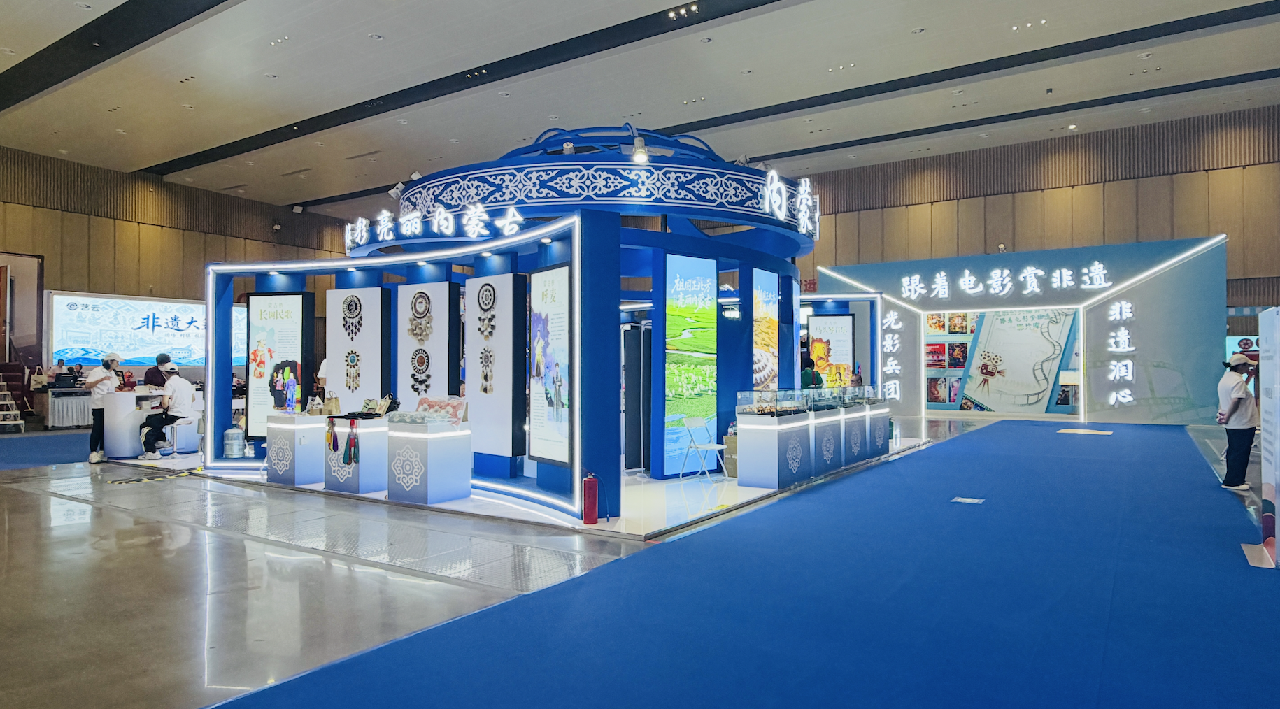
Xinjiang Hosts Cultural heritage artisans and classic folk artworks from across China at an exhibition in Shihezi county of Xinjiang.
By: Muhammad Arif, Editor NSN.Asia
Urumqi: An intangible cultural heritage exhibition has opened in Shihezi, Xinjiang, bringing together intangible cultural heritage artisans and classic folk artworks from across China.
From paper-cutting and clay sculpture to diverse ethnic costumes, and from traditional delicacies to folk song and dance performances, the event serves as a key cultural platform, enabling locals to experience the diversity of Chinese traditional cultures and promoting knowledge of China’s national intangible cultural heritage across the region.
Beyond on-site exhibitions, intangible cultural heritage inheritors from across China engaged in in-depth dialogues, co-created integrated cultural works, and built long-term partnerships to advance the innovation and inheritance of traditional folk culture.
-
Xinjiang — The Historic and Modern Gateway of Silk Road Connectivity
For more than two millennia, Xinjiang has served as one of Eurasia’s most important crossroads, linking China with Central Asia, South Asia, the Middle East, and Europe. From the caravans of the ancient Silk Road to today’s high-speed rail corridors and logistics hubs, the region has remained central to transcontinental connectivity.
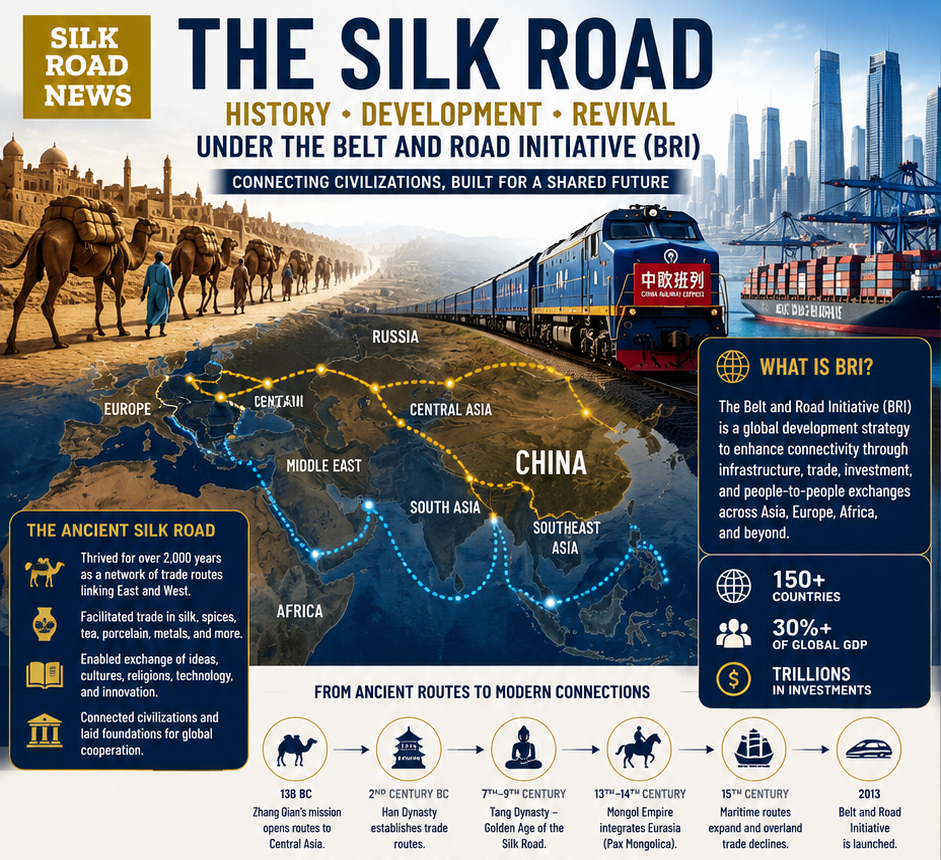
Beginning during the Han Dynasty, merchants, scholars, diplomats, and pilgrims traversed the Tarim Basin through oasis cities such as Kashgar, Hotan, Yarkand, and Turpan. These settlements became vibrant centers of commerce where silk, jade, spices, horses, paper, and porcelain were exchanged alongside religions, languages, scientific knowledge, and cultural traditions. Xinjiang connected East Asia with Persia, the Arab world, and ultimately Europe, making it one of history’s greatest corridors of civilization.
-
Present-Day Strategic Role
In the 21st century, this region has re-emerged as a pivotal gateway under China’s Belt and Road Initiative (BRI). Owing to its strategic location bordering eight countries, the region provides China’s principal overland access to Central Asia and onward to Europe through highways, railways, pipelines, and logistics networks. Cities such as Urumqi and Kashgar have developed into major transport and commercial hubs supporting international trade and regional connectivity.
-
Rail and Logistics Connectivity
The Urumqi International Land Port has become a major node for China–Europe freight services, linking manufacturing centers in eastern China with destinations across Central Asia, Russia, and Europe. Modern multimodal infrastructure—including rail terminals, expressways, dry ports, and customs facilities—has significantly reduced transport times compared with traditional maritime shipping for many categories of goods.
This automous region of China also anchors the northern end of the China–Pakistan Economic Corridor (CPEC), connecting Kashgar with Pakistan’s Gwadar Port through the Khunjerab Pass and the Karakoram Highway. This corridor is designed to strengthen trade, energy cooperation, industrial development, and regional economic integration between western China, Pakistan, and the Arabian Sea, while complementing broader Belt and Road connectivity across Eurasia.
-
Looking Ahead
As global supply chains continue to diversify, this city’s geographic position places it at the intersection of emerging trade corridors linking East Asia, Central Asia, South Asia, the Middle East, and Europe. Supporters view the region as a cornerstone of Eurasian connectivity and economic integration, while international observers also note that discussions surroundingthe this region encompass broader geopolitical and human rights issues beyond transport and trade
[ad_2]
]]>- Kashgar City’s winding alleyways, bustling bazaars and lively folk-dance performances offer visitors an immersive cultural experience
- Kashgar City provides an inviting gateway to a vibrant and multifaceted Xinjiang
By: Muhammad Arif, Editor NSN.Asia
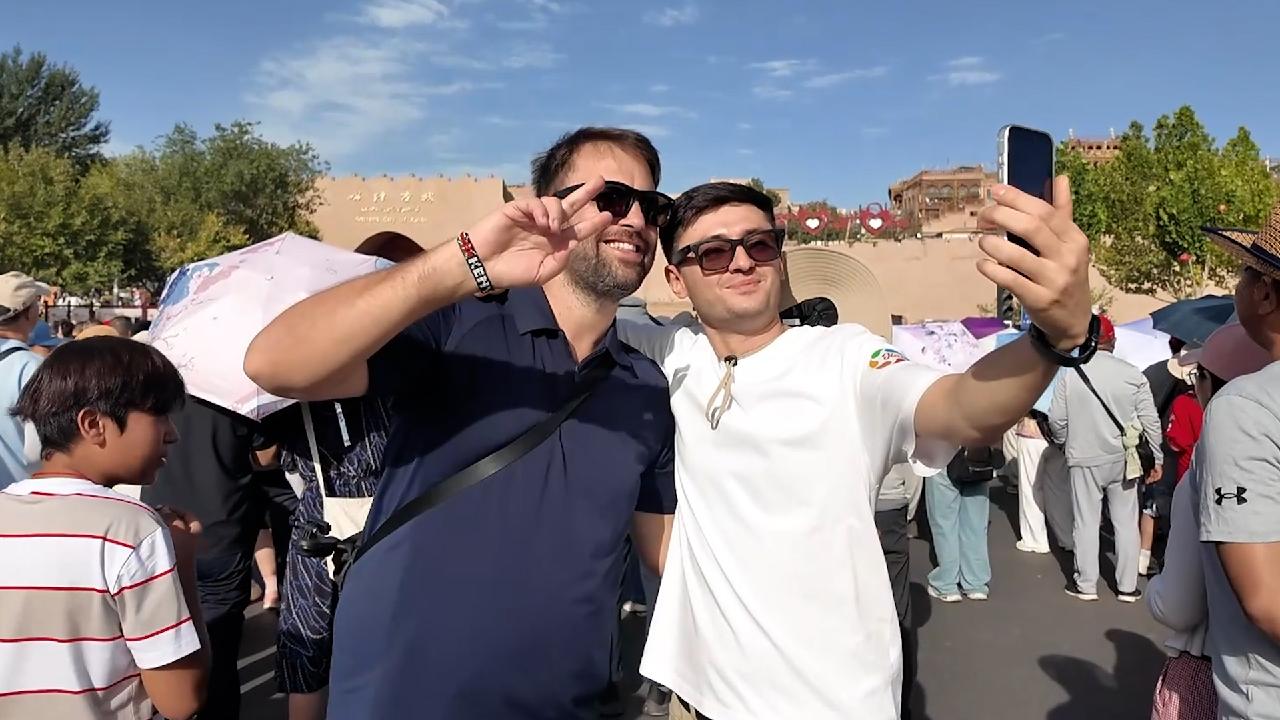
Silk Road Charms: Why Kashi Old City Remains Northwest China’s Living Time Capsule
Kashgar’s ancient quarter, one of Asia’s largest earthen-building complexes, is drawing renewed global attention as a rare window into 2,000 years of Silk Road heritage.
Tucked against the edge of the Tarim Basin, where the Pamir foothills meet the desert, sits a city that once decided whether a caravan carrying silk, spices, or jade would survive its journey west. Kashi — better known internationally as Kashgar — is not a museum reconstruction of the Silk Road. It is, in large part, the real thing: mudbrick alleys, teahouses, and bazaars that have hosted traders, pilgrims, and travelers for over two millennia.
As interest in slow travel and heritage tourism grows across Asia, Kashi Old City is emerging as one of northwest China’s most compelling — and least crowded — cultural destinations.
A Crossroads Older Than the Silk Road’s Name
Kashgar’s history predates the term “Silk Road” itself by centuries. In the Qin and Han dynasties, more than 2,000 years ago, the area was home to the ancient Kingdom of Shule, one of the thirty-six kingdoms of the Western Regions. Its fate changed permanently when the Han dynasty envoy Zhang Qian traveled west, opening formal contact between China and Central Asia and folding Kashgar into a vast trans-continental trade network.
From that point on, Kashgar sat at a genuinely unique geographic hinge: the point where the Silk Road’s northern, southern, and central routes converged before pushing on toward Central Asia, the Middle East, South Asia, and eventually Europe. Caravans loaded with Chinese silk moved west; wool, glassware, spices, and ideas moved east. Buddhism, Islam, and successive waves of migration all left visible marks on the city that remain today.
That layered history earned Kashgar a saying still repeated across Xinjiang: visiting the region without seeing Kashgar means not truly having seen Xinjiang at all.
Inside the Old City: Architecture Built to Outlast Empires
What makes Kashi Old City remarkable isn’t a single monument — it’s the density and continuity of everyday life preserved at scale. Spanning roughly 20 square kilometers, the old quarter is often described as Asia’s largest surviving complex of earthen and timber residential architecture. Structures rise two and three stories high, connected by covered “over-street” buildings that link rooftops across narrow lanes, a design that both maximized shade in the desert heat and created a labyrinth that still disorients first-time visitors in the best way.
On the eastern side, the Gaotai neighborhood preserves some of the oldest mudbrick homes in the city, some reportedly inhabited by the same families for generations. Nearby, the Kashgar Dongbazaar — a Central and West Asia international trade market — carries the bazaar tradition forward with dried fruit stalls, silk vendors, essential oil sellers, and the region’s famous handcrafted Yingjisha knives.
Wandering the alleys today, visitors pass wood-carving workshops, copper and metalwork stalls, hat and textile makers, and bakeries turning out fresh naan on open flame — much of it made using techniques passed down through generations of craftsmen rather than revived for tourism.
Id Kah Mosque and the Rhythm of Daily Life
At the heart of the old city stands Id Kah Mosque, Xinjiang’s largest mosque and a spiritual anchor for the surrounding community for centuries. The mosque’s open courtyard and the plaza in front of it remain a genuine gathering point rather than a roped-off attraction, giving visitors a sense of a living neighborhood rather than a preserved relic.
Just as central to the old city’s identity is its century-old teahouse culture. Traditional teahouses scattered through the lanes have long served as informal community hubs, where elders gather over pots of tea, sometimes accompanied by informal music, much as they have for generations.
Why Travelers Are Rediscovering Kashgar Now
Several factors are converging to put Kashi back on international travel radars in 2026. China’s expanded visa-free transit policies have made the country markedly easier to reach: travelers from more than fifty countries can now enter for short visa-free stays, with several nations enjoying stays of up to 30 days. That accessibility, combined with growing interest in destinations positioned as alternatives to over-touristed sites, has pushed lesser-known Silk Road cities into the spotlight.
Kashgar also benefits from its role as a gateway rather than an endpoint. Many itineraries pair a few days in the old city with the Sunday Livestock Market, considered one of Central Asia’s great traditional markets, and multi-day routes along the Karakoram Highway toward Tashkurgan, passing high-altitude landmarks such as Karakul Lake and the Stone City ruins en route to the Pakistan border.
For travelers building a broader Xinjiang itinerary, tour operators typically recommend two to three days focused on Kashgar’s core sites — the Old City, Id Kah Mosque, the century-old teahouse, and the Sunday markets — before extending outward toward the Pamirs.
A Cultural Crossroads, Preserved
What distinguishes Kashi Old City from many “ancient town” attractions elsewhere in China is the degree to which it has resisted becoming purely decorative. Families still live inside the old walls. Craftsmen still sell goods made using inherited techniques, not props. The layered influences of Han Chinese, Uyghur, and broader Central Asian culture are visible not in placards, but in architecture, food, language, and daily ritual.
For a global audience increasingly drawn to destinations with deep, tangible history — rather than reconstructed heritage sites — Kashi Old City offers something increasingly rare: a genuine Silk Road city that never stopped being lived in.
Planning a visit: Entry to Kashi Old City is generally free, though select historical buildings and museums within the complex charge separate admission. The most atmospheric times to visit are early morning, before the bazaars fill with day-trippers, and Sunday, when the surrounding livestock and general markets are in full swing.
[ad_2]
A Diplomatic Milestone Wrapped in Mango Season
Pakistan and China established diplomatic relations in 1951, and 2026 marks 75 years of what both governments routinely describe as an “All-Weather Strategic Cooperative Partnership.” Throughout the year, Pakistani missions across China — from Beijing to Guangzhou — have organised a series of cultural and trade events to commemorate the milestone, with mangoes emerging as an especially popular centerpiece. Earlier this month, the Pakistan Embassy in Beijing hosted a similar festival at Pakistan House, drawing hundreds of guests. The Guangzhou edition extended that celebration to southern China’s commercial hub, a region with deep and growing import ties to Pakistani agricultural produce.
The Guangzhou event drew a wide cross-section of the city’s diplomatic and business community, including Consuls General, representatives of the Consular corps, officials from Foreign Affairs Offices, chamber of commerce leaders, entrepreneurs, scholars, students, and members of the local Pakistani community. The gathering reflected how food and trade diplomacy have become an effective bridge for building people-to-people ties alongside formal government engagement.
Mangoes as Ambassadors
Guests at the festival sampled a curated spread of Pakistan’s most celebrated mango varieties — Sindhri, Chaunsa, and Anwar Ratol — prized internationally for their fragrance, sweetness, and rich pulp. Beyond fresh fruit, the festival offered a range of mango-based creations, including mango milkshakes, mango yogurt shakes, mango custard, and mango ice cream, giving attendees a full sensory introduction to Pakistan’s mango culture.
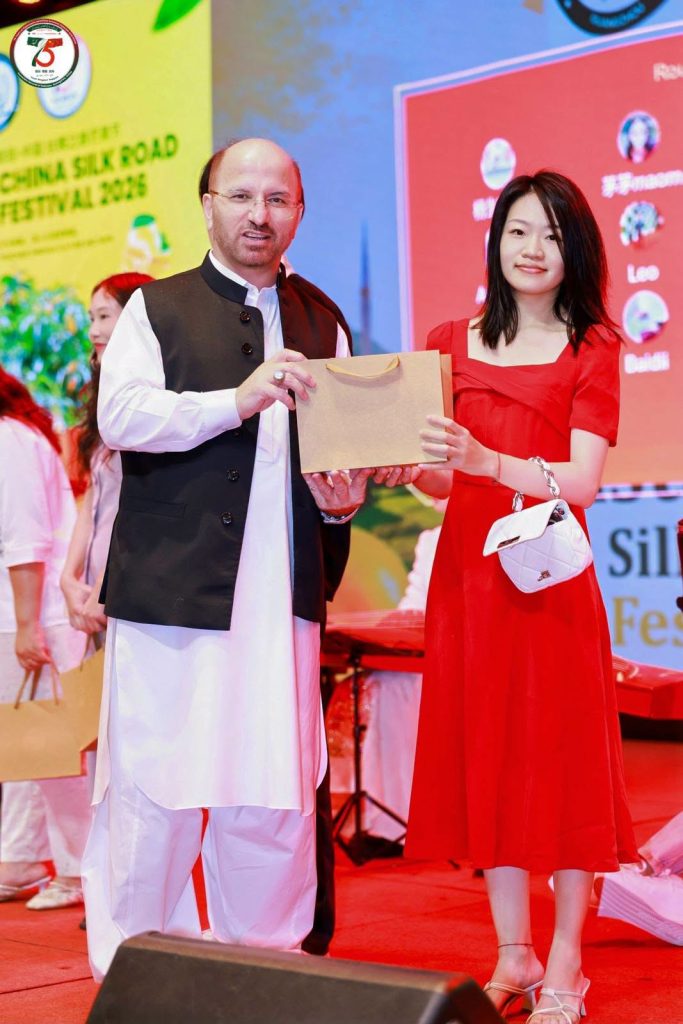
Pakistan is among the world’s top mango producers, with orchards concentrated in Sindh and Punjab that have supplied the fruit to South Asian, Gulf, and increasingly Chinese markets for years. Chinese demand for Pakistani mangoes has grown steadily as trade facilitation and cold-chain logistics have improved, making events like this festival as much about commerce as culture. Local co-hosts, the Guangdong Chamber of Commerce of Importers & Exporters and the Guangzhou Jiangnan Market Imported Fruit Chamber of Commerce, represent exactly the kind of trade networks that move Pakistani produce into Chinese supermarkets and fruit markets, underscoring the festival’s dual purpose of celebration and commercial promotion.
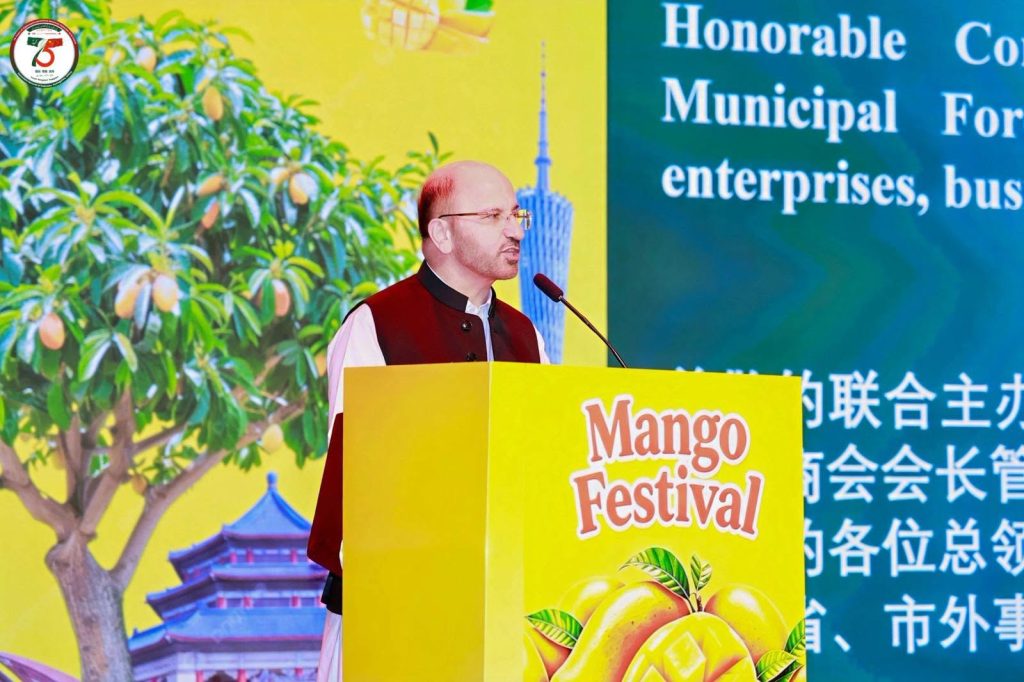
Music, Performance, and a Shared Stage
Beyond the fruit tables, the festival featured cultural performances blending Pakistani and Chinese traditional music, offering guests a live demonstration of how the two nations’ artistic traditions can share a single stage. Such performances have become a recurring feature of Pakistan-China cultural diplomacy, reinforcing the idea that the relationship extends well beyond government offices and trade ledgers into classrooms, concert halls, and community gatherings.
Pakistan’s Deeper Roots on the Silk Road
The festival’s name is no accident. Pakistan’s geography places it at a historic crossroads of the ancient Silk Road, the network of trade routes that once linked China to Central Asia, Persia, the Indian subcontinent, and the Mediterranean world. Regions of present-day Pakistan — including Gilgit-Baltistan, the Karakoram corridor, and the Indus Valley — served as vital passageways for caravans moving silk, spices, textiles, and ideas between Chinese dynasties and civilizations to the west. The legendary Karakoram Highway, built in the twentieth century along ancient trade paths through the Himalayas, is often called the “modern Silk Road” for the way it retraces those same historic connections between the two countries.
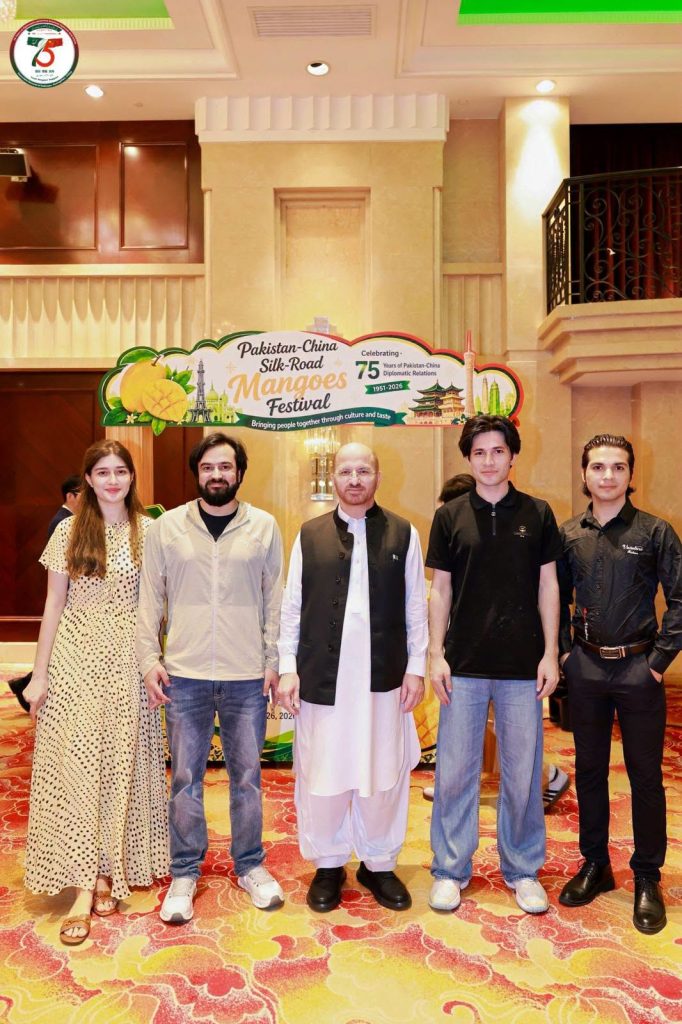
That centuries-old exchange of goods and culture laid the groundwork for the deep trust that characterizes Pakistan-China relations today. From the Silk Road’s caravans to the China-Pakistan Economic Corridor, a flagship project connecting Gwadar Port to western China, the throughline is continuity: two civilizations repeatedly finding new routes, literal and symbolic, to reach each other. Framing a mango festival under the “Silk Road” banner deliberately draws on this history, positioning modern trade in fruit as a continuation of an exchange that predates the modern nation-state itself.
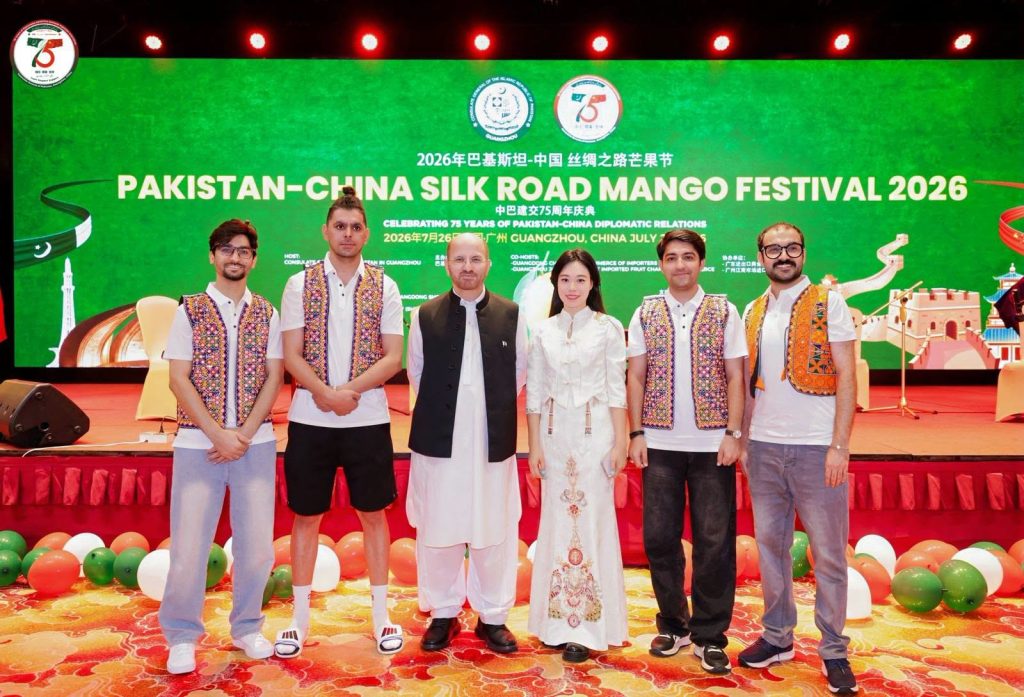
A Sweet Symbol of a Strategic Partnership
In remarks shared around the event, Pakistani officials described the relationship using an apt metaphor: like the mango, the All-Weather Strategic Cooperative Partnership between Pakistan and China is rooted in trust, nourished by cooperation, and ripened by the warmth of the people on both sides. It is a fitting image for a relationship that Pakistani officials frequently describe as “higher than the mountains and deeper than the oceans,” now recast in the more approachable language of shared meals and shared harvests.
Cultural Connectivity Through Cuisine
What events like the Silk Road Mango Festival ultimately reveal is that diplomacy often travels most effectively through a dinner table rather than a conference room. Food has a unique capacity to dissolve language barriers and formality, inviting people to experience another culture directly rather than simply hearing about it. When Chinese guests in Guangzhou tasted Sindhri and Chaunsa mangoes alongside Pakistani milkshakes and custards, they were not just sampling fruit — they were participating in a centuries-old tradition of culinary exchange that has connected China with South Asia since the earliest Silk Road caravans carried dried fruits, spices, and recipes alongside silk and porcelain.
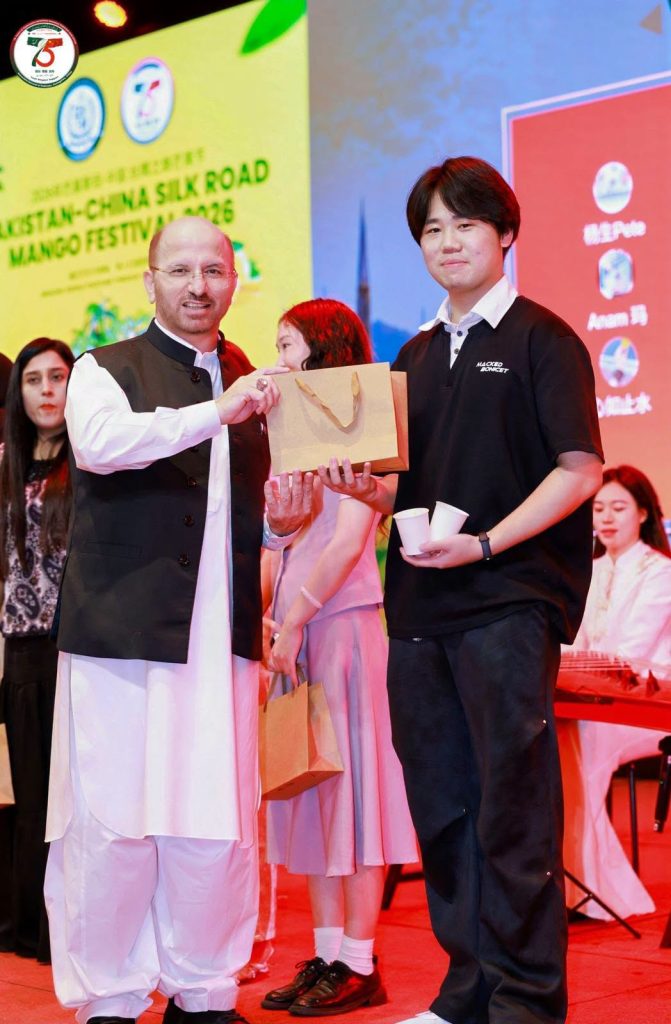
This is why cuisine so often anchors cultural diplomacy: a shared meal creates common ground faster than a shared communique. Pakistani biryani nights in Chinese cities, Chinese culinary festivals in Pakistani universities, and now mango festivals like this one in Guangzhou all serve the same purpose — turning abstract diplomatic language about “friendship” and “partnership” into something tangible that people can taste, discuss, and remember. As Pakistan and China look toward the next 75 years of relations, it is this kind of cultural connectivity — built one mango, one dish, and one shared table at a time — that may prove just as enduring as any formal treaty.
]]>Mehran University Receives 164 Books Under Japan’s READ JAPAN Project.
JAMSHORO (NSN) — Mehran University of Engineering and Technology (MUET), Jamshoro, has received a significant donation of 164 books under the internationally recognized READ JAPAN Project of the Tokyo Foundation, marking another milestone in educational and cultural cooperation between Japan and Pakistan.
The book donation ceremony highlighted the shared commitment of both countries to promoting knowledge, research, and cross-cultural understanding through academic collaboration. The initiative is expected to enrich the university’s library resources and provide students and faculty with greater access to contemporary scholarship, Japanese studies, international affairs, public policy, economics, technology, and cultural studies.
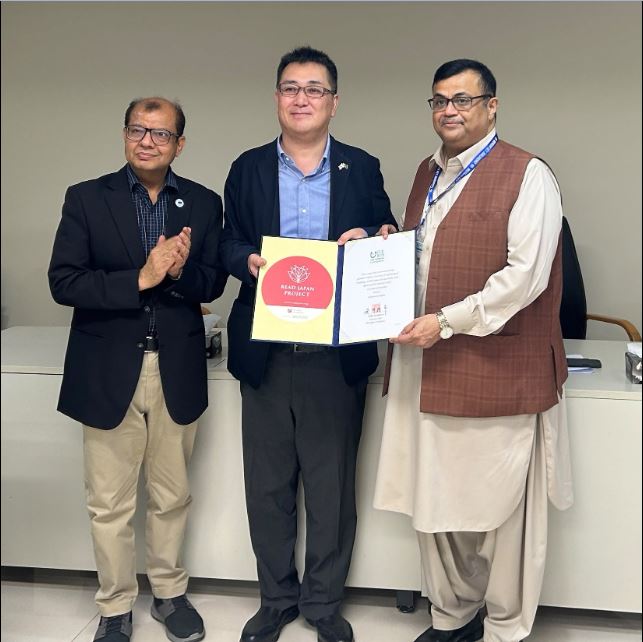
Acting Consul General of Japan Tamura Takahiro emphasized the enduring value of reading and expressed hope that the READ JAPAN Initiative would encourage university students to reconnect with books as an important and reliable source of knowledge and information.
“I sincerely hope the READ JAPAN Initiative will enable university students to reconnect with book reading as a valuable information source,” he said during the ceremony.

University officials welcomed the donation, describing it as a valuable contribution to academic excellence and intellectual development at MUET. They noted that the books would support students’ learning, broaden their global perspectives, and strengthen research opportunities across multiple disciplines.
The university also expressed gratitude to the Nippon Foundation for providing the financial support for the initiative and to the Tokyo Foundation for coordinating the project efficiently and ensuring the timely delivery of the collection.

Strengthening Educational Cooperation Between Japan and Pakistan
The donation reflects the growing educational partnership between Japan and Pakistan, which has expanded steadily over the years through scholarships, academic exchanges, technical cooperation, and cultural initiatives.
Japan has long been a key development partner for Pakistan, supporting projects in education, infrastructure, health, disaster management, and human resource development. Educational collaboration has become an increasingly important pillar of bilateral relations, with both countries recognizing the role of universities and research institutions in fostering innovation and mutual understanding.
Officials at the ceremony said that initiatives such as READ JAPAN create opportunities for students to engage with international ideas, explore comparative perspectives, and develop a deeper understanding of global issues. Such exposure is particularly valuable for young scholars preparing to work in an increasingly interconnected world.
Background: What Is the READ JAPAN Project?
The READ JAPAN Project is a global initiative administered by the Tokyo Foundation with financial support from the Nippon Foundation. The program aims to promote a deeper understanding of Japan by donating books to universities, libraries, and research institutions around the world.
Through the initiative, institutions receive carefully selected collections covering subjects such as:
Japanese politics and governance
International relations
Economics and business
Science and technology
History and culture
Public policy
Society and contemporary issues
The project seeks to encourage informed discussions about Japan and strengthen intellectual connections between Japanese scholars and academic communities in other countries. Since its launch, the READ JAPAN Project has distributed thousands of books to institutions across Asia, Europe, Africa, the Americas, and the Middle East.
For universities in developing countries, the initiative provides access to high-quality academic resources that may otherwise be difficult to obtain. The program also supports the broader goal of promoting international dialogue through education and research.
Importance of Reading in the Digital Age
The remarks by Acting Consul General Tamura Takahiro drew attention to a growing global concern: the declining habit of reading among young people in the age of digital media and social networking.
Educators worldwide have increasingly emphasized the importance of sustained reading for developing critical thinking, analytical skills, creativity, and informed decision-making. Unlike the rapid consumption of information through short-form digital content, books provide depth, context, and nuanced understanding of complex subjects.
At universities, strong reading habits are closely linked to academic performance, research quality, and intellectual growth. By expanding library collections and encouraging students to engage with books, institutions can help cultivate a stronger culture of inquiry and lifelong learning.
MUET officials said the newly donated books would serve as a valuable resource for students seeking deeper knowledge beyond classroom lectures and online materials.
Cultural Exchange Through Books
Books have long served as bridges between societies, allowing readers to understand different cultures, histories, and ways of thinking. The READ JAPAN donation is expected to contribute to greater cultural awareness among Pakistani students by introducing them to diverse aspects of Japanese society and scholarship.
Educational experts note that such exchanges can play an important role in strengthening people-to-people relations. Students who gain exposure to international perspectives are often better equipped to collaborate across borders, pursue higher education abroad, and contribute to global research networks.
For Japan, cultural diplomacy initiatives like READ JAPAN help build long-term relationships with future leaders, researchers, and professionals in partner countries. For Pakistan, access to international academic resources supports the development of a more globally connected higher education system.
Mehran University’s Academic Mission
Mehran University of Engineering and Technology, located in Jamshoro, is one of Pakistan’s leading public-sector universities specializing in engineering, technology, and applied sciences. The university has played a significant role in producing engineers, researchers, and professionals who contribute to Pakistan’s industrial and technological development.
By receiving the READ JAPAN collection, MUET further strengthens its academic resources and enhances opportunities for interdisciplinary learning. University administrators said the books would be integrated into the library system and made accessible to students, faculty members, and researchers.
They also expressed hope that the initiative would encourage greater academic collaboration with Japanese institutions in the future, including research partnerships, faculty exchanges, and student engagement programs.
Looking Ahead
The donation of 164 books to Mehran University under the READ JAPAN Project represents more than a simple addition to a library collection. It symbolizes a shared commitment by Japan and Pakistan to invest in education, knowledge exchange, and cultural understanding.
As universities around the world seek to prepare students for the challenges of the 21st century, initiatives that promote reading, research, and international connectivity have become increasingly important. The collaboration between the Tokyo Foundation, the Nippon Foundation, and Mehran University demonstrates how educational partnerships can create lasting benefits for students and society.
With the new collection now available at MUET, students and researchers will have greater opportunities to explore Japanese scholarship, broaden their intellectual horizons, and strengthen their understanding of global issues. The initiative is expected to inspire a renewed appreciation for books as a powerful source of knowledge, learning, and cross-cultural connection — reinforcing the growing educational partnership between Japan and Pakistan for years to come.
]]>