
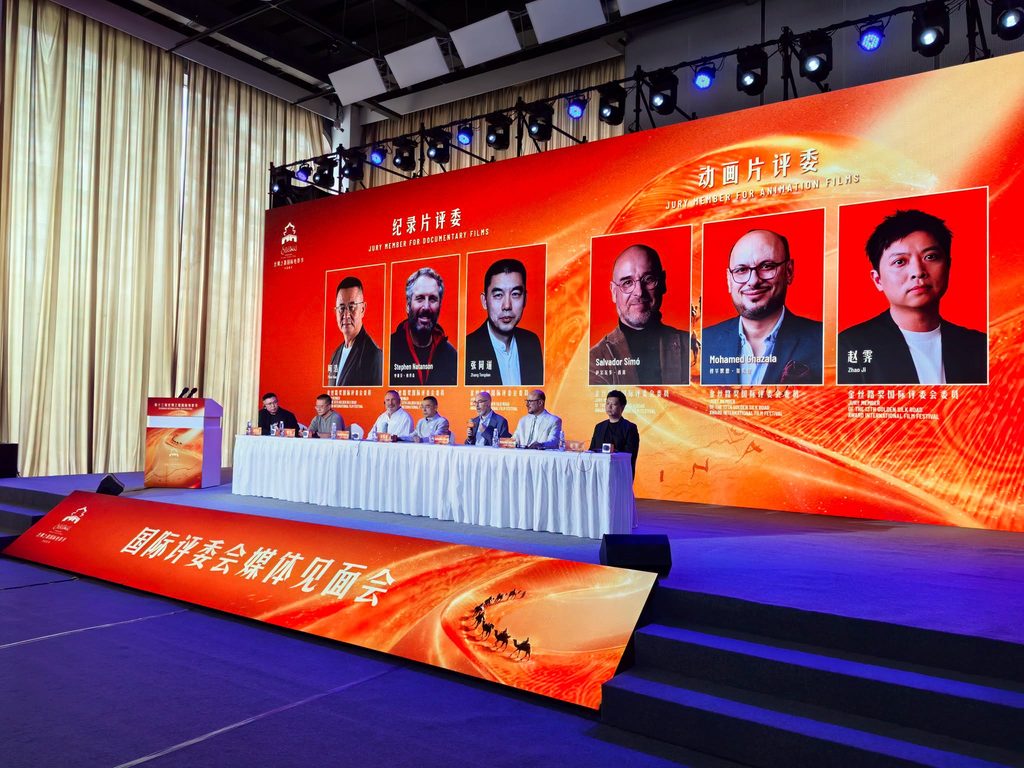
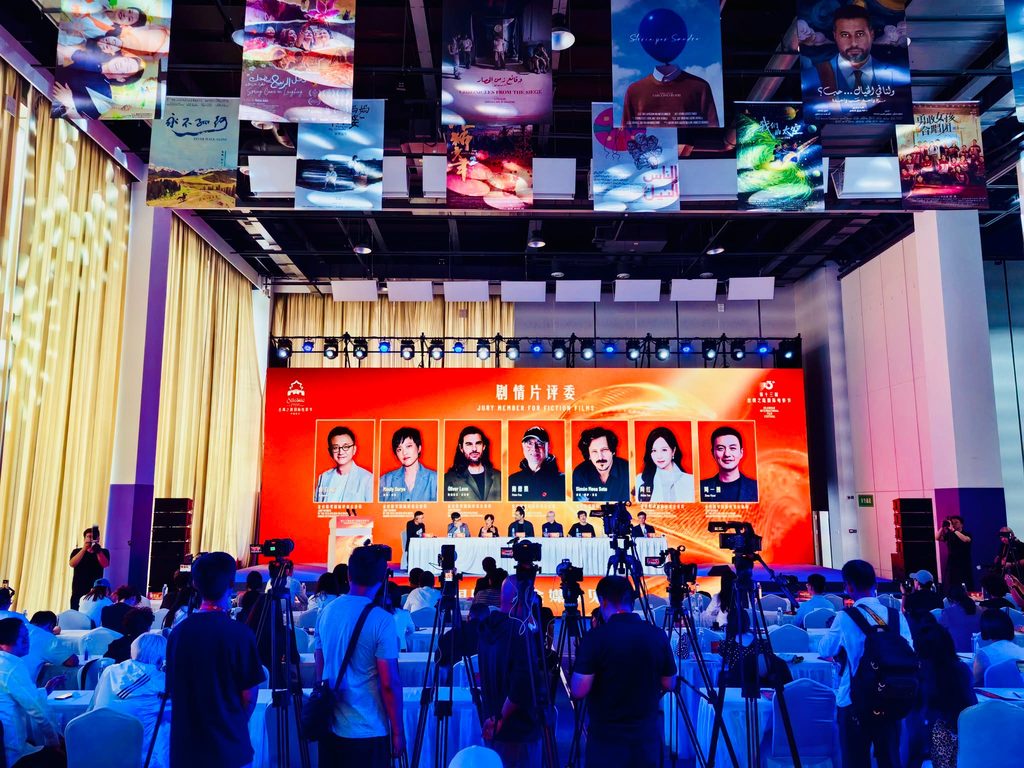
Silk Road International Film Festival held in Xi’an City, Shaanxi Province, running from September 19 to 23, 2026 to promote Cultural Connectivity under Silk Road Spirit of friendship.
The 13th Silk Road International Film Festival opened in Xi’an City, Shaanxi Province, running from September 19 to 23, 2026, bringing together filmmakers, industry professionals, and audiences from across the Silk Road region and beyond. Now well into its second decade, the festival has become one of China’s most prominent platforms for positioning cinema as a vehicle for cross-border cultural exchange under the framework of the Belt and Road Initiative.

A Festival Rooted in the Belt and Road Framework
Officially established in 2014, the Silk Road International Film Festival is hosted alternately by Shaanxi and Fujian provinces — two regions chosen for their historical resonance with the ancient Silk Road’s overland and maritime routes respectively. This year’s edition was organized by the People’s Government of Shaanxi Province, the People’s Government of Fujian Province, and China Media Group, with the Ministry of Culture and Tourism formally approving and filing the hosting of the event in August 2026.
The festival’s structure reflects its founding purpose: rather than functioning purely as a domestic showcase, it is explicitly designed as an international platform connecting film industries across the dozens of countries linked, historically and symbolically, by Silk Road trade routes.
From Global Call for Entries to Cairo Screen Dialogue
The road to this year’s festival began months earlier. In May 2026, the Competition Section of the 13th edition officially opened its call for entries to filmmakers worldwide, with submissions closing at midnight on July 10, 2026.
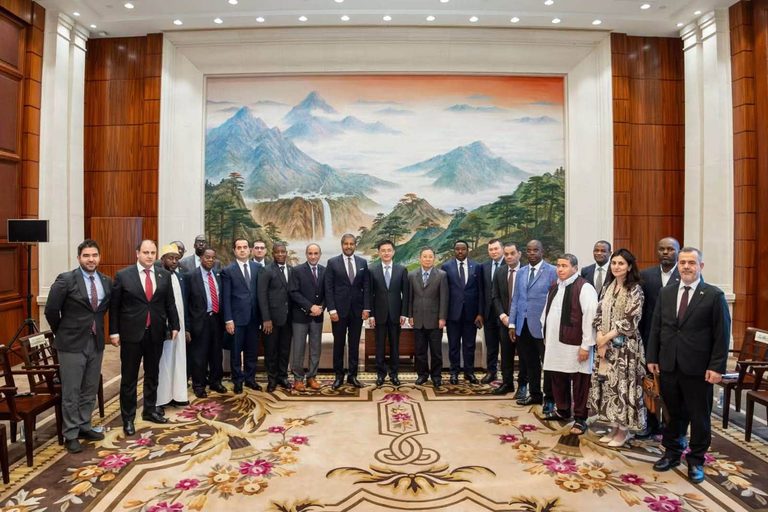
In between, organizers took the festival’s outreach on the road quite literally. In early July 2026, the Silk Road International Film Festival’s Executive Committee, together with the Western Film Group and other partner organizations, held the opening ceremony of the “Chang’an–Cairo Screen Dialogue – 2026 China-Egypt Western Film Week” in Cairo, Egypt. The event was designed to deepen film-cultural exchange between China and Egypt, build anticipation for the Xi’an festival, and directly invite participation from the Egyptian film industry. The Cairo programme was structured around three core components: film screenings, institutional matchmaking between industry stakeholders, and broader cultural exchange activities — a format that underscores how the festival increasingly functions as a year-round diplomatic and industry engagement effort rather than a single week-long event.
Registration Standards Aimed at Global Competitiveness
The festival’s registration specifications reflect an effort to maintain international competition standards. Feature films and animated films submitted for competition were required to run no less than 70 minutes, while documentaries needed a minimum runtime of 60 minutes. All eligible films had to have been completed after January 1, 2025, ensuring the competition showcased recent work. Films with dialogue in languages other than Mandarin Chinese were required to carry English or Chinese subtitles, while any Chinese films submitted for evaluation needed to hold a valid Public Screening License. The required technical screening format was DCP (Digital Cinema Package), the industry standard for theatrical exhibition. Under equal conditions, organizers indicated that priority would be given to films receiving their World Premiere or International Premiere at the festival — a standard practice among major film festivals seeking to establish prestige and draw premiere-seeking filmmakers.
Backgrounder: The Silk Road Spirit and the Case for Cultural Connectivity
The ancient Silk Road, which for roughly two millennia linked China with Central Asia, the Middle East, Africa, and Europe through overland and maritime trade routes, has long been invoked in Chinese cultural diplomacy as a symbol of exchange predating modern geopolitics — a historical precedent for connection built on commerce, ideas, and mutual curiosity rather than confrontation. Since the launch of the Belt and Road Initiative in 2013, Chinese officials have frequently framed contemporary infrastructure and economic cooperation as an extension of what is often termed the “Silk Road Spirit”: peace and cooperation, openness and inclusiveness, mutual learning, and mutual benefit.
Cultural and cinematic connectivity forms a specific strand of this broader initiative, running parallel to the infrastructure and trade corridors more commonly associated with Belt and Road projects. Film festivals, in particular, offer a lower-cost, high-visibility mechanism for cultural diplomacy: they generate media coverage, facilitate direct industry relationships between producers and distributors across borders, and create opportunities for audiences in participating countries to encounter cinema — and by extension, cultural narratives — from nations they might otherwise have limited exposure to.
The Cairo Screen Dialogue exemplifies this approach in practice. Rather than simply issuing an open call for international submissions, organizers proactively built relationships with a specific national film industry months ahead of the main event, treating festival participation as something to be cultivated through direct institutional engagement rather than left to organic interest.
The Way Forward
As the Silk Road International Film Festival enters its second decade, its trajectory offers a useful lens on how China is refining its approach to cultural diplomacy: less reliant on symbolism alone, and increasingly structured around sustained institutional relationships, industry matchmaking, and international outreach efforts conducted well ahead of the festival itself. Whether this year’s edition succeeds in expanding genuine international participation — as opposed to primarily domestic and regional entries — will likely shape how much further organizers invest in initiatives like the Cairo dialogue for future editions, as the festival continues positioning cinema as connective tissue within the broader Belt and Road framework.
About the Author