


The 13th Beijing Xiangshan Forum opens with delegations from nearly 100 countries, focusing on security governance, AI safety, and US-China ties as it marks its 20th anniversary
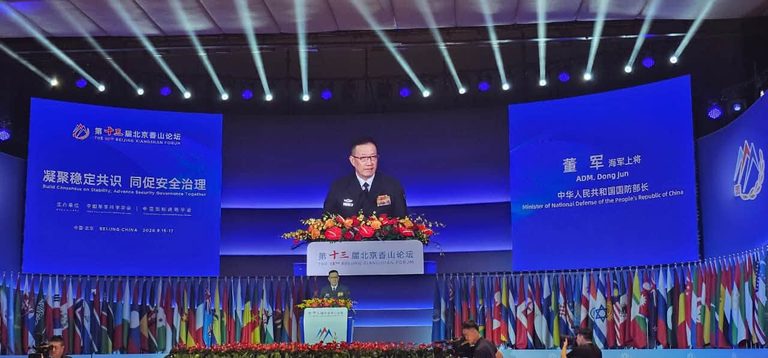
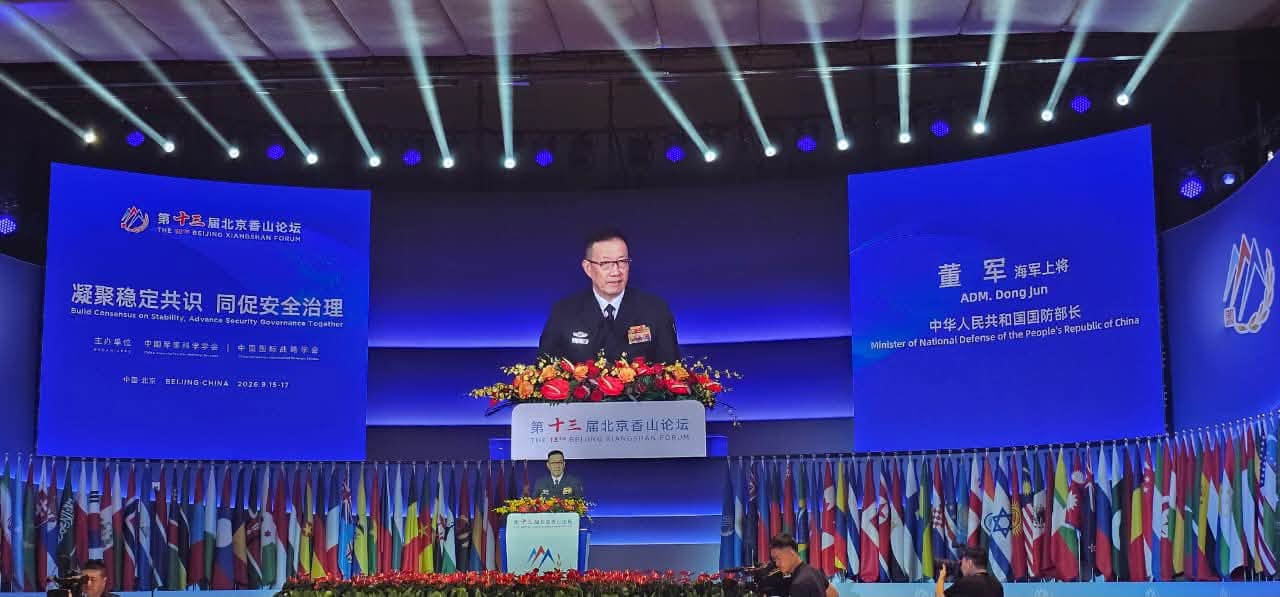
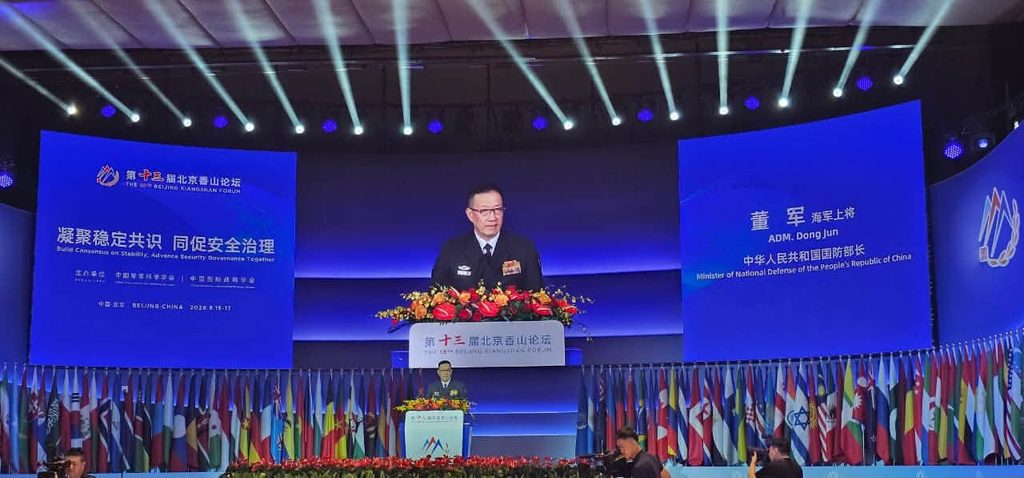
China’s premier annual defence and security gathering opened in Beijing this week, drawing official delegations from nearly 100 countries, regions, and international organizations to the Beijing International Convention Center. The 13th Beijing Xiangshan Forum, running from September 15 to 17, carries added weight this year as it marks the two-decade anniversary of a platform that has grown from a modest academic exchange into one of Asia’s most closely watched security dialogues.
Scale and Participation
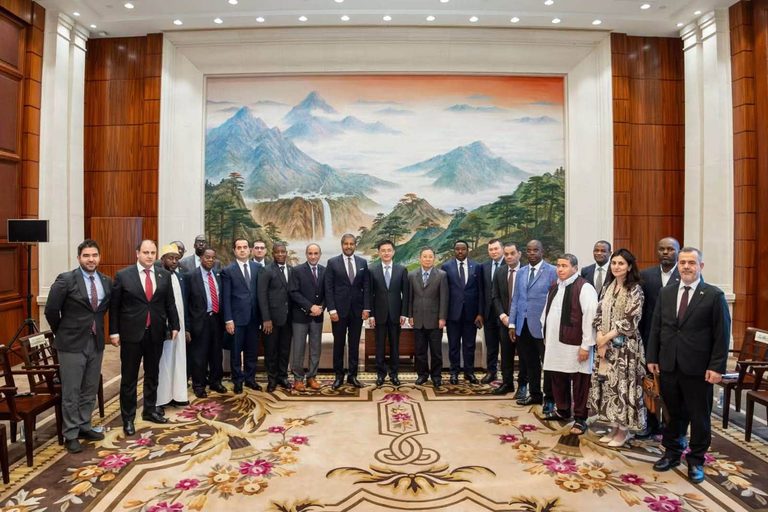
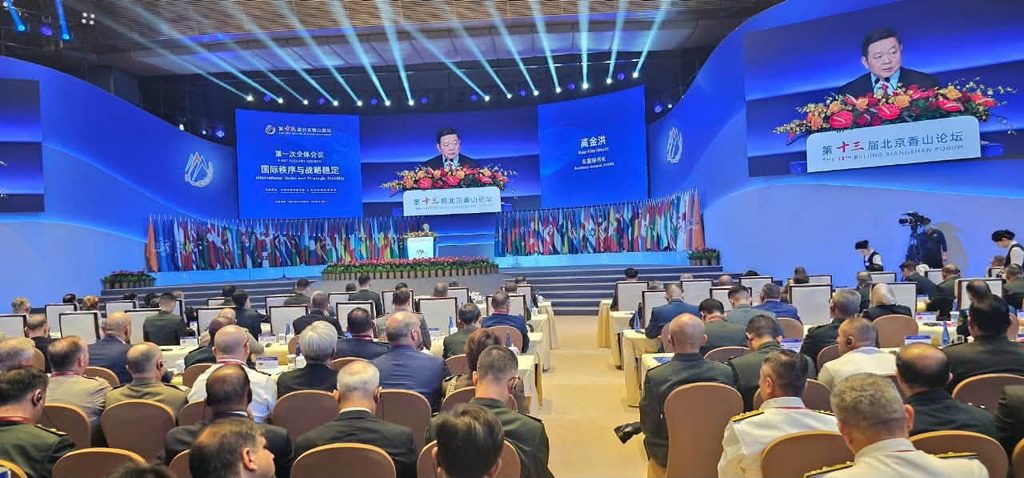
Organizers confirmed that this year’s forum has attracted more than 60 ministerial-level representatives and military chiefs, alongside scholars, former officials, and defence analysts. Notably, Western participation remained substantial, with delegates from New Zealand, Australia, and Canada among those attending — a point Chinese officials have highlighted as evidence of what they describe as the forum’s spirit of openness and inclusiveness.
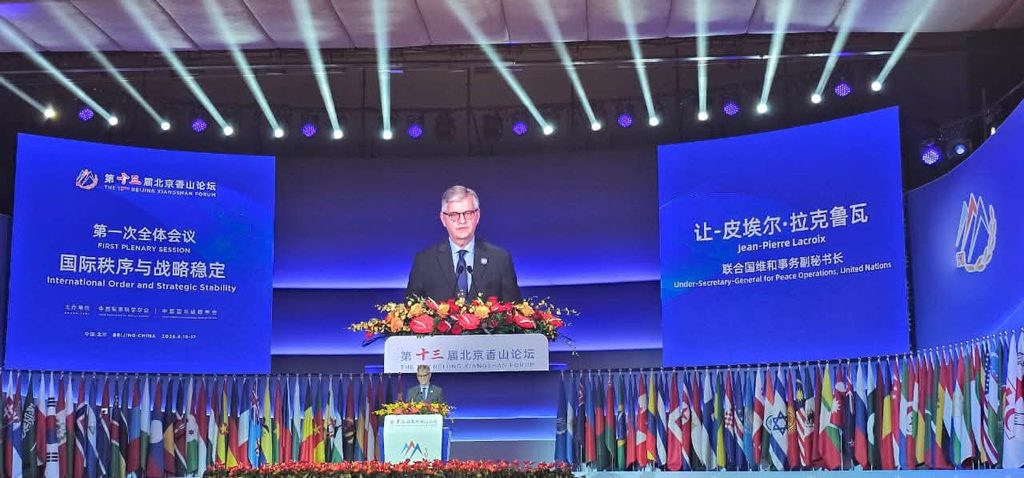
The three-day programme is structured around four plenary sessions and eight parallel thematic discussions, held under the theme “Build Consensus on Stability, Advance Security Governance Together.” In a move aimed at maximizing resource sharing and aligning outcomes, the forum ran alongside the fourth China-Africa Peace and Security Forum, linking two of Beijing’s key security diplomacy tracks in a single window.
The Agenda: From Regional Flashpoints to AI Safety
Discussions this year have ranged widely, from persistent regional tensions across the Indo-Pacific to newer challenges around the governance of artificial intelligence in military and security contexts — a topic that has climbed rapidly up the agenda at defence forums worldwide.
Former Japanese Prime Minister Yukio Hatoyama, a regular participant in regional dialogue initiatives, described the forum as a valuable platform for frank exchanges at a moment of rising tensions. Several experts in attendance pressed for stronger international cooperation on AI governance, arguing that the pace of technological development is outstripping the frameworks meant to regulate its military application, and called for expanded dialogue as a confidence-building measure.
Among the more pointed interventions came from British scholar Jean Christophe Baron von Pfetten, who held up China’s Global Governance Initiative Concept Paper — released in 2025 — and told attendees: “This is the key of the future in this world. This is promoted by China, not for China, but for the world.” In an earlier interview, he argued that “governance is the most critical factor,” adding that without multilateralism, security problems proliferate and the United Nations operates under constraints. He went further still, describing China as “currently the ‘engine’ of world peace.”
It’s worth noting that such characterizations reflect the views of individual participants at a forum hosted and shaped by Beijing, and they sit within a broader international debate in which many governments assess China’s regional security role quite differently.
Backgrounder: Two Decades of the Xiangshan Forum
Launched in 2006, the Beijing Xiangshan Forum began as a relatively low-key track-two dialogue convened by Chinese think tanks. Over the years it has been progressively elevated, expanding to include serving defence ministers and military chiefs, and is now widely regarded as China’s answer to the Shangri-La Dialogue in Singapore — the long-established security summit that has traditionally been shaped by Western and allied perspectives.
The forum’s growth mirrors the broader arc of Chinese defence diplomacy: a shift from participation in security conversations designed elsewhere toward hosting and framing those conversations directly. For Beijing, the platform serves several purposes at once — projecting an image of openness, offering a venue to articulate its own security concepts, and providing a setting for bilateral military-to-military contacts on the sidelines, including with the United States, whose relationship with China remains the single most consequential variable in Asian security.
A Wider Institutional Push
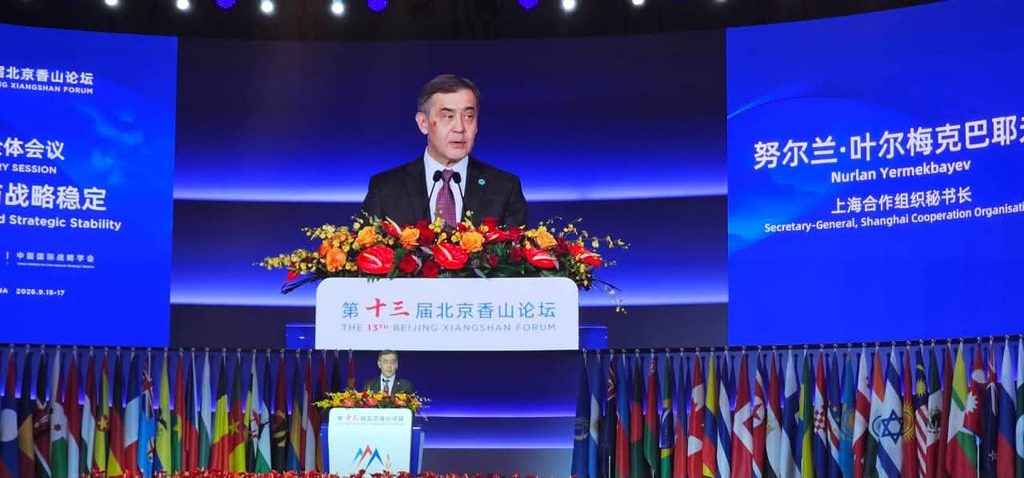
The forum does not exist in isolation. Beijing has been steadily reinforcing a network of regional institutions through which it channels security and economic cooperation. In August, Shanghai Cooperation Organisation Secretary-General Nurlan Yermekbayev attended an event at the ASEAN-China Centre in Beijing marking anniversary milestones in China-ASEAN cooperation and the transition to new Secretary-General Zhang Lizhong, succeeding Shi Zhongjun. Yermekbayev used the occasion to acknowledge the Centre’s role in fostering interaction between ASEAN, the SCO Secretariat, and other regional partners — a reminder of how China’s various multilateral tracks increasingly interlock.
Way Forward: Governance, Competition, and the Question of Trust
The central proposition advanced at this year’s forum — that stability requires collective security governance rather than bloc-based arrangements — lands at a moment of genuine international uncertainty. Whether that proposition gains traction will depend less on the quality of the argument than on the durability of trust between major powers.
For China, the strategic logic is clear enough. Positioning itself as a convener of inclusive security dialogue offers a counterweight to alliance structures it views as containment-oriented, while the Global Governance Initiative provides a conceptual framework for its broader diplomatic ambitions. The presence of Western delegations suggests that even amid strategic competition, few governments are willing to forgo the channels of communication such forums provide.
The harder test lies ahead. Dialogue platforms are valuable precisely because they keep lines open during periods of friction — but they are not substitutes for the concrete mechanisms, crisis hotlines, and verifiable agreements that prevent miscalculation from escalating. As AI governance, maritime disputes, and US-China military competition all intensify simultaneously, the Xiangshan Forum’s second decade will likely be judged not by how many delegations it attracts, but by whether the consensus it seeks to build translates into arrangements that hold when tested.
About the Author