


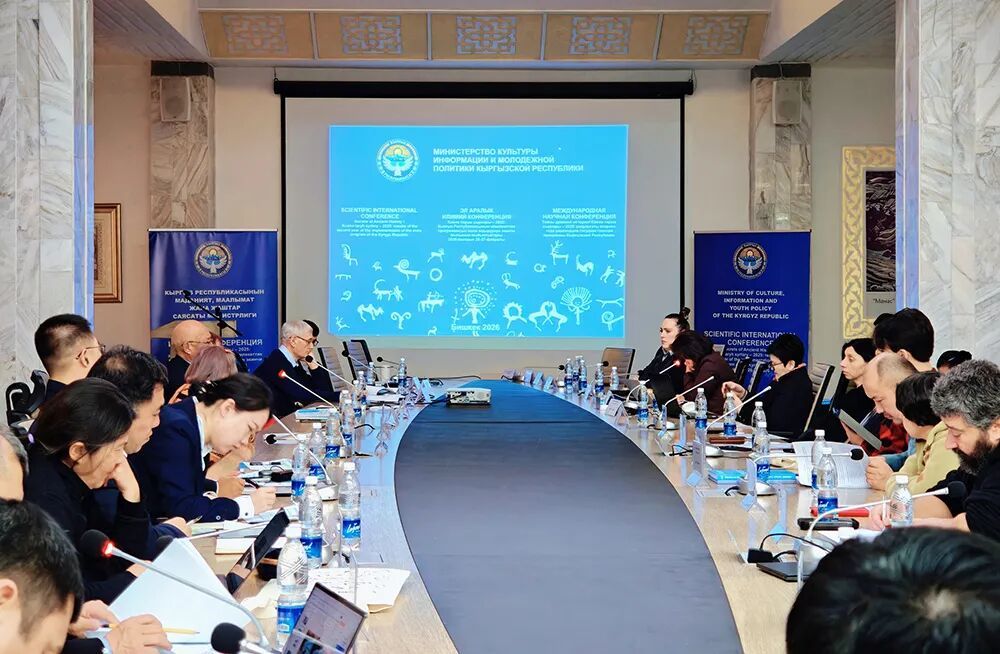
Archaeologists and historians from around the world gathered at the “Mysteries of Ancient History” conference in Kyrgyzstan to discuss heritage preservation and civilizational exchange.
A delegation from the Maijishan Grottoes Art Research Institute of the Dunhuang Academy of China shares its expertise in grotto temple conservation and World Heritage site management.International Dunhuang & Its Link with the Silk Road
Dunhuang—a historic oasis city on the edge of the Gobi Desert—served as a vital gateway along the ancient Silk Road, linking China with Central Asia, the Middle East, and Europe. For centuries, it functioned as a cultural and commercial crossroads where goods, religions, art, and ideas converged.
Today, “International Dunhuang” represents China’s effort to revive this legacy under modern connectivity initiatives like the Belt and Road Initiative. The city has been repositioned as a hub for cultural diplomacy, tourism, and academic exchange.
A central symbol of this transformation is the Silk Road (Dunhuang) International Cultural Expo, which brings together countries across Eurasia to promote shared heritage, economic cooperation, and people-to-people ties. The event highlights Dunhuang’s historical role as a meeting point of civilizations and reinforces its relevance in today’s geopolitical and economic landscape.
Moreover, landmarks like the Mogao Caves—a UNESCO World Heritage site—reflect the deep cultural exchanges fostered by the Silk Road, with influences from Indian, Persian, and Central Asian traditions visible in Buddhist art and manuscripts.
In essence, International Dunhuang serves as both a symbolic and practical bridge between the ancient Silk Road spirit and modern Eurasian connectivity—blending heritage with diplomacy, and history with future-oriented cooperation.
About the Author